What a Bernedoodle Actually Costs You in the First Twelve Months
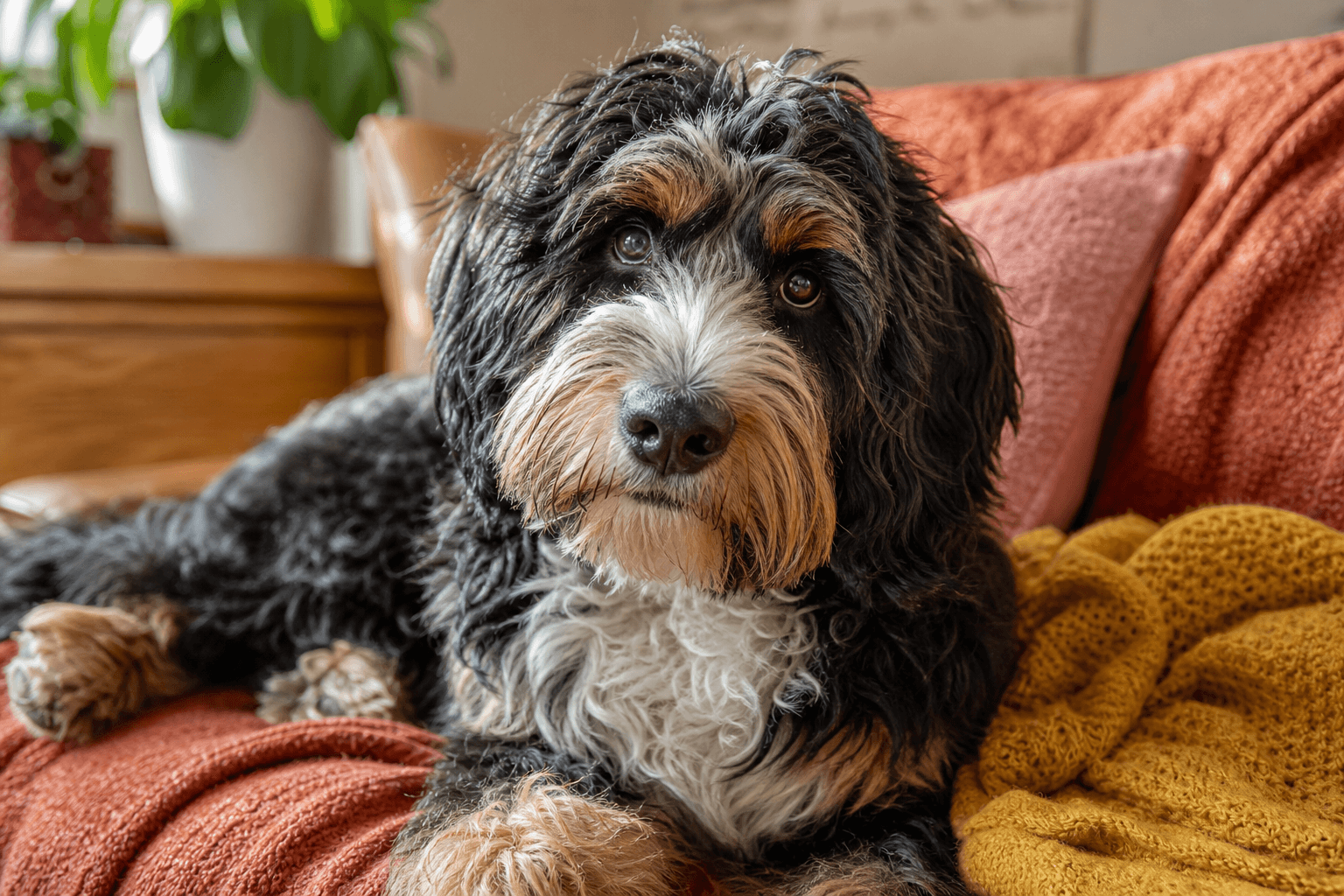
You love the teddy-bear face, the goofy charm, and the family-friendly vibe — we do too.
But the first year with a Bernedoodle has real costs that surprise many new owners.
Here is exactly what you will pay in year one, where the money goes, and how to budget with confidence.
1. The Big Upfront: Purchase or Adoption
Most families either purchase from a reputable breeder or adopt a doodle mix from rescue.
Breeder prices typically run $2,500–$4,500 depending on size, pedigree, and region. Adoption fees usually land around $150–$600 and may include initial vetting.
Whatever route you choose, budget for a deposit, travel to pick up, and a first vet visit.
2. Setup Gear You Will Actually Use
You do not need a boutique haul — just quality basics sized for a fast-growing pup.
- Crate and two beds (puppy and adult): $120–$250
- Bowls, slow-feeder, storage bin: $40–$80
- Leash, harness, ID tags, long line: $40–$100
- Grooming tools (slicker, comb, nail grinder): $60–$120
- Poop bags, enzyme cleaner, baby gates: $50–$120
Plan $300–$600 for a setup that lasts.
3. Routine Vet Care and Vaccines
Expect two to three puppy visits for core vaccines, plus a wellness exam at 6–12 months.
Across the first year, routine care (exams, core vaccines, fecal tests) typically runs $250–$500, not counting spay/neuter.
Add $200–$400 for monthly flea, tick, and heartworm prevention depending on your region and your puppy’s adult size.
4. Spay/Neuter, Microchip, License
Many vets now recommend waiting until growth plates close for large Bernedoodles; ask your vet for timing.
Spay/neuter costs vary by weight and clinic: $300–$700 is a fair planning range.
Microchip and local license together are usually $30–$80.
5. Grooming: The Bernedoodle Reality
This is the line item most new owners underestimate.
Bernedoodles mat quickly without upkeep. Professional grooms every 6–8 weeks keep coats healthy and comfortable.
At $85–$130 per session, plan for 6–8 visits the first year: about $600–$1,000. Regular at-home brushing with a slicker and metal comb reduces time in the salon and prevents shave-downs.
6. Food, Treats, and Chews
Standards can reach large-breed portions; minis eat less but still more than toy dogs.
Balanced food, training treats, and safe chews typically total $550–$900 in the first year, depending on size, brand, and inflation in your area.
7. Training and Socialization
Bernedoodles are bright, biddable, and sometimes stubborn. Group classes build manners and confidence.
Budget $200–$600 for puppy kindergarten and a basic manners course. Add private sessions if you need help with reactivity, jumping, or grooming desensitization.
8. Insurance or Self-Insuring
Pet insurance can blunt the cost of emergencies, which tend to be pricey for medium and large dogs.
First-year premiums commonly run $500–$900 depending on coverage and deductible. If you do not insure, commit the same amount to a dedicated emergency fund and keep it intact.
9. Travel, Boarding, and Sitting
Even homebodies have weddings, work trips, or holidays.
Plan $200–$600 for occasional boarding, in-home sitting, or dog-walking during long workdays. Prices swing with city and dog size.
10. First-Year Cost Summary
Here is a realistic snapshot for a purchased Bernedoodle. If you adopt, subtract the purchase price and you will still see how grooming and care dominate year one.
Annual Cost Breakdown
| Expense | Annual Cost |
|---|---|
| Purchase price (breeder) | $2,500–$4,500 |
| Setup gear (crate, bed, basics) | $300–$600 |
| Routine vet care & vaccines | $250–$500 |
| Spay/neuter | $300–$700 |
| Parasite prevention (flea/tick/heartworm) | $200–$400 |
| Microchip & license | $30–$80 |
| Professional grooming (6–8 visits) | $600–$1,000 |
| Food, treats, chews | $550–$900 |
| Training classes | $200–$600 |
| Pet insurance (optional) | $500–$900 |
| Toys & replacements | $100–$250 |
| Boarding/sitting/walks | $200–$600 |
| Misc. & accident buffer | $200–$500 |
| Est. Annual Total | $5,900–$11,500 |
If you adopt ($150–$600), your first year often lands between $3,500 and $7,000, driven mostly by grooming, food, and routine care.
11. Smart Ways to Save
- Buy a quality slicker and metal comb and brush to the skin — fewer mats means shorter, cheaper grooms.
- Choose group classes over private training unless you have a specific behavior to fix.
- Price-shop preventives through your vet’s online pharmacy and use rebates from manufacturers.
- Feed a reputable large-breed formula and watch portions; overfeeding costs money and joint health.
- Skip impulse gear; upgrade only what you outgrow or wear out.
12. Red Flags That Drive Costs Up
FAQs
Usually, yes. Home maintenance reduces time and cost, but most Bernedoodles still need full grooms every 6–8 weeks for sanitation, nail care, ear care, and coat management.
Somewhat. Minis eat less and may have slightly lower grooming and medication costs due to size, but the big line items — training, routine vet care, and many fees — are similar.
If an unexpected surgery would strain your budget, insurance or a dedicated emergency fund is smart. Large-mix dogs can rack up four-figure bills for GI obstruction, orthopedic injuries, or emergencies.
You drop the purchase price and spay/neuter, but you will still pay for grooming, food, annual exams, preventives, and occasional training refreshers. Many families spend $2,000–$4,000 per year after year one.
Some owners do after learning coat prep, line brushing, bathing, drying, and clipper work. Expect a learning curve, upfront tool costs, and lots of practice; many still use a pro every few grooms.