9 Things to Know Before Getting an Egyptian Mau
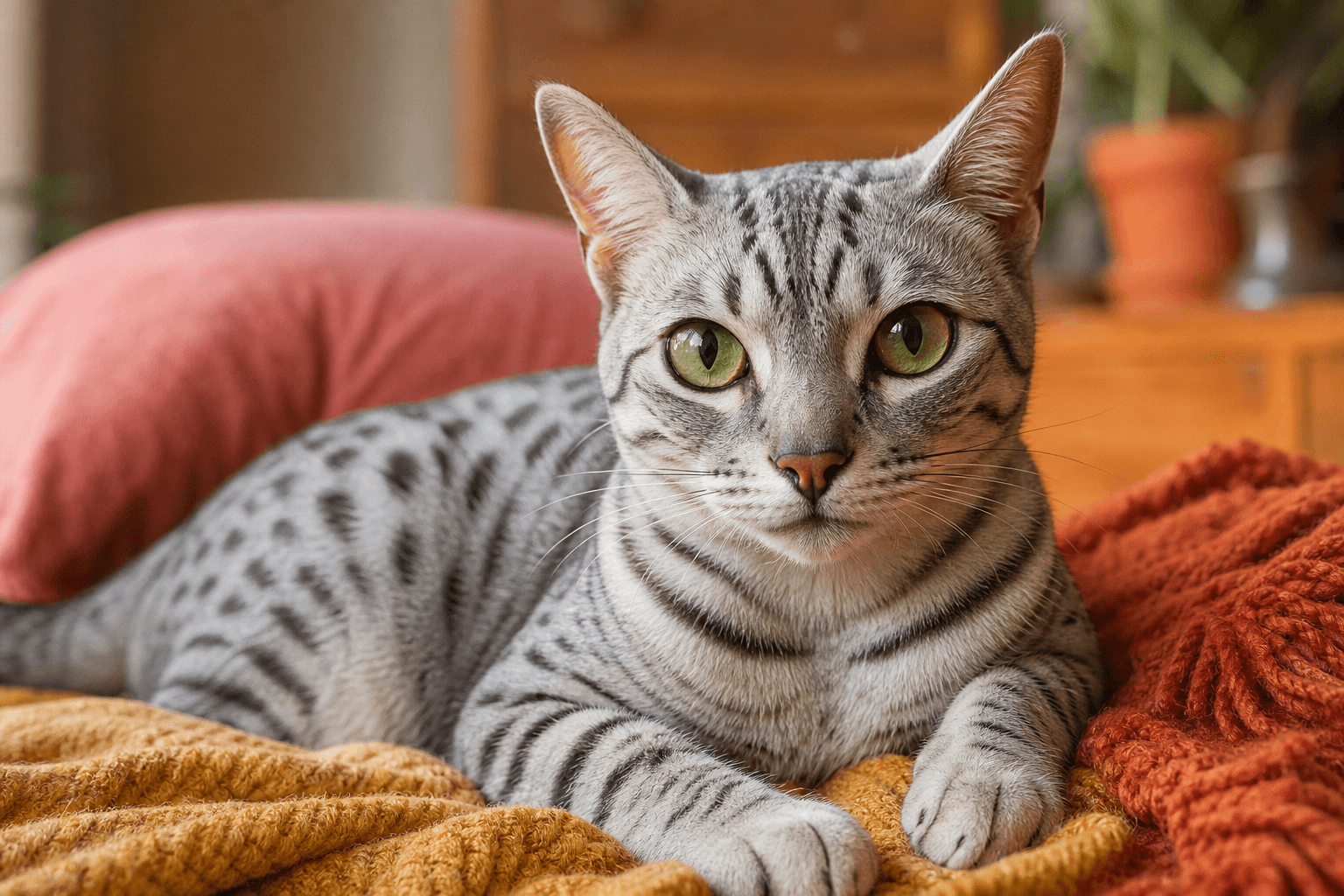
You fell for those natural spots and that quicksilver grace. We did, too.
Before you bring an Egyptian Mau home, here are the real-world things we wish we knew on day one.
They are stunning, sensitive, and surprisingly silly — and they thrive when you set them up right.
1. Built Like a Sprinter
The Mau is one of the few naturally spotted domestic cats, and that athletic look is real-life energy.
They have a long hind leg, gooseberry-green eyes, and a turbo burst of speed. Expect short, intense play sessions several times a day.
Plan for two to three 10-minute play bursts with wands or fetch toys. A tired Mau is a content Mau.
2. They Bond Deeply — and Choose Favorites
Egyptian Maus are loyal. Many pick a person and shadow them room to room.
That devotion is sweet, but it also means they notice schedule changes and absences. Build predictable routines and offer engagement when you are home.
Give that athlete a stage to thrive on
3. A Soft Voice with a Lot to Say
Maus are not screamers, but they are communicators. You will hear trills, chirps, and an endearing chuff when hunting toys.
They use their tails and shoulders to “point” at what they want. Learn their signals and you will avoid 3 a.m. zoomies.
4. Vertical Space Is Not Optional
This breed loves height. If you do not provide it, they will make their own — on top of your fridge.
Tall, stable tree
At least 5-6 feet with a perch wide enough to loaf.
Window hunting
A cat window seat plus bird feeder outside equals hours of content play.
Shelf highway
Staggered wall shelves let them sprint and perch without chaos.
Hideouts
A tunnel or cube for cooldown prevents overstimulation.
5. Friendly, but Not a Party Cat
Most Maus warm up to respectful visitors and can live with other pets, especially another energetic cat or a cat-savvy dog.
They dislike rough handling and chaotic spaces. Households with gentle kids do fine; toddlers need supervision and clear boundaries.
6. They Hate the Cold
Many Maus have a thinner coat feel and a warm-weather vibe. You will see them seek sun patches and heated spots.
Provide a cozy bed away from drafts. In winter, a low-profile heated mat on a timer becomes their favorite place.
7. Low Grooming, High Play
Their short coat is low-maintenance. A weekly rubber curry or grooming glove keeps shedding under control and brings out that glossy ticked or spotted pattern.
Nail trims every 2-3 weeks and daily dental care (dental gel or brushing) matter more than coat work.
- Weekly brush with grooming glove
- Daily 5-minute play sessions
- Skip dental care because they eat dry food
8. Health: Generally Robust, With a Few Watch-Outs
Egyptian Maus are typically healthy with good lifespans when responsibly bred.
Watch for sensitive tummies, periodontal disease (common in many breeds), and rare but documented issues like pyruvate kinase deficiency in some lines.
Vet-smart basics
- Baseline exam and fecal check in week 1Set vaccine schedule, discuss parasite control, and diet.
- Spay/neuter timingPlan with your vet based on age, behavior, and your home.
- Microchip and registerMaus are fast; if a door opens, you want them back.
9. Finding a Responsible Breeder (or Rescue)
Ask for transparency on lineage, socialization, and early handling. Good breeders welcome questions and match temperament to your home.
Contracts should include a health guarantee, spay/neuter terms, and a return policy. Rescue Maus pop up, too — being open to an adult can be wonderful.
Many spotted cats are mixed-breed or other pedigrees like Ocicat or Bengal. Maus have specific conformation and temperament.
They are fully domestic cats with a natural spotted pattern and no recent wild ancestry.
They do shed; it is just easier to manage with quick weekly grooming.
Yes, if you commit to daily play and environmental enrichment. Their needs are simple but consistent: movement, vertical space, and routine.
Absolutely. Prioritize tall trees, window perches, and interactive play. Space matters less than structure.
Common show colors include silver, bronze, and smoke, each with distinct contrast in spotting. Pet lines may have variations.
With slow introductions and a dog that respects boundaries, many Maus do well. Provide high escape routes and supervise early interactions.