9 Things to Know Before Getting a Scottish Fold
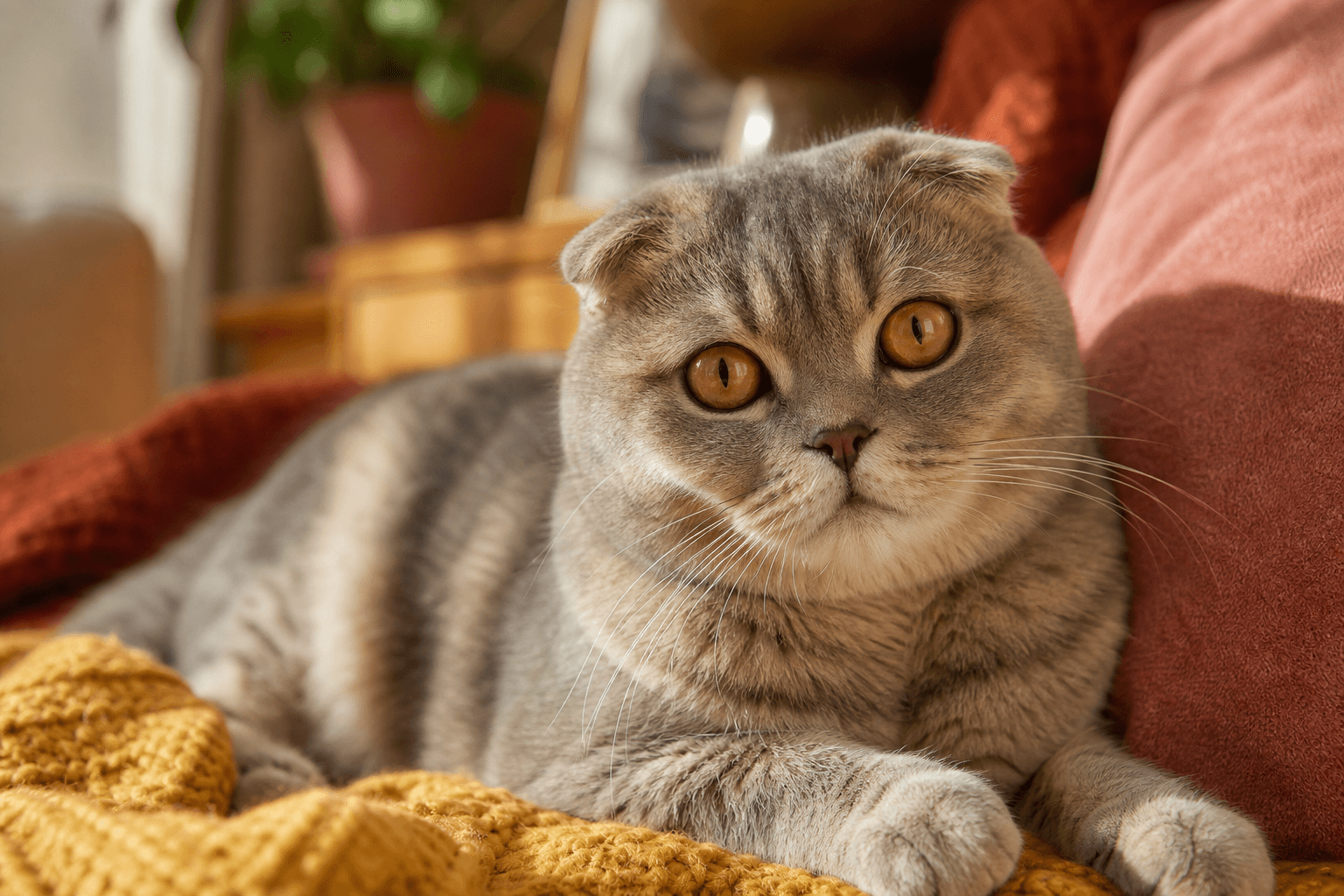
You fell for the round face, big eyes, and those irresistibly folded ears. We get it — we did too.
Before you bring a Scottish Fold home, here are the real-life truths that matter, from health to daily care.
Read these nine points and you will know exactly what you are saying yes to.
1. The Fold Is Linked to a Real Health Risk
The trademark folded ear comes from a cartilage gene that can also affect joints. The condition, osteochondrodysplasia, may lead to painful arthritis, stiffness, and a bunny-hop gait, sometimes early in life.
Responsible breeders screen parents, avoid Fold-to-Fold matings, and monitor kittens for tail and limb flexibility. Even then, some risk remains.
2. Sweet, Gentle, and People-Oriented
Scottish Folds are typically calm, affectionate shadows who enjoy being near you without being needy. Many ride out household bustle with poise.
They bond closely and often choose a favorite person, following room to room and curling up wherever you settle.
Daily life with a Fold feels mellow, cuddly, and quietly playful.
3. Playful But Not Hyper
Expect short play bursts rather than marathon zoomies. Wand toys, food puzzles, and low-to-mid climbing satisfy most Folds.
4. Coat Care: Short vs. Longhair
Shorthaired Folds (Shorthair) shed moderately and usually need a quick brush 1-2 times weekly. Longhaired Folds (Longhair/Highland Fold) need more: 3-4 times a week to prevent tangles, especially around the britches and armpits.
All Folds benefit from nail trims every 2-3 weeks and dental care. Start toothbrushing young for easier buy-in.
Shorthair routine
Slicker brush weekly, deshed during seasonal blows, quick wipe of eyes if needed.
Longhair routine
Comb to the skin several times weekly; check behind ears, belly, and pants for sneaky knots.
5. Ear Care Is Not Optional
Folded ears can trap wax and reduce airflow, which may mean more frequent cleaning. Check weekly.
Lift the flap gently, look for debris or odor, and use a vet-approved ear cleaner on a cotton pad — never insert swabs deep into the canal.
6. Choosing an Ethical Breeder Matters
This is the single biggest factor in long-term health. Ethical breeders pair Fold to Straight, screen for joint issues, and are transparent about veterinary findings.
- Fold x Straight pairings only (no Fold x Fold).
- Contract with health guarantees and return clause.
- You cannot meet parents or see records.
- Breeder discourages x-rays or downplays arthritis risk.
7. Set Up a Joint-Friendly Home
Make movement easy and soft. Provide low-rise steps to favorite perches, a supportive bed, and litter boxes with low entry.
Skip tall leaps. Choose cat trees with ramps or broad, closely spaced platforms so joints stay happy.
Comfort rules
- Soft landingsPlace mats or rugs where your cat jumps down.
- Easy accessUse ramps/steps to windowsills and couches.
- Warmth helpsCozy, draft-free sleeping spots can ease stiff joints.
8. Budget for Lifetime Costs
Beyond the purchase price, plan for preventive care and possible joint management.
Annual Cost Breakdown
| Expense | Annual Cost |
|---|---|
| Food and litter | $500–$900 |
| Routine vet + vaccines | $200–$500 |
| Preventives/parasite control | $120–$250 |
| Grooming supplies | $60–$150 |
| Insurance (optional) | $300–$600 |
| Potential joint care (supplements/meds/x-rays) | $150–$800+ |
| Est. Annual Total | $1,330–$3,200+/year |
9. Kids, Dogs, and Apartment Life
Folds usually do well in apartments thanks to their calm vibe and moderate activity. They can thrive with respectful kids and cat-savvy dogs.
Teach gentle handling — no ear folding or stretching tails — and provide a quiet retreat your cat can always access.
Not always. Many live comfortably, but the gene that folds the ears can affect cartilage elsewhere. Ethical breeding, weight control, and joint-friendly living reduce risk, and your vet can help manage any issues early.
Yes — often called Scottish Straights. They lack the fold but share much of the same temperament and look without the elevated joint-risk from folded cartilage.
Two or three 10-minute play sessions daily is plenty for most Folds. Focus on low-impact games and food puzzles.
Yes, with enrichment: window perches, puzzle feeders, safe toys, and a steady routine. Many appreciate a midday play break if possible.
Build varies, but many adults fall around 6–11 lb. Your vet will tailor a body-condition score — keeping them lean protects joints.