9 Things to Know Before Getting a Veiled Chameleon
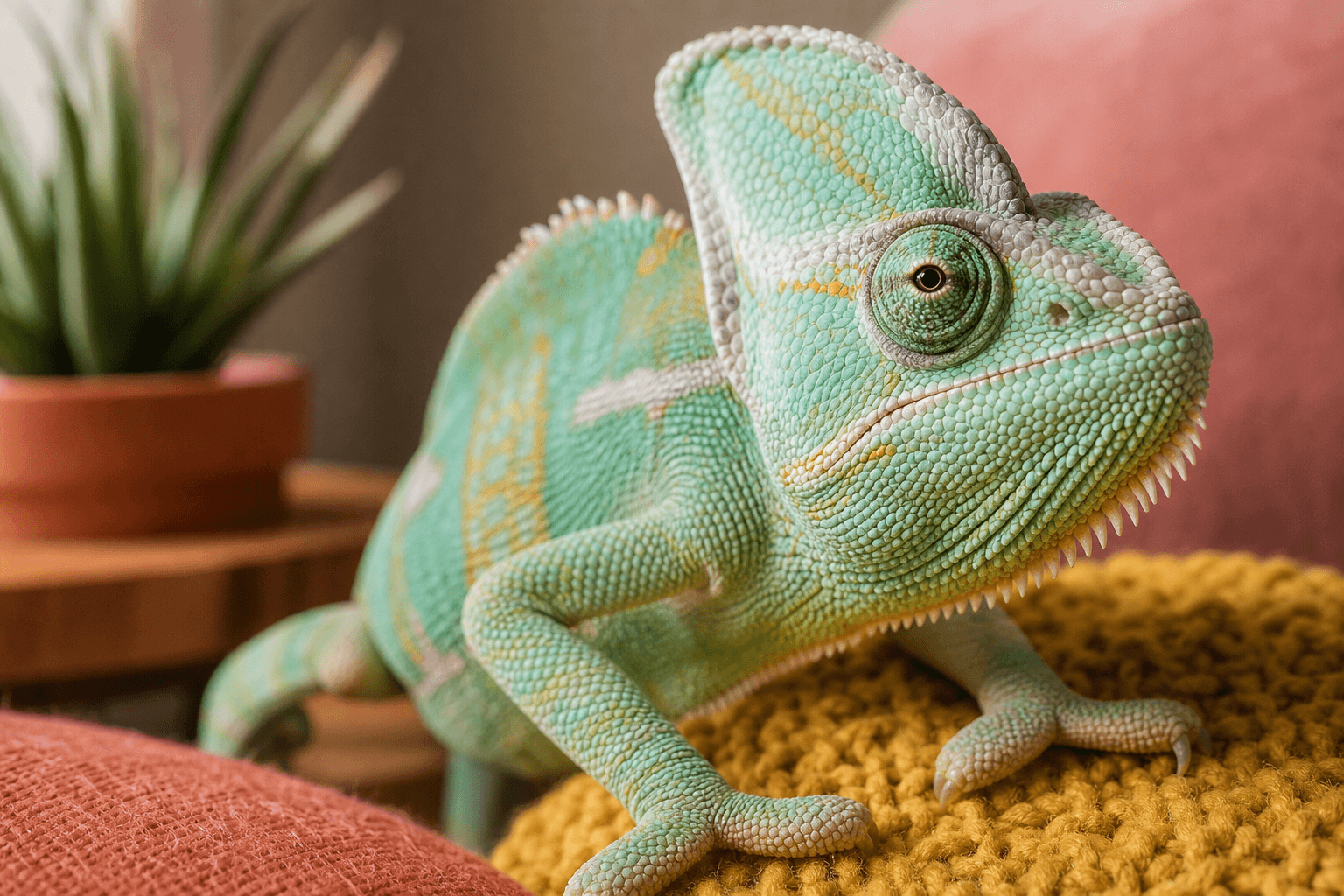
You saw that gorgeous casque and those slow, careful steps and thought: maybe a veiled chameleon is for me.
You can absolutely succeed — if you set up the right environment and know what daily care really looks like.
Here are the nine things that matter most, distilled from keepers who have learned the hard way so you don’t have to.
1. The Enclosure Must Breathe
Veileds are arboreal, territorial, and sensitive to stagnant air. A tall, mostly screen enclosure is the standard — think 24 x 24 x 48 inches for an adult, minimum.
Glass doors can be fine on a hybrid, but solid glass tanks trap heat and humidity and stress chameleons.
Go for Height
Prioritize vertical space with branches from bottom to top so they can thermoregulate by moving.
Avoid Visual Stress
Use plants to create line-of-sight breaks; no mirrors; limit views of other chameleons.
Get the lights right before the lizard arrives
2. UVB and Heat Are Non‑Negotiable
Without proper UVB, veileds develop metabolic bone disease fast. Use a linear T5 HO UVB (5.0/6% for most setups) spanning most of the top, with a safe basking distance per bulb brand’s chart.
Pair it with a separate basking bulb — no colored lights. Aim for a basking branch surface around 88–95°F, with ambient daytime mid‑70s to low 80s.
3. Humidity Is a Rhythm, Not a Number
Veiled chameleons do best with a daytime drop (around 40–50%) and a gentle nighttime rise (up to 70–80% with safe ventilation). Constantly high humidity with warm air invites respiratory issues.
Let the enclosure dry between misting sessions. A digital hygrometer at mid‑height keeps you honest.
4. They Won’t Drink From a Bowl
Veileds lick moving droplets from leaves. Provide a reliable water plan: hand‑misting, an automatic misting system, or a clean dripper that runs for short periods.
Mist before lights on and again near lights off to mimic dew. Always allow leaves and branches to dry between sessions.
5. Feeder Variety and Gut‑Loading Matter
Crickets alone won’t cut it. Rotate dubia roaches, crickets, black soldier fly larvae, silkworms, and the occasional hornworm.
Gut‑load 24–48 hours before feeding with dark leafy greens and a quality insect diet. Dust with plain calcium (no D3) at most feedings, plus a multivitamin and calcium with D3 on a light schedule (e.g., D3 twice monthly, multivitamin twice monthly).
- Offer appropriately sized feeders (no wider than the space between the chameleon’s eyes).
- Skip wild-caught bugs and fireflies (toxic).
- Avoid overfeeding adult males; obesity is common.
6. Minimal Handling Is Kindness
Veileds are display reptiles. Many tolerate short, calm interactions, but frequent handling elevates stress and suppresses appetite.
Work with a perch or branch to move them when needed. Watch for gape displays, dark coloration, and hissing — all signs to back off.
“With chameleons, the best bond you build is trust in your routine, not time on your shoulder.”
7. Safe Plants and Vertical Highways
Live plants stabilize humidity and give cover. Safe staples include pothos, umbrella plant (Schefflera), ficus benjamina, and hibiscus. Wash leaves well and repot in organic soil without perlite; cover soil with river rocks.
Use a lattice of branches and vines in different diameters so their feet can fully wrap. Place a sturdy basking branch 6–8 inches under the UVB, per your fixture’s guidance.
8. Common Health Pitfalls to Avoid
Most issues trace back to setup. No UVB or wrong dosing leads to soft jaws and curved limbs. Overly wet, warm air brings respiratory infections. Loose substrates risk impaction — bare bottoms or bioactive with proper barrier layers are safer choices.
They benefit from a nighttime drop into the mid‑60s to low‑70s. Red bulbs disturb sleep and can overheat.
Constant wetness encourages bacteria and stress. Provide sessions, then let the enclosure dry.
Most tolerate, few enjoy. Minimal, purposeful handling reduces stress.
9. Expect Real Costs and Daily Checks
The lizard is the cheapest part. Budget for the enclosure, UVB fixture and bulbs (replaced every 6–12 months per brand), basking lamp, timer, misting system or dripper, supplements, feeders, and plants.
Annual Cost Breakdown
| Expense | Annual Cost |
|---|---|
| UVB bulb replacements | $40–$60 |
| Feeders & gut‑load | $300–$500 |
| Supplements | $30–$60 |
| Electricity & water | $60–$120 |
| Vet fund (set aside) | $150–$300 |
| Est. Annual Total | $580–$1,040 + initial setup |
Start no smaller than 18 x 18 x 36 inches and upgrade to 24 x 24 x 48 for adults. Bigger is better if you can maintain gradients.
No. They are solitary and territorial. Co‑housing causes chronic stress and injury.
Usually not if your room drops to the mid‑60s to low‑70s. If your home gets colder, use a ceramic heat emitter to nudge temps safely — no lights at night.
Juveniles daily in small amounts; adults every other day with portion control. Adjust to body condition.
Replace bulbs on schedule and, if possible, verify the UVI at the basking branch with a Solarmeter 6.5. Follow brand distance charts.