9 Things to Know Before Getting a Sphynx Cat
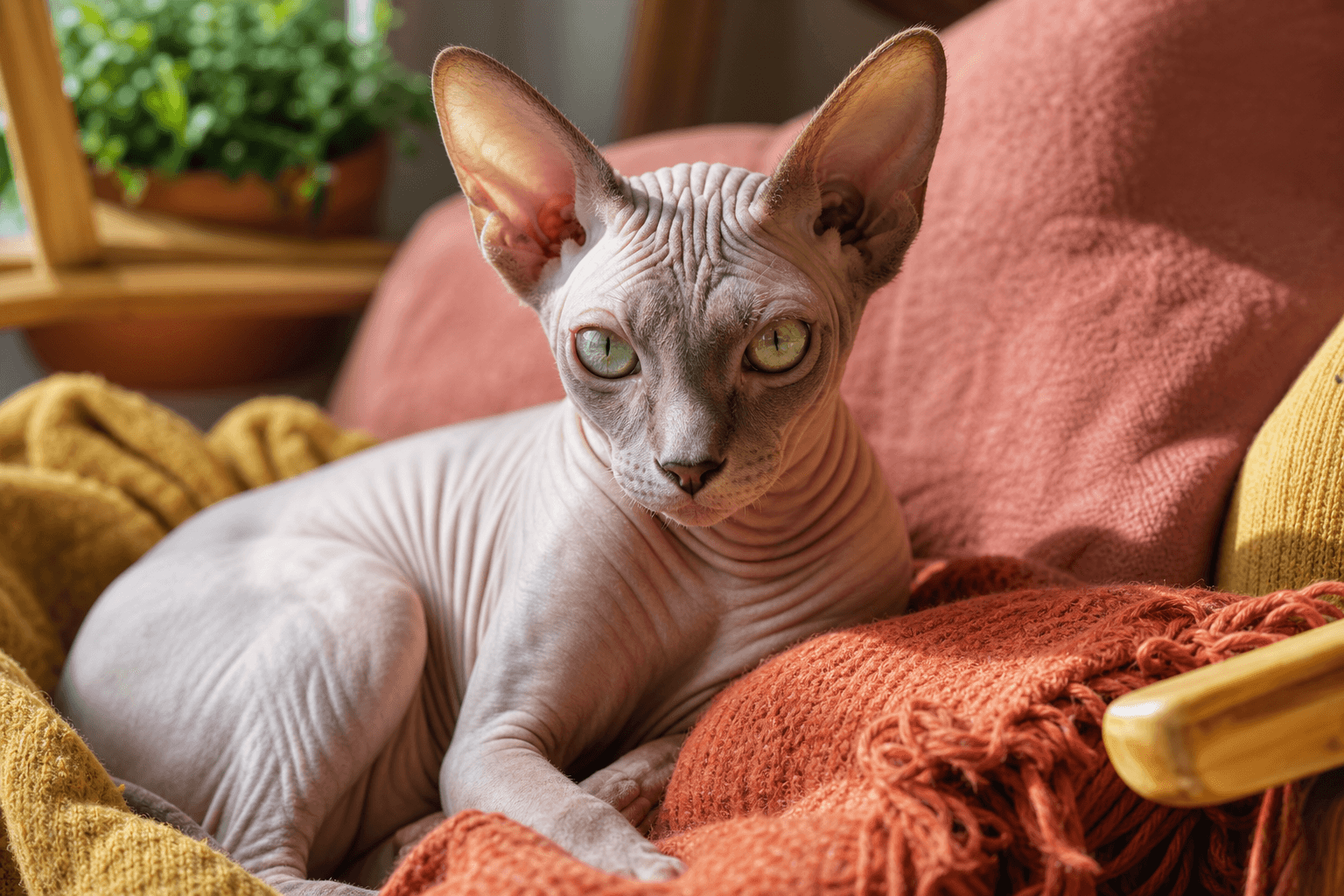
You saw those big ears and wrinkly cheeks and thought: is a Sphynx right for me?
Here are the real-life things we wish someone told us first, so you can say yes with confidence.
Short, practical, and straight to the point.
1. Their Skin Needs Weekly Care
No fur means natural skin oils sit on the surface. Without bathing, those oils transfer to blankets, furniture, and your shirt.
Plan on a gentle bath about once a week or every 10–14 days, plus a quick wipe of folds between baths. Too frequent baths can dry skin; too few cause buildup.
What to use
Warm water, a mild, fragrance-free pet-safe cleanser, and soft cloths or cotton pads for folds.
What to avoid
Human shampoos with fragrance, dish soap, rough scrubbing, and heavy oils that clog pores.
2. They Run Cold (and Sometimes Hot)
Sphynx cats don’t have an insulating coat, so room temperature matters. Most are happiest at typical home temps, but they seek warmth aggressively.
Offer heated beds with low, pet-safe settings, sunny spots, and cozy blankets. In summer, provide cool resting areas and never leave them in hot rooms or cars.
3. Velcro Personality: Expect a Shadow
This is a people-first breed. They follow you, help with emails, and nap under your hoodie. If you want an independent cat, this may not be your match.
Left alone too long, they can get vocal or mischievous. Consider a second friendly pet or reliable midday interaction.
Warm laps and warmer hearts come with responsibilities
4. Fast Metabolism Means Smart Feeding
To stay warm, many Sphynx cats burn calories quickly. You may notice a heartier appetite than your previous shorthaired cat.
Feed a high-quality, complete diet with ample protein and moisture. Two to three measured meals a day work well; some do fine with scheduled free-feeding if weight stays stable.
- Prioritize meat-first wet or balanced raw/cooked under vet guidance
- Monitor weight monthly; adjust portions, not just brand
- Ignore calories and let the bowl stay bottomless
5. Litter Sticks to Skin—Choose Wisely
Oil on bare skin acts like glue for dust. Clumping litters can cake on toes and bellies.
We have the best luck with larger-grain litters: pelleted paper, wood, or low-dust mineral crystals. Place a washable mat outside the box and wipe paws during skincare time.
6. Sun Safety Matters
Hairless doesn’t mean sun-proof. UV can cause burns and long-term skin damage.
Prioritize shade and limit direct midday sun at windows. If your vet recommends sunscreen for brief supervised exposure, use a pet-safe, non-zinc, fragrance-free product and spot-test first. Better yet, rely on window UV films and cozy shaded perches.
7. Grooming Isn’t Gone—It’s Just Different
No shedding tumbleweeds, yes—yet grooming shifts to ears, nails, and skin folds.
Ears
Clean weekly with vet-approved ear cleaner and cotton pads; Sphynx produce more ear wax.
Nails
Trim every 1–2 weeks. Wipe brown oil from nail beds to prevent stains on fabrics.
They produce the same Fel d 1 allergen in saliva and skin oils. Some people react less, but many still react.
Most need regular bathing and wipe-downs to manage oil buildup and keep skin comfortable.
8. Know the Health Watchouts
Work with ethical breeders or rescues that screen. The big concern is hypertrophic cardiomyopathy (HCM); responsible breeders perform periodic heart scans on breeding cats.
Other watchouts: skin yeast or bacterial overgrowth from residue, ear infections, dental disease, and body-temperature sensitivity. Annual vet exams (often twice-yearly for seniors) and prompt skin/ear care go a long way.
Annual Cost Breakdown
| Expense | Annual Cost |
|---|---|
| Quality food and treats | $600–$1,200 |
| Routine vet care | $200–$500 |
| Insurance (optional) | $300–$600 |
| Grooming supplies & skincare | $80–$200 |
| Litter & accessories | $150–$300 |
| Heating pads, sweaters, bedding | $60–$200 |
| Est. Annual Total | $1,390–$3,000+/year |
9. They Thrive on Routine and Enrichment
A bored Sphynx will find trouble, usually at 3 a.m. They shine with predictable meals, warm sleep spots, and daily play.
Daily essentials
- Interactive playTwo short sessions with a wand toy to burn energy and bond.
- Warmth stationsAt least two cozy options in different rooms so they can follow you.
- Skin checkA 30-second scan of folds, nails, and ears while you cuddle.
Not if you keep up with gentle baths and wipe-downs. Odor usually means oil buildup or trapped residue—adjust the bath routine and rinse thoroughly.
Generally yes—they are social and playful. Supervise introductions and give them warm retreat spots to reduce stress.
Most do well every 7–14 days. Start light, watch the skin, and avoid over-bathing which can cause dryness and overproduction of oils.
Only supervised and briefly. Sun, cold, and rough surfaces are risky. A secure stroller or catio with shade is safer.