The Complete New Sheepadoodle Puppy Checklist for Your First 48 Hours
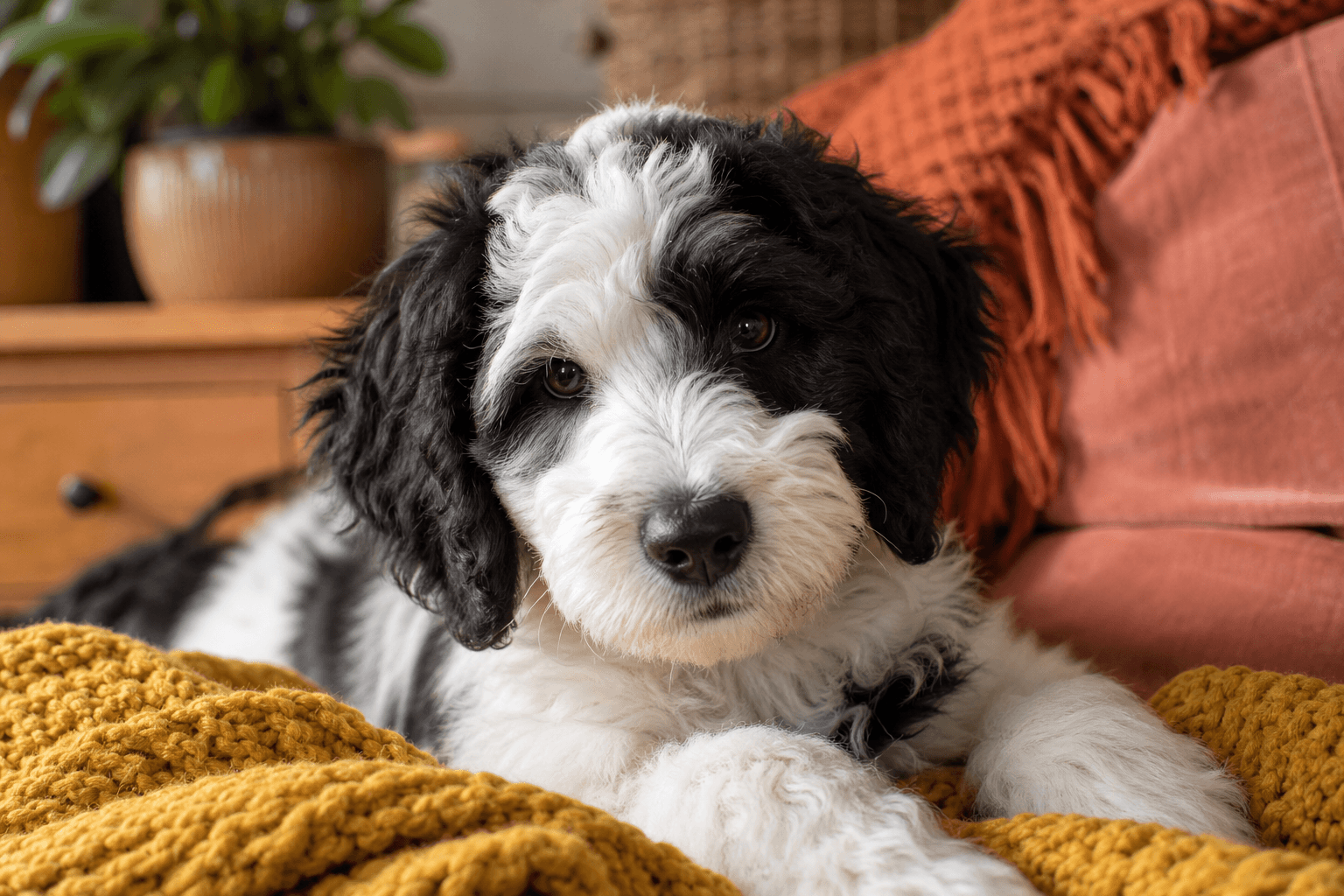
You did it — your fluffy Sheepadoodle is finally coming home.
These first 48 hours set the tone for calm nights, easy potty training, and a confident pup.
Here is the exact, no-fluff checklist we follow with our own doodles — so you can enjoy the snuggles and skip the guesswork.
1. Gather Essentials Before Pickup
Set up before you leave so your puppy walks into calm, not chaos.
You will want a crate with a divider, two bowls, a puppy-safe chew, 6-foot leash and flat collar, enzyme cleaner, baby gates, poop bags, and the same food the breeder used.
2. The First Hour Home
Carry your Sheepadoodle to the potty spot before entering the house. Quiet praise if they go, then straight inside to their pre-set area.
Keep voices soft and visitors away. Let them explore one small room on leash so curiosity does not tip into overwhelm.
Once they have sniffed and settled, it is time to make their den.
3. Safe Space And Crate Setup
Place the crate in a living area where you can hear them at night. Use a divider so they can lie down and turn around, but not potty in a corner.
Add a washable pad or towel and one safe chew. No plush beds until you know they do not shred.
Feed a few kibbles in the crate with the door open, then close for 1 to 3 minutes and release before fussing starts. Repeat a few times on day one.
4. Potty Plan From Minute One
Set a timer. New puppies usually need to go after waking, after eating, after play, and about every 60 to 90 minutes when awake.
Take them to the same outdoor spot on leash, say your cue once, wait quietly 5 minutes. If nothing, back inside for 10 minutes in the crate or tether, then try again.
When they go, mark with bright praise, treat, then a minute of sniffy freedom as a bonus.
5. Feeding Without Tummy Drama
Stick to the breeder diet for at least 3 to 4 days. Sudden switches cause diarrhea, which sets potty training back.
Offer 3 to 4 small meals spaced through the day. Use part of the ration for training so you do not overfeed a fast-growing, large-breed mix.
Water stays down all day, but pick it up 1.5 to 2 hours before bedtime to help the first nights.
6. Sleep Strategy For Night One And Two
Expect whimpers the first nights. Place the crate near your bed so you can reach a couple of fingers in to soothe without removing them.
Last potty at bedtime, then a calm walk to the crate. If they cry for more than a minute, try a single calm shush. If it escalates, a quiet potty break may be needed.
Night wake-ups are not playtime. Out, potty, back in. Lights low, voices soft.
7. Health And Vet Plan In 48 Hours
Confirm the first vet appointment within the first two days to review vaccines, deworming, and microchip details from the breeder.
Ask about large-breed growth needs, flea and tick prevention timing, and when it is safe to start puppy classes.
Watch for red flags: lethargy, vomiting, diarrhea, refusal to eat, coughing, or green nasal discharge. Call the vet if you see any of these.
8. Early Training And Socialization
Teach their name with a simple game: say the name once, mark the glance with a yes, treat. Ten tiny reps, a few times a day.
Start sit and come with food lures, never yanking the leash. Keep sessions under two minutes.
Socialization in the first 48 hours is gentle: new rooms, different floor textures, soft handling of paws and ears, car rides, and curated sounds at low volume. Pair every new thing with treats.
9. Grooming And Coat Care Starter
Sheepadoodles can have wavy to curly coats that mat fast behind ears, under collar, and in the armpits.
Do a five-minute touch session: brush the easy areas, lift each paw, peek in ears, and reward. You are building a future grooming pro, not a wrestling match.
Keep ears dry after water and wipe the beard after meals to prevent odor. Schedule the first introductory groomer visit once vaccines are on track.
10. Quick Supply Checklist
- Adjustable crate with divider and washable pads
- 6-foot leash, flat collar with ID tag, and a harness for car rides
- Breeder food for 1 to 2 weeks and small training treats
- Puppy-safe chews and a food puzzle or slow feeder
- Enzyme cleaner, baby gates, and a playpen
- Sturdy water and food bowls
- Skip retractable leashes for now
- Avoid plush beds if your pup shreds fabric
First 48-Hour Rules
- Short and sweet outingsPotty trips and five-minute sniff walks beat long neighborhood tours.
- Protect growing jointsLimit stairs and jumping from couches while growth plates are soft.
- Train the routine, not just the puppySame potty spot, same mealtime windows, same bedtime beats faster learning.