The Complete New Pomsky Puppy Checklist for Your First 48 Hours
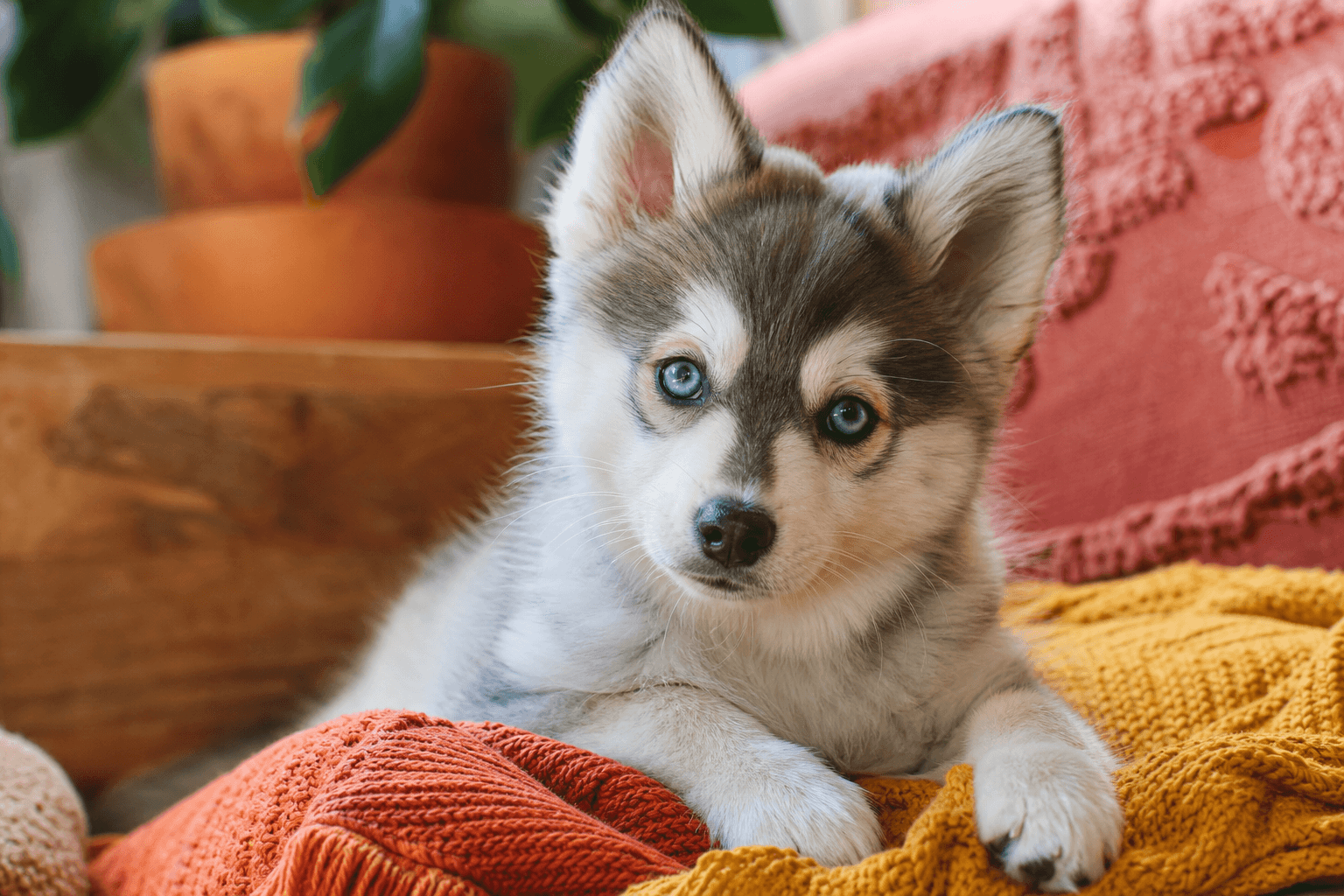
You just said yes to a Pomsky. Now the clock starts on a smooth first 48 hours.
Here is the exact checklist we use with new families, tuned to Pomsky energy, smarts, and escape-artist tendencies.
Skim it once, then work down the sections as you go. You have this.
Get These Supplies Before Pickup
Pomskies are small to medium and wiggly; plan for containment and comfort.
- 24 to 30 inch wire crate with divider, plus a washable bed that fits snugly.
- Exercise pen or baby gates to create a puppy zone.
- Flat collar and an adjustable harness, plus a 6-foot leash.
- Puppy food the breeder or shelter uses, measuring cup, and 2 stainless bowls.
- High-value soft treats and a chew that lasts but will not splinter.
- Enzyme cleaner, poop bags, puppy pee pads for emergencies only.
- Quiet toys for settling and one tug or fetch toy for play bursts.
- Soft brush, nail file, and unscented puppy wipes.
- Snuggle-safe heat source or a warm water bottle wrapped in a towel for the first night.
- Copies of health records, microchip details, and emergency vet contacts.
Set Up a Safe Space
Claim one small room or a corner with the crate, water, and a bed or mat.
Pomskies inherit Husky curiosity and Pomeranian boldness, so puppy-proof like an escape artist lives with you: hide cords, secure trash, latch doors, and block gaps behind appliances.
- Crate assembled with divider set so the puppy can stand up, turn, and lie down but not potty in a corner
- Exercise pen attached to crate to create a safe play zone
- Pee pads covering the entire pen floor
- Loose toys and chews rotated so only 2 to 3 are out at once
- Food bowl down all day
Pickup day: calm, contained, and predictable.
Pickup and the Ride Home
Keep this low key. Skip errands and visits.
On the ride, seat-belt a travel crate or have a second person hold the harnessed puppy snugly in a towel. Motion sickness is common; bring extra towels and avoid feeding within two hours of driving.
Carry the puppy straight to the potty spot when you arrive, then into the puppy zone for water and rest.
First Meal and Water Plan
Offer water first, then a half portion of the familiar food within an hour of arrival.
For the first 48 hours, feed 3 to 4 small meals spaced 4 hours apart. If appetite is low, hand-feed a few kibbles mixed with a spoon of warm water to release aroma.
Stool may be soft from stress. Stay with the current food for one week before any slow transition.
Potty Plan From Minute One
Take the puppy to the same outdoor spot every time. Quietly stand still; praise and treat the instant they finish.
Schedule for most Pomsky pups: out on wake, after every meal, after play, after a drink, and every 2 to 3 hours while awake. Nighttime: 1 to 2 breaks for very young or tiny pups.
First Night and Crate Routine
Place the crate in your bedroom so the puppy is not alone. A nearby human makes night training faster.
Last call: potty break, then a calm cuddle, then into the crate with a safe chew. If crying starts, wait for a brief pause before a quiet potty trip. Back to the crate, lights out.
In the daytime, feed some meals in the crate and drop treats in randomly so the crate predicts good things.
Calming Pomsky Energy
Pomskies are bright and vocal. In the first 48 hours, trade cardio for brain work.
Sniffari walks in the yard
Five to ten minutes on a loose leash, letting the nose lead.
Scatter feeding
Toss kibble in a small patch of grass to encourage foraging and slow eating.
Name game
Say the name once, treat when eyes meet yours. Ten reps, done.
Settle on a mat
Reward any sit or down on the bed. Build calm in short bursts.
Vet Visit and Records
Confirm shot dates at pickup and schedule a wellness exam within 48 to 72 hours. Many breeders require this for health guarantees.
Bring stool sample, records, microchip number, and your questions. Ask about deworming, flea prevention timing, and safe activity while vaccines complete.
Gentle Training and Bonding
In these two days, you are teaching one big lesson: you are safe and predictable.
- Reward any check-in, sit, or quiet moment. Ignore demand barking; pay calm.
- Start a simple routine: potty, play, train for one minute, nap. Repeat.
- Handle paws, ears, and tail with treats so grooming is easy later.
- Invite, do not chase. If you need to interrupt, trade for a treat or toy.
Grooming and Coat Care in 48 Hours
Most Pomskies have a plush double coat that sheds. Skip baths this week unless there is a mess.
Instead, do a one-minute brush-and-treat session once a day to create positive associations. Wipe paws after potty so they learn handling is normal.