The Complete New Morkie Puppy Checklist for Your First 48 Hours
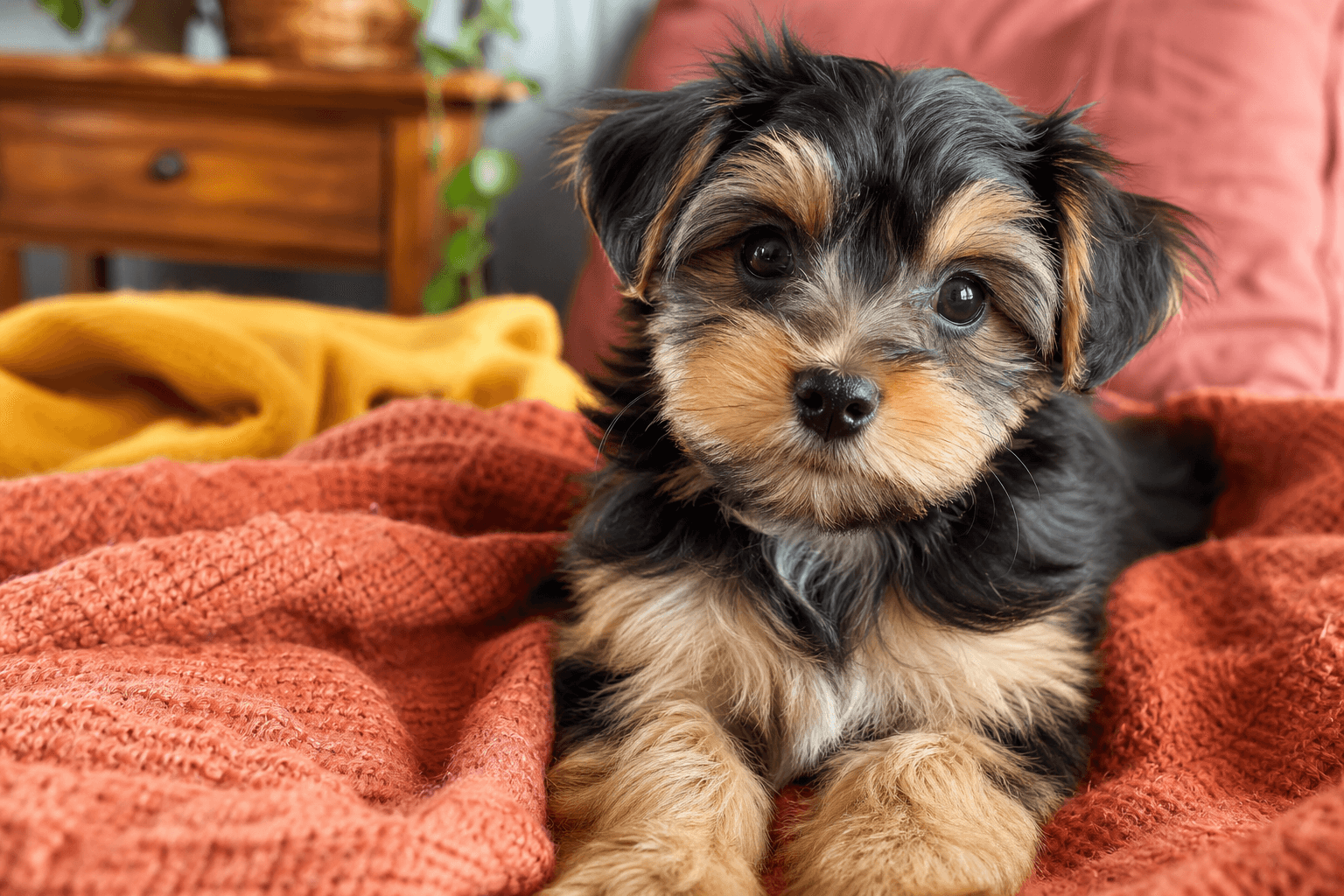
You brought home a tiny heart with fur — congrats.
The first 48 hours set the tone for calm nights, quick potty wins, and a confident Morkie.
Use this simple checklist to get the essentials right and avoid the toy-breed pitfalls.
Create a Safe Puppy Space
Before your Morkie explores, define one small, puppy-proof zone where nothing bad can happen.
Pick an easy-clean area you live in daily, like the kitchen. Use an exercise pen with a non-slip mat.
Inside: a crate, a bed that fits inside the crate, a water bowl, a potty area if you are using pads, and two safe chew toys.
Gather the Core Supplies
Crate and Pen
Wire or plastic crate just big enough to stand, turn, and lie down; a secure pen for play.
Bedding and Pads
Washable bed or fleece; pee pads if indoor training, plus enzyme cleaner for accidents.
Bowls and Food
Shallow, tip-resistant bowls; the same food the breeder or shelter used for at least 3-5 days.
Collar and Harness
Lightweight buckle collar and a soft, front-clip harness; 4-6 ft leash.
ID and Records
Temporary tag with your phone; microchip number and paperwork in one folder.
Chews and Toys
Soft chew sticks made for puppies, a snuffle mat, a small squeaky for engagement.
Feed for Tiny Tummies
Morkies are small but active, and their fuel tank is tiny. Aim for three to four mini meals across the day and a bedtime snack for the first week.
Stick with the current diet for 3-5 days, then transition gradually if you plan to change. Sudden switches mean tummy upsets and messy nights.
Each meal should be portioned so your pup finishes within 10 minutes. Leave fresh water down, but pick up the bowl two hours before bedtime to help night potty success.
Food in, potty plan out
Start the Potty Plan Immediately
First stop from the car: your designated potty spot. Wait quietly, mark the moment with a gentle yes or a click, and treat within two seconds.
For outdoor training, carry your Morkie to the grass every hour while awake, plus after naps, meals, play, and right before bed.
If using pads, tape one spot inside the pen and do not scatter pads around; your puppy learns fastest with one clear target.
Your 5 potty rules
- Beat the clockSet a timer for 60 minutes while awake; shorten after big drinks or play.
- Quiet potty zoneNo play until business is done. Then throw a mini party.
- Accidents happenInterrupt gently, scoop to the spot, clean with enzyme, and move on.
- Night planExpect 1-2 overnight wake-ups. Out, pee, back to bed. No play.
- Consistency winsSame door, same spot, same word builds a fast habit.
Night One Sleep Plan
Put the crate next to your bed so your Morkie can smell and hear you. That closeness cuts crying and keeps you ahead of potty needs.
Last hour before lights out: calm play, short potty walk, then a chew in the crate so your pup self-settles.
If your puppy fusses, offer a finger to sniff, whisper, and wait 30 seconds. If it escalates, quick escort to potty and right back into the crate.
Crate and Confinement Setup
Use the crate for naps and nights; use the pen for awake time you cannot supervise. This prevents rehearsal of house-wide chaos.
Make the crate a snack bar: toss a few pieces of kibble in randomly through day one and two. Closed-door minutes should start short and grow: one minute, three minutes, five minutes.
A right-sized crate feels like a den. For toy breeds, it is also a safety tool that prevents falls, cord chewing, and overexertion.
A pen lets you supervise and reward the right choices. Add a clear potty spot or take frequent outdoor trips and habits form faster.
Health Checks and First Vet Steps
Within the first 48 hours, schedule a wellness exam to confirm weight, hydration, parasite control, and vaccine timing.
Ask your vet about toy-breed hypoglycemia signs: wobbliness, glassy eyes, sudden sleepiness that is hard to wake, or tremors. Keep honey or gel only for emergencies and call the vet if used.
Record the breeder or shelter deworming and vaccine dates, and place your microchip registration under your name immediately.
Day-One Training That Matters
You do not need fancy tricks; you need name response, come here, and a soft mouth.
Five times on day one, say your pup’s name once, and when they glance your way, mark and treat. Back up two steps, say come, and reward at your shoes. Swap for a toy or treat when teeth touch skin so mouthing never pays.
- Name means look at you
- Come to your feet, not your hands
- No rough wrestling with hands
- Jumping up gets attention
Safe Early Socialization
In the first 48 hours, keep it low-key. One or two friendly visitors, no pass-the-puppy party.
Play neutral background sounds softly and pair with food. Carry your Morkie for a 5-minute sniff of the neighborhood after vaccines are current for your area, or keep to clean, low-dog-traffic surfaces until your vet advises broader exposure.
Pros
Good first exposures
- Different floors, gentle handling, soft music, car engine idle with treats
- Umbrella opening at a distance, mail slot noises, smooth elevator ride
Cons
Not yet
- Dog parks or pet store floors
- Crowded gatherings and toddlers hugging
- Long walks that tire tiny joints
Lock In a Simple 48-Hour Routine
Puppies thrive on rhythm. Keep a calm, predictable loop and you will see faster confidence and fewer accidents.
7:00
Wake and potty
Carry to spot, mark and treat.
7:10
Breakfast
Short meal, water down.
7:30
Play and train
5 minutes name and come, gentle tug.
7:50
Potty and nap
Crate nap 60-90 minutes.
Cycle
Repeat
Wake, potty, eat, play, potty, nap. Bedtime snack and last potty at 10:00-10:30.
Follow your current food’s toy-breed puppy guide by weight, split into 3-4 meals. For very small pups under 3 lb, ask your vet about an extra bedtime snack to prevent low blood sugar.
Most first-night fuss is protest, not panic. Keep the crate bedside, offer a chew, and do short, frequent crate sessions by day. Take out only for potty, not parties.
Short carry-and-sniff outings are fine where surfaces are clean. Ground time with other dogs or high-traffic areas should wait until your vet clears based on vaccine progress.
Choose an XXS or XS soft harness with adjustable straps. You should slip one to two fingers under the neck and girth without gaping.