The Complete New Mini Goldendoodle Puppy Checklist for Your First 48 Hours
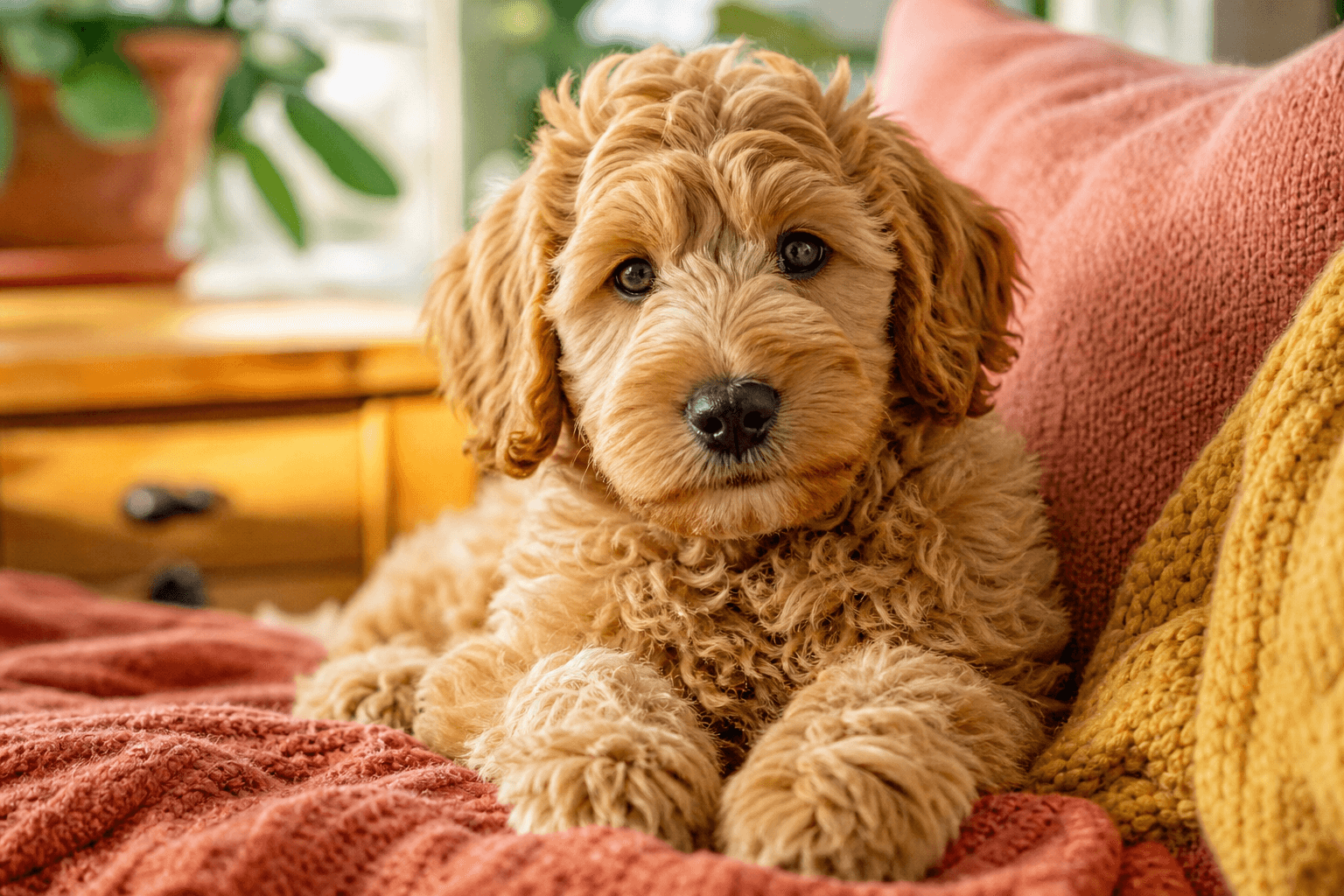
You did it — your mini Goldendoodle puppy is finally coming home.
These first 48 hours shape everything: sleep, potty, bonding, and confidence.
Here’s the exact, no-filler checklist we follow so you feel ready the minute those paws step through the door.
1. Set Up a Safe Landing Zone
Before pickup, create a quiet puppy basecamp: a wire crate with a divider, a playpen around it, and an easy-clean floor surface.
Place it away from drafts and loud traffic but close enough that your puppy hears you living life.
2. Essentials to Buy Before Pickup
Having the right gear makes the first hours smooth instead of scramble.
Correct-size crate
Wire, with divider; cover three sides for den-like comfort.
Pen and gates
Limit freedom to prevent accidents and chewing.
Collar and harness
Flat collar and soft front-clip harness sized for toy to small breed.
Leash
Light 4–6 ft leash; skip retractables for now.
Food
What the breeder or shelter fed; transition later over 7–10 days.
Bowls and water
Shallow, non-tip bowls; fresh water available except just before bed.
Bedding and chews
Washable mat and vet-approved puppy chews.
Cleanup kit
Enzymatic cleaner, poop bags, paper towels, baby wipes.
3. The First Car Ride Home
Buckle a travel-safe crate or have a second person hold the puppy in a harness and wrap with a light towel for security.
Keep the ride calm: no errands, no visitors, no detours. Go straight home.
4. Potty Plan from Minute One
Head to the designated potty spot the second you arrive and every 30–60 minutes after, plus after naps, play, and meals.
Stand still, quiet. The instant they go, mark with a cheerful yes and reward with a small treat on the spot.
5. Food and Water: What, When, How
Feed the same brand and amount your puppy ate yesterday to protect that sensitive mini Goldendoodle tummy.
Offer 3–4 small meals spaced through the day; tiny pups do better with more frequent meals to avoid dips in energy.
Fresh water is available during the day; pick it up about two hours before bedtime to help the first night.
Now that your basics are humming, lock in sleep and sanity.
6. Sleep Setup and First Night Strategy
Place the crate near your bed the first few nights. Your breathing is a natural sound machine.
Use a warm, soft blanket and a safe heartbeat toy if you have one. Cover three sides of the crate to reduce stimulation.
Expect 1–2 potty breaks overnight. Quietly carry out, leash on, potty, reward, back to bed — no play party.
7. Gentle Introduction to Home and People
Give a house tour on leash, room by room, then back to the basecamp for a nap. Short bursts beat marathons.
Introduce family one at a time, sitting on the floor, letting the puppy approach first. Keep kids calm and seated.
8. Early Training: Name, Crate, Calm
Pair the name with good stuff. Say the name once, puppy glances at you, mark yes, treat. Ten reps, done.
Crate games are simple: toss a treat inside, pup enters, treat again, door open. Build to short closed-door sessions while you sit nearby.
Reward four feet on the floor and quiet moments. You are already training what adult life will feel like.
9. Health Basics in 48 Hours
Schedule a vet visit within 48–72 hours to establish care, review vaccines and deworming, and register your microchip if present.
Normal first-day stress signs include softer stools and extra naps. Provide rest, routine, and gentle reassurance.
Mini Goldendoodles often have floppy ears; start a habit of quick post-outing ear checks to keep moisture and debris from building.
10. Grooming Starter Steps
Brush for two minutes once or twice a day with a soft slicker while feeding a few treats. Your goal is positive association, not perfection.
Touch paws and open the mouth briefly, treat, release. These micro-reps make future nail trims and teeth brushing easy.
11. Red Flags to Watch
Call your vet if you see repeated vomiting, diarrhea with blood, refusal to eat two meals in a row, bloated abdomen, labored breathing, or lethargy that sleep does not fix.
Trust your gut. Early help is always better.
12. Sample 48-Hour Schedule
Morning: Out to potty, breakfast, five minutes of training, quiet play, nap.
Midday: Potty, short walk or yard exploration, lunch, crate nap.
Afternoon: Potty, gentle play and handling, independent chew in the pen, nap.
Evening: Potty, dinner, cuddle and brush, wind-down, last water one to two hours before bed.
Night: Final potty, into crate near your bed, brief overnight potty as needed.
13. Quick Do’s and Don’ts
- Do keep the first two days calm and predictable.
- Do reward potty in the correct spot every single time.
- Do carry vaccination records and schedule your first vet appointment.
- Don’t change food abruptly or add rich toppers.
- Don’t flood your puppy with visitors or dog park trips.
- Don’t punish accidents; guide and supervise instead.
A rough guide is hours equal to months of age, but most young puppies still need one to two potty trips overnight the first week. Set an alarm before they wake and whine.
During the day, yes — keep meals on schedule. Overnight, healthy puppies can sleep between last and first meals as long as they are eating well during the day.
Leashed sniff-walks on your own clean sidewalk are fine with care, but avoid high-dog-traffic areas until your vet approves based on vaccine progress.
Choose a small-to-medium wire crate with a divider so you can resize as your puppy grows, keeping the sleeping area cozy to support potty training.
It is new and a little scary. Start with daytime crate snacks, cover three sides, add a safe chew, and return the moment they are quiet to reinforce calm.