The Complete New Bernedoodle Puppy Checklist for Your First 48 Hours
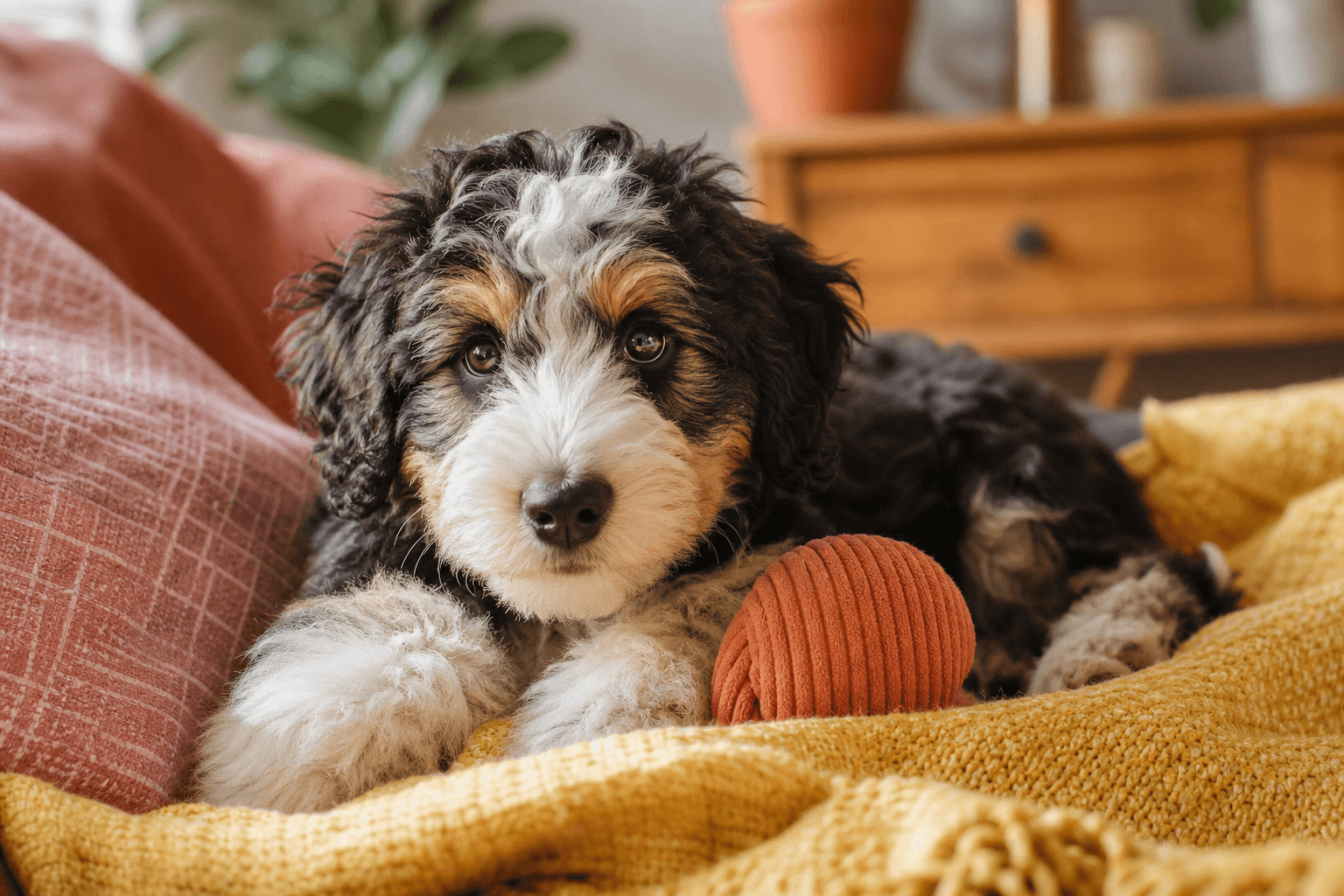
You brought home a Bernedoodle, and the clock just started on the most important two days.
We have raised these curly teddy-bears ourselves — here is exactly what to do (and what to skip) in the first 48 hours.
Follow this checklist and you will trade chaos for calm, fast bonding, and confident routines.
Prep Your Home Before Pickup
Choose a small, puppy-safe area as the landing zone: kitchen corner, mudroom, or a penned-off space near where you hang out.
Remove cords at floor level, secure trash, and block stairs. Have the crate set up and the potty spot clear before the leash ever clicks.
Grab the Right Supplies
Crate with Divider
Right now, just big enough to stand, turn, and lie down. Use a divider and size up later.
Two Bowls
Stainless or ceramic. One for water, one for meals. Fresh water always available except right before bedtime.
Collar, ID, and Flat Leash
ID tag day one. Skip retractables; a 4 to 6 foot flat leash is safer for training.
Enzymatic Cleaner
Accidents happen. Enzyme cleaner removes scent so the spot does not become the bathroom.
Chews and a Puppy Kong
Soft, size-appropriate chew plus a stuffable toy for crate calm.
Slicker Brush and Comb
Start handling that coat now to prevent future mat battles.
Travel Home Without Tears
Line the crate or a snug travel carrier with a towel and a light blanket that smells like the breeder if possible.
Seatbelt the crate for stability. Stop once for a potty break on grass far from pet traffic, not at a busy dog area.
First Potty Plan
On arrival, go straight to the outdoor potty spot on leash. Stand quietly and let them sniff. Praise and treat immediately after success.
For the first 48 hours, take them out on a rhythm: after waking, after play, after eating, and every 60 to 90 minutes while awake.
At night, set one or two alarms based on age. A young Bernedoodle likely needs a quick, boring potty trip around 2 a.m.
Feeding and Water
Keep them on the breeder food for at least 5 to 7 days to avoid tummy upset. If you will switch later, do it gradually.
Standard Bernedoodles do best on a large-breed puppy formula to support slow, steady growth and protect joints. Minis can use an appropriate small to medium puppy food.
Offer two to three small meals spaced through the day. Water is available except for the last hour before bedtime to help the night go smoother.
Crate and First Night Sleep
Place the crate by your bed the first night so you can hear stirring and reassure with your voice.
Make it cozy but not hot: a single blanket and a safe chew. If whining continues after a quick potty check, stay calm and give them a minute to settle.
Morning comes fast — set tomorrow up tonight
Vet, Records, and Parasite Plan
Before pickup, book a new puppy exam within the first 48 to 72 hours. Bring vaccination records, microchip number, and any deworming info.
Ask about a fecal test, flea and tick prevention, and heartworm prevention. Confirm the vaccine schedule based on their current status.
Gentle Socialization
Socialization is not a meet-everyone sprint; it is controlled, positive exposure.
In the first two days, let them observe household sounds, different floors, a closed umbrella, and a calm neighbor at a distance. Pair with tiny treats and retreat if they hesitate.
Early Training Basics
Teach their name, a simple sit, and reinforce following you. Keep sessions to 1 to 3 minutes and end on a win.
Clip the leash on indoors and let them drag it while supervised so it stops feeling weird before your first neighborhood walk.
House rules that help day one
- One room at a timeFreedom expands as accidents shrink and manners grow.
- Chew tradeOffer a treat to trade for household items so they learn giving things up is good.
- Short play burstsBernedoodle pups fade fast. Stop before overstimulation turns to nipping.
Grooming Starter
Handle paws, ears, tail, and mouth for seconds at a time while feeding a few kibbles. That desensitization now saves future groomer drama.
Do a 60 second brush with a slicker every day. Focus on armpits, behind ears, and the collar line where mats start first.
Dry ears gently after any bath or rain to reduce ear infections, which doodles can be prone to due to hair and moisture in the canal.
Bernedoodle-Specific Tips
- These pups are people-oriented and can be sensitive. Keep corrections soft and reward often.
- Protect growing joints. Avoid stairs sprints and long runs; think frequent short strolls and sniffy breaks.
- They run warm in heavy coats. Provide a cool rest spot and skip over-heated rooms.
Red Flags to Watch
Call your vet if you see repeated vomiting or diarrhea, refusal to eat two meals in a row, lethargy that sleep does not fix, a bloated hard belly, persistent coughing, or green eye discharge.
- Crate sized with divider and in a quiet, close-by spot
- Large-breed puppy food for standards; gradual transitions only
- Avoid dog parks and store floors until vaccines are complete
- Unsupervised free-roam on day one
- Retractable leash for first walks
- Over-exercise or stair marathons
Expect a trip every 60 to 90 minutes when awake, plus after sleep, play, and meals. Overnight, plan one quick outing depending on age and last water.
Leash skills start indoors day one. Short, quiet outdoor sniff-walks near home are fine after a few days. Skip busy sidewalks until vaccines progress and confidence grows.
Buy the adult-size wire crate for their expected size and use a divider so the sleeping area fits their current body. This prevents potty accidents and saves money.
Many shed lightly, some almost not at all, but all can mat. Plan on daily quick brushing and professional grooming every 6 to 10 weeks once vaccines allow.
Use part of their kibble or pea-sized soft puppy treats. Keep sessions tiny to protect their stomach and attention span.