Siberian Husky vs Northern Inuit: Which One Actually Fits Your Home Better?
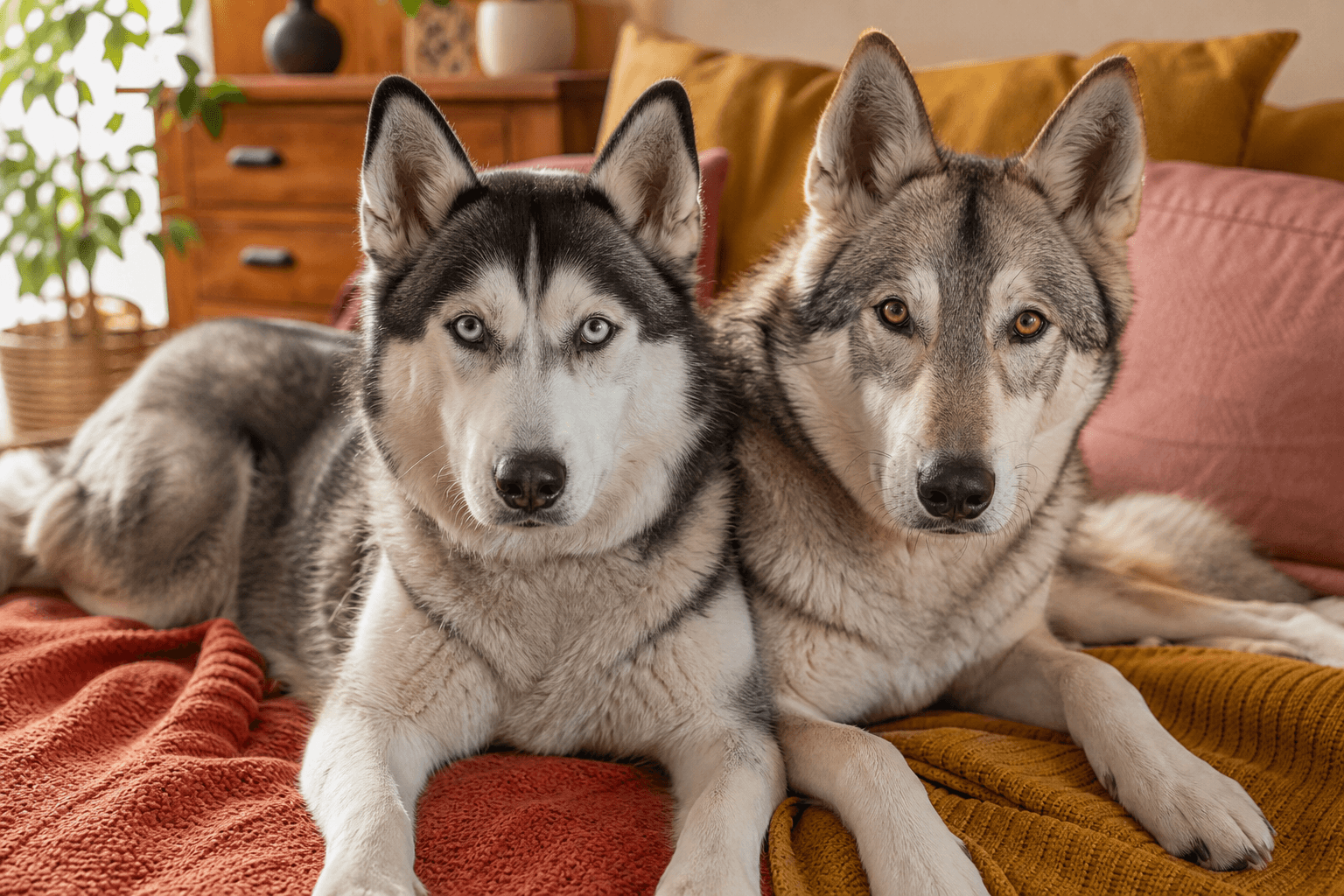
You love that wolfy look — now you are torn between a Siberian Husky and a Northern Inuit.
We have lived the high-energy, double-coat life and can help you cut through the hype, fast.
Here is the practical, decision-ready guide to which one truly fits your home and habits.
At a Glance
Energy
Husky: very high, go-go-go. Northern Inuit: high, often a notch calmer.
Trainability
Husky: independent, stubborn-smart. Northern Inuit: biddable but sensitive.
Size
Husky: medium, 35-60 lb. Northern Inuit: larger, 55-110 lb range.
Shedding
Both heavy seasonal blowouts; frequent brushing required.
Climate
Both thrive in cool; heat management is essential.
Availability
Husky: common globally. Northern Inuit: mainly UK, limited elsewhere.
Temperament
Huskies are comedians with rocket fuel. They are people-friendly, vocal, and famously independent. Think enthusiastic teammate, not a natural rule follower.
Northern Inuits were developed in the UK to look wolfy but live companionably. Well-bred lines tend toward steady, social, and slightly more handler-focused than Huskies, though still not a guard breed.
If you crave a calmer, more even-keel vibe in the house, the Northern Inuit often wins. If you want nonstop antics and banter, the Husky is your show.
Exercise & Mental Needs
Huskies need vigorous daily outlets: 60-90 minutes minimum plus mental work. Without it, you get digging, howling, and jailbreaks.
Northern Inuits still need real work, but many are satisfied with a solid 60-90 minutes split between cardio and brain games. They are less purely sled-drivey than Huskies, but under-exercise still backfires.
Size & Presence
Husky: athletic medium build, easier to lift, fit in smaller cars, and board with sitters.
Northern Inuit: larger frame and longer legs. Gorgeous, but doorways, sofas, and crates all need upsizing. Travel logistics also change.
Coat, Shedding & Climate
Both have dense double coats that blow seasonally. Expect tumbleweeds and regular brushing, with extra sessions during coat blows.
Heat is the real constraint. In warm climates you will need early or late exercise windows, cooling mats, shade, and strict watchfulness.
Training Style
Husky training is about outsmarting a clever, independent athlete. Short, upbeat sessions, limited repetition, and ironclad management are key.
Northern Inuits tend to engage a bit more willingly but can be soft to pressure. They thrive on calm, consistent, reward-based work and clear routines.
Kids, Cats & Other Dogs
Both breeds are typically affectionate with respectful children. Supervision and boundaries matter because excitement can topple toddlers.
Prey drive is real in both. Huskies often have a stronger chase impulse; many do not live safely with free-roaming cats or small pets. Northern Inuits vary by line; slow, protected introductions are essential.
Health & Lifespan
Husky lifespan averages 12-14 years. Known concerns: hip dysplasia, eye issues such as cataracts and glaucoma, and hypothyroidism. Reputable breeders screen hips and eyes.
Northern Inuits also average around 12-14 years. Established clubs encourage testing for hips, elbows, and eyes; some lines monitor for epilepsy and cryptorchidism. Ask to see certificates.
Home & Space Fit
Apartment living is possible for a Husky only with high discipline: multiple daily outings, structured enrichment, and secure, escape-proof management.
Northern Inuits are bigger, so tight apartments feel smaller. With consistent exercise and calm routines, many settle nicely indoors, but you will feel the footprint.
Availability & Cost
Huskies are widely available through breeders and rescues. Prices vary by region; rescues are common because people underestimate the energy and escape artistry.
Northern Inuits are far rarer outside the UK. Expect waitlists, import logistics, and higher upfront costs. Verify club affiliation and health tests.
Red Flags & Gotchas
Both breeds can trigger landlord or insurance scrutiny due to wolfy looks. Clarify breed on paperwork, and carry proof from a recognized club when relevant.
Escaping is a Husky specialty. Six-foot fencing with dig guards and double-gate entry saves heartbreak.
Northern Inuits can develop separation distress if under-stimulated or left without structure. Plan for crate training and gradual alone-time conditioning.
What They Are Great At
Husky: canicross, bikejoring, skijoring, hiking, backpacking, and any sport that lets them move and think.
Northern Inuit: long hikes, tracking games, canicross, obedience foundations, therapy prospects for steady individuals, and structured social adventures.
Quick Decision Guide
- You want a social clown with relentless go and you enjoy creative training puzzles
- You can secure your yard like a fortress and accept hair everywhere
- You need a lower-shed, low-exercise companion
- You prefer a slightly calmer, larger, companion-focused northern breed feel
- You live in heat without the ability to adjust routines
- You have cats or small pets and no plan for strict management
Our plain-language match verdict
Choose a Siberian Husky if you want maximum sparkle, smaller size, and you are excited to engineer daily outlets and outwit an escape artist.
Choose a Northern Inuit if you love the look, prefer a steadier in-home presence, can meet big-dog logistics, and have access to reputable, health-tested lines.