Is Your Shih Poo Stressed? 9 Warning Signs Most Owners Miss
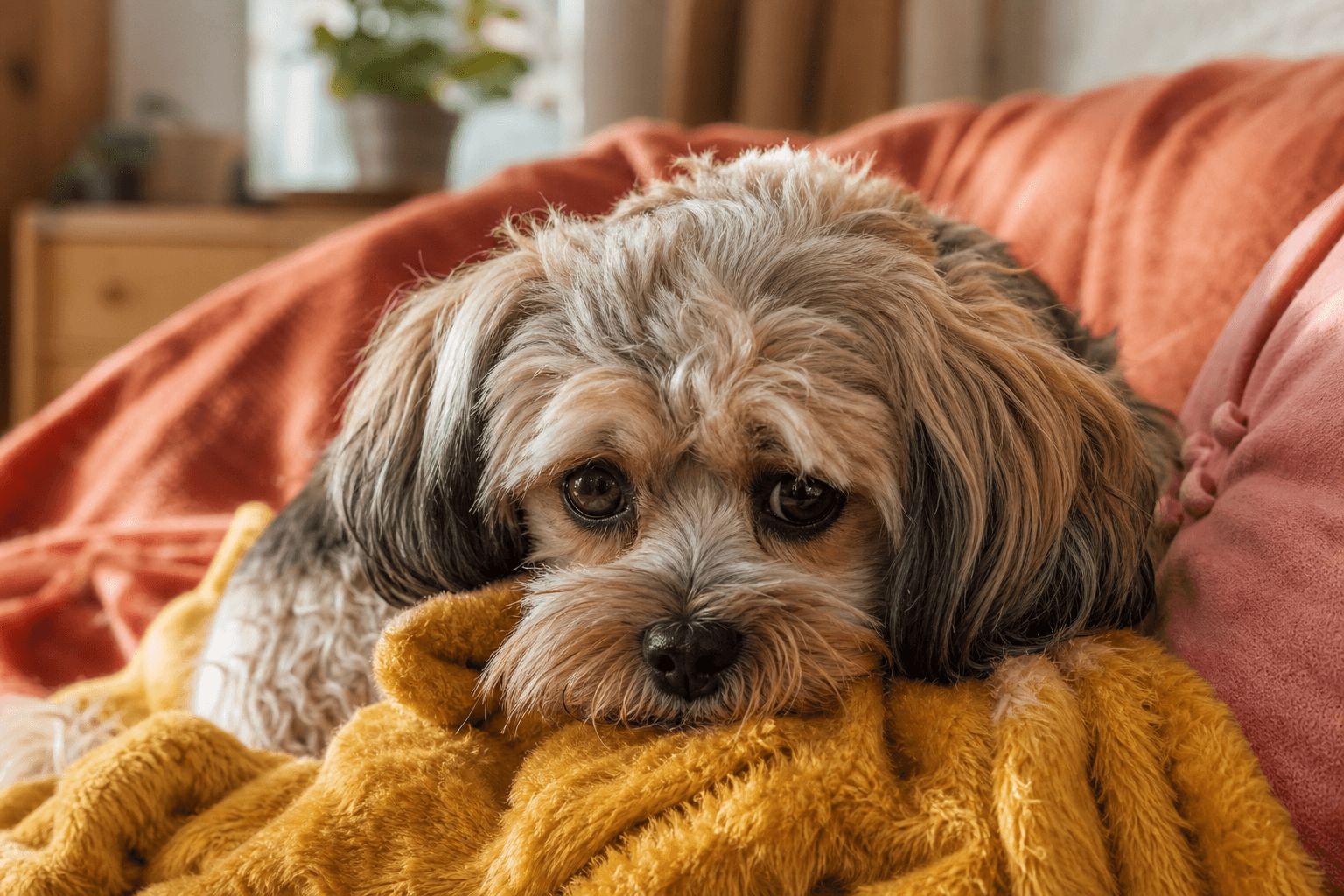
You know your Shih Poo is smart, cuddly, and a little extra sensitive.
That combo means stress can sneak up in ways that look like quirks, not red flags.
Here are the subtle signals we watch for in our own homes, and simple steps you can take today.
1. Restlessness and Pacing
Circling the coffee table, hopping on and off the couch, or pacing the hallway is your Shih Poo trying to discharge nervous energy.
Because this mix is bright and people-oriented, mental boredom amplifies anxiety.
2. Excessive Vocalizing
Whining at the door you just walked through, barking at hallway sounds, or sudden yips at dusk can be stress talking.
Rule out true alarms, then teach a quiet routine: meet needs first, reward calm, and avoid scolding, which can raise arousal.
3. Tucked Tail and Pinned Ears
Even with a fluffy plume tail, you can spot a tuck by how it hugs the thighs.
Ears pulled back, whale eye, and a low, curved body say, I am not okay.
Step back from the trigger, give space, and let your dog choose to re-approach.
4. Panting, Yawning, and Nose Licks
If it is not hot and your Shih Poo is panting after a mild noise, or string-yawning during grooming, that is stress physiology, not fitness.
Frequent little nose licks or lip flicks around strangers or during vet handling are subtle but meaningful.
5. Avoidance or Velcro Mode
Some Shih Poos hide under tables when guests arrive; others glue themselves to your ankles and cannot settle.
Both are stress strategies: retreat or seek safety.
Set up a quiet station with a bed, water, and a stuffed chew in a low-traffic room so your dog has a supported choice.
6. Appetite and Tummy Changes
Skipping breakfast the morning after fireworks, scarfing food before you leave, soft stools, or gas can all follow stress spikes.
This mix may have sensitive tummies; keep meals predictable and consider a bland topper during known stress windows if your vet approves.
7. Destructive Chewing or Overgrooming
Chewing chair rungs, ripping mail, or licking a wrist until the fur thins are classic displacement behaviors.
Offer legal outlets: braided fleece tugs, frozen lick mats, and rotate safe chews so novelty soaks up stress.
8. Sleep Shifts
Stressed dogs sleep less at night and doze more in the day, or they refuse to settle in their usual spot.
We restore rhythm with an earlier wind-down, a darkened room, and a short pre-bed sniff walk to lower arousal.
9. Accidents and Marking
Regression happens, especially after schedule shake-ups or moves.
Stress can tighten bladders in weird ways: quick, tiny pees near doors or new rugs are common.
Go back to basics for two weeks: timed outdoor breaks, praise for outside pees, enzyme-clean all indoor spots, and reduce freedom when you are not supervising.
- Give your Shih Poo a calm, predictable daily rhythm (meals, walks, rest).
- Layer mental work into exercise: sniff walks, training games, food puzzles.
- Create a quiet safe-place and teach a go-to-mat cue.
- Punish vocalizing or accidents.
- Force greetings with people or dogs when you see tucked tails or pinned ears.
- Skip a vet check when behavior changes are sudden or severe.
How We Turn Signs Into Solutions
We map triggers for a week, then change one variable at a time: distance from triggers, duration of outings, or difficulty of training.
For separation-related stress, we start with micro-absences, pair departures with a long-lasting chew, and use a webcam to confirm progress.
For grooming stress, we slow everything down: brush one body area, treat, break; poodle coats mat fast, and pain masquerades as misbehavior.