Is Your Bernedoodle Stressed? 9 Warning Signs Most Owners Miss
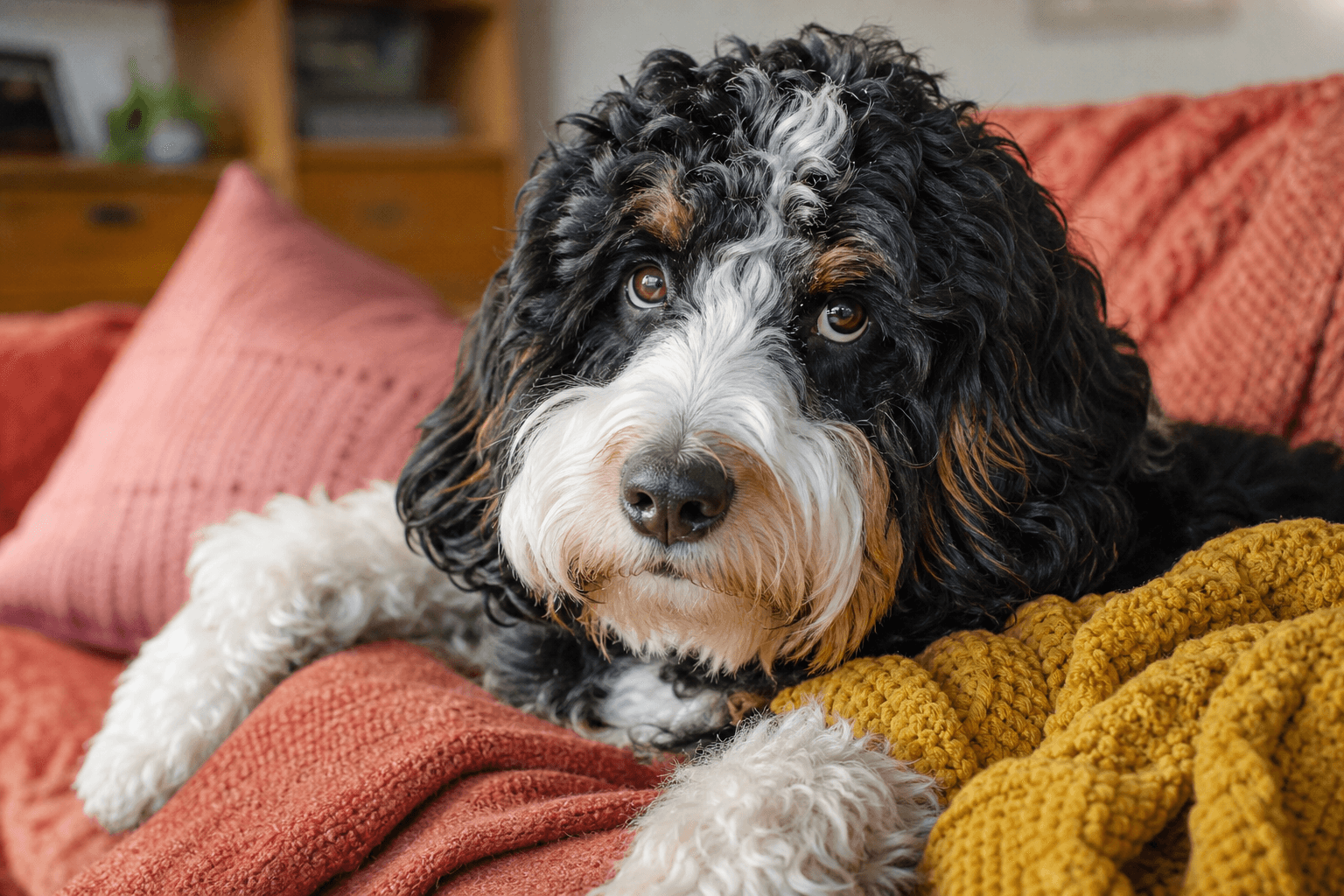
You know your Bernedoodle is sweet, smart, and sensitive — that sensitivity cuts both ways.
If you have a hunch something is off, you are probably right.
Here are the quiet stress signals most owners overlook and the quick fixes that actually help in the moment.
1. Tight Face and Whale Eye
Watch the corners of the mouth and the eyes first. A stressed Bernedoodle pulls the lips tight, shows the whites of the eyes, or squints with darting eye movement.
Because their brows are expressive, you will often see a furrowed forehead and a long, closed mouth before anything else.
2. Panting or Drooling When It Is Not Hot
Heavy panting indoors at rest, with no exercise or heat, is a classic stress tell. Some Bernedoodles also string saliva or lick at the air.
Rule out heat with a quick ear or belly check. If the room is cool and your dog is still huffing, create space and lower the excitement level.
3. Yawning and Lip Licking Out of Context
Stress yawns are shorter and more frequent than sleepy yawns, and they pop up during nail trims, vet visits, or when kids get bouncy.
Rapid tongue flicks or nose licks are canine appeasement signals that say, I am trying to keep this polite.
4. Ears and Tail Switch to "Low" Mode
Bernedoodle ears slide back and down when unsure, and the tail lowers, slows, or tucks. A slow, low wag is not happiness — it is conflicted.
Paired with a turned-away head or a lifted front paw, this means your dog needs distance now.
5. Pacing, Restlessness, and Can’t Settle
Walking tight loops, visiting doors repeatedly, or popping up every minute on the couch are restlessness patterns we see in sensitive doodles.
It often follows overstimulation: guests arriving, clippers buzzing, or a long chaotic day.
6. Clinginess or Sudden Hiding
Bernedoodles bond hard with their people, so stress can show up as shadowing you from room to room or, the flip side, slipping under a table to be alone.
Neither is naughty. Both are coping strategies. Respect the choice and make the environment feel safer.
7. Sudden Shedding or Dandruff Flurries
In a high-stress moment you might see a light “snow” of dander when you stroke the back, even on low-shed coats. That is adrenaline at work.
It often appears during car rides, grooming, or in busy lobbies. Step out, breathe together, and try again slowly.
8. Appetite Dips and Tummy Troubles
Turning down dinner after a noisy day or having a soft stool post-fireworks is common for sensitive dogs.
If appetite drops for more than a day, or diarrhea lasts beyond 24 hours, call your vet to rule out medical causes.
9. Barking, Growling, or Air-Snapping
These are late-stage stress signals, not defiance. Your dog has used quieter cues already and was ignored or trapped.
Increase distance, stop the trigger, and let them decompress. Later, train with controlled set-ups and generous rewards.
What to do in the moment
Make Space Fast
Add distance from the trigger. Step off the sidewalk, move to another room, or give a covered crate break.
Lower the Arousal
Speak softly, dim lights, and keep hands slow. Avoid crowding hugs — offer a side-on body and invite, do not insist.
Let Them Sniff
Scatter a small handful of treats on the ground. Nose work flips the nervous system toward calm.
Switch Activities
Trade chaos for a simple cue, then reward. Two or three easy sits with treats can reset the brain.
Why Bernedoodles Feel It Big
This mix blends Bernese steadiness with poodle sensitivity and smarts. That gives you a dog who reads the room and also soaks it up.
They do best with predictable routines, kind training, and regular outlets for their busy brains and bodies.
Build a Calmer Baseline This Week
- Exercise: two balanced outings daily that mix sniffing with moderate movement, not just fetch.
- Decompression: one quiet, no-ask walk on a long line where they set the pace.
- Predictability: short, simple rituals before meals and outings so life feels knowable.
- Grooming practice: daily two-minute brush-and-treat sessions to desensitize before full grooms.