Is Your Aussiedoodle Stressed? 13 Warning Signs Most Owners Miss
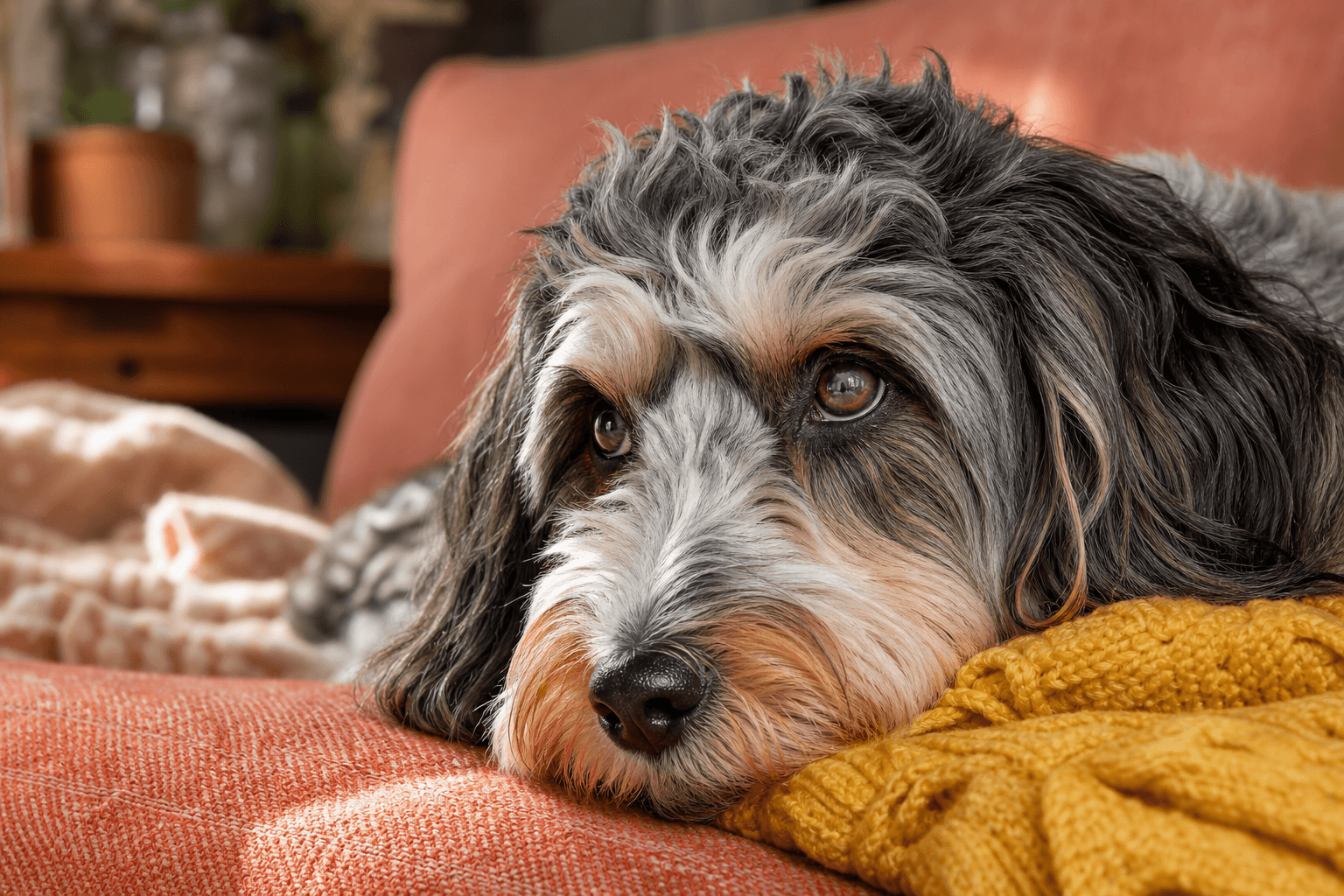
You know your Aussiedoodle is smart and sensitive — that is exactly why stress can sneak up on them.
If something feels off, it probably is. Catching the early signs keeps little worries from becoming big behavior problems.
Here are the subtle signals we watch for in our own doodles, and what to do in the moment.
1. Whale Eye or Hard Stare
When your doodle shows the whites of their eyes while keeping the head still, that is a classic stress signal.
Aussiedoodles tend to lock on to movement thanks to their herding genes; a fixed, unblinking look usually means they are uncomfortable and deciding what to do next.
2. Excessive Lip Licking or Yawning
Quick, repeated lip licks and frequent yawns outside of nap time are appeasement gestures.
We see this during crowded greetings or when a camera or phone hovers too close.
3. Pacing and Restlessness
High-drive dogs like Aussiedoodles pace when their brain has nowhere to put energy.
If they cannot settle after a normal walk, the missing piece is often mental work — scent games or puzzle feeding beat more miles.
4. Sudden Shedding or Dandruff Bursts
Even low-shedding doodles can release a flurry of hair or dandruff when cortisol spikes.
It is common after vet visits or loud arguments in the house. A soft brush-out and a quiet room help them rebalance.
5. Tucked Tail with Stiff Body
A tucked tail paired with rigid legs is fear, not stubbornness.
For Aussiedoodles, stiffness often precedes reactive barking on walks. Increase distance and let them watch from safety instead of forcing a greeting.
6. Startle Response to Small Noises
Flinching at dropped keys or hallway sounds can mean their stress bucket is already full.
Shorten the day, lower the arousal, and trade fetch for quiet sniffing in the yard.
7. Shadowing You Room to Room
Following you is normal; doing it endlessly with panting or whining signals separation stress.
Teach tiny independence reps: scatter feed in one room, step out for 10 seconds, return before they worry, and build gradually.
8. Refusing Food or Taking Treats Hard
Skipping meals can be stress, especially after big changes.
On the flip side, snatching treats with a hard mouth means arousal is too high to learn. Increase space and switch to calm rewards like slow hand-feeding.
9. Zoomies That Don"t Wind Down
Playful zoomies end with a shake-off and flop. Stress zoomies look frantic and loop without a pause.
Interrupt gently with a toss-and-find game across the grass to redirect energy into sniffing and searching.
10. Compulsive Licking or Paw Chewing
Stress can show up as hot spots and red, damp paws.
Rule out allergies with your vet, then add enrichment and rest. A lick mat with frozen broth can meet the need to lick without harming skin.
11. Staring at Doors or Windows
Fixating on exits often predicts barrier frustration or alert reactivity.
Close blinds at prime trigger times and give them a job: a mat near you with quiet chew options.
12. Sudden Sensitivity to Touch or Grooming
Aussiedoodles are usually tolerant, but mats, ear irritation, or past grooming stress can make touch feel risky.
Pair every brush stroke with a tiny treat and end before they struggle. If flinching persists, see your vet to rule out pain.
13. Potty Accidents in a House-Trained Dog
Regression after visitors, travel, or schedule shifts is a red flag.
Go back to basics: leash to potty spot, quiet praise, and predictable meal times. Sudden accidents can also signal a UTI — call your vet if it is new or frequent.
What Helps Right Now
Think decompress, not discipline. Stress behavior is information, not mischief.
Create distance
Cross the street, step behind a car, or move to the edge of the park to lower intensity.
Offer a sniff break
Scatter a few treats in grass. Sniffing drops pulse and lets the brain switch tasks.
Soften the scene
Dim lights, white noise, and one quiet room. Skip visitors tonight.
Match their brain
5–10 minutes of nosework or a food puzzle beats another hyped-up fetch session.
Excitement has loose, wiggly movement, quick recovery, and a soft mouth. Stress shows stiffness, tucked tail, hard eyes, or taking treats roughly, and it lingers after the trigger ends.
Yes — Aussiedoodles need daily physical and mental outlets. Aim for varied activity: a brisk walk, a sniffy stroll, and 10 minutes of problem-solving or training.
Supplements can take the edge off mild stress but won’t solve triggers. Combine them with management, training, and vet input if anxiety is frequent.
If your dog rehearses reactivity, cannot settle at home, or you feel stuck, bring in a force-free trainer or veterinary behaviorist early. It is faster and kinder than waiting.