German Shepherd vs Belgian Malinois: Which One Actually Fits Your Home Better?
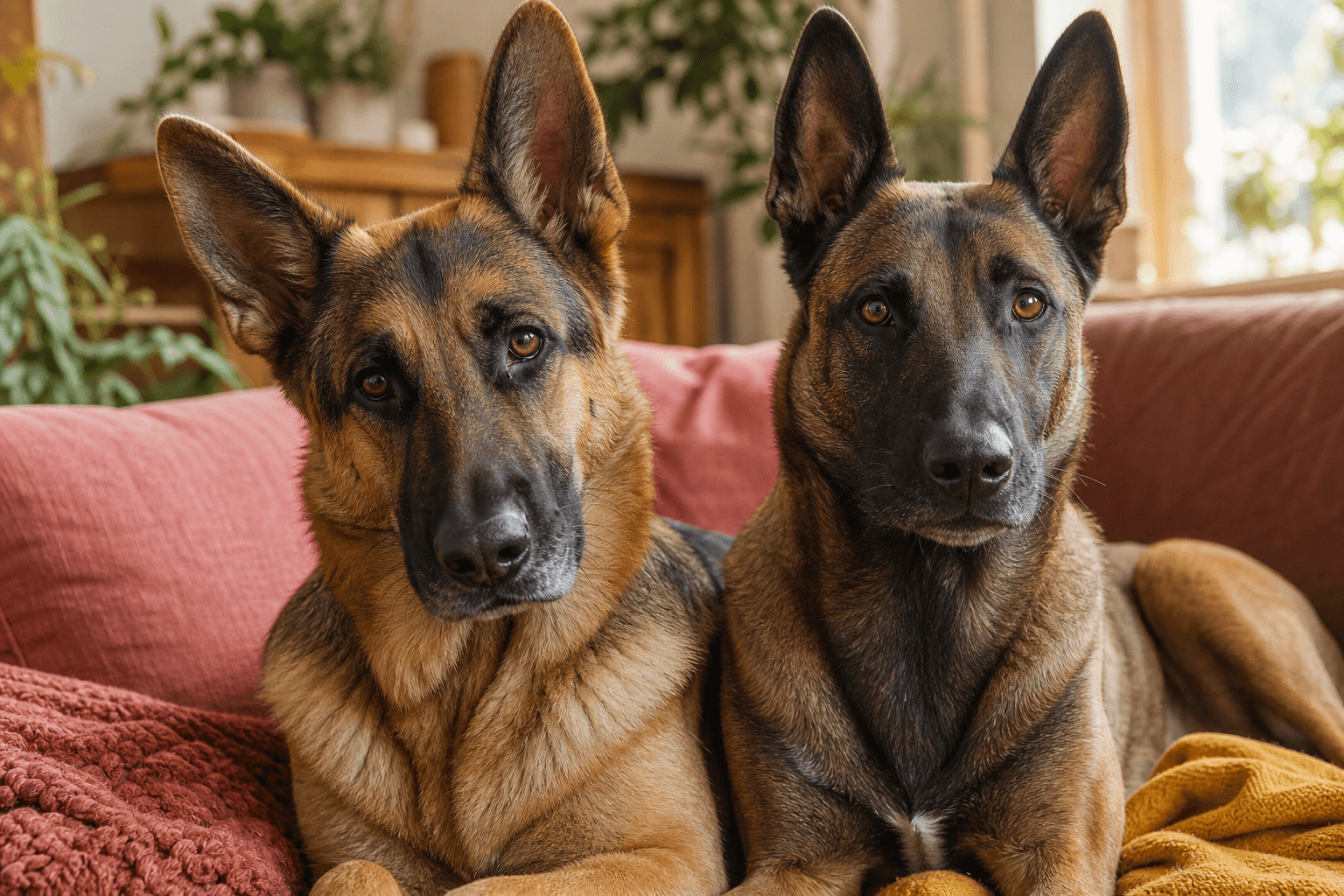
You want a brilliant, loyal working dog. But will that energy love your living room or bounce off the walls?
We have trained, fostered, and lived alongside both breeds. Here is the fast, no-fluff guide to which one actually fits your home.
By the end, you will know which breed matches your time, temperament, and space — not just your Pinterest board.
Temperament at Home
German Shepherds are designed to be biddable, steady, and bonded. In a typical pet home, a well-bred Shepherd settles after exercise and enjoys just being with you.
Belgian Malinois are intensely driven and alert. Even when relaxed, they are poised for the next task. Many are velcro dogs with a razor focus on their handler.
If you want a dog that can switch off more easily in the house, the German Shepherd generally has the edge. If you love a dog that is always on, the Malinois delivers.
Energy needs are where most families feel the difference.
Daily Exercise and Mental Work
Both breeds need real jobs, not just backyard time. The difference is degree.
German Shepherd: plan on 60 to 90 minutes of physical exercise plus short training games and sniffy enrichment. Two quality sessions a day keeps most pets balanced.
Belgian Malinois: expect two to three structured work blocks daily. That might be a run or bike, bite-sport or obedience reps, and problem-solving games. Free play alone will not touch this tank.
Trainability and Work Drive
Both are highly trainable. The Shepherd learns fast and repeats well, making it forgiving for handlers still polishing timing.
The Malinois learns faster than you can plan your next rep. That brilliance comes with intensity; sloppy criteria can create frantic patterns or frustration barking.
Space and Lifestyle Fit
You do not need acres, but you do need a plan.
Apartment life is possible for a Shepherd with consistent outings, elevator manners, and weekday training. The Malinois can do it only if you treat training like a sport you practice daily.
Runners, hikers, scent-work fans, and obedience handlers will love either. If your weekdays are long and unpredictable, the Shepherd is far more forgiving.
Grooming and Shedding
Both are double-coated and both shed. A lot.
German Shepherds often have a thicker coat and can blow coat dramatically twice a year. Malinois tend to have a shorter coat that sheds steadily year-round.
Brush weekly, add a deshedding session during coat drops, and budget for a good vacuum. Baths as needed; overbathing can dry skin.
Health and Lifespan
German Shepherds are prone to hip and elbow dysplasia, degenerative myelopathy, and occasionally exocrine pancreatic insufficiency. Ethical breeders screen hips, elbows, and DM and prove stable temperament.
Belgian Malinois are generally athletic and long-lived but still face hip and elbow dysplasia and some eye issues. They thrive when kept lean and conditioned.
Lifespan ranges: Shepherd roughly nine to thirteen years; Malinois roughly twelve to fourteen.
Kids, Guests, and Other Pets
Well-socialized Shepherds are typically more tolerant of chaos and novelty. They can be wonderful with respectful kids and polite with visitors when guided.
Malinois can be mouthy and motion-triggered. That can look like herding, nipping heels, or patrolling doorways. Excellent management and structured greetings are non-negotiable.
Both need early, thoughtful exposure to dogs and people. If your home is kid-heavy or guest-forward, the Shepherd is usually the smoother fit.
First-Time Owner Reality Check
If this is your first herding breed, a stable, health-tested German Shepherd from a breeder who prioritizes nerve and clarity is a workable path. Training class is a must, and you will love the journey.
A Belgian Malinois is generally not a starter dog. They shine with handlers who enjoy daily drills, crisp boundaries, and sport outlets like IGP, PSA, or French Ring.
Pros
Malinois is for you if
- You already compete or plan to in bite-sport, agility, or high-level obedience.
- You enjoy multiple structured training blocks every single day.
- You prefer a smaller, ultra-athletic dog with laser focus.
Cons
Not a fit if
- You want a more off switch around family life.
- Your schedule varies or you travel often without reliable help.
- You dislike management tools like crates, tethers, and gates during training.
So, which one fits your home?
If you want a capable working partner who can still be a family pet, choose the German Shepherd and invest in training and socialization.
If you crave a full-time sport project and daily high-intensity work, the Belgian Malinois is unmatched.
Yes, with a plan. Shepherds manage with two quality exercise blocks and training. Malinois need multiple daily work sessions and excellent management to prevent nuisance behaviors.
They shed more visibly and need extra brushing to prevent mats, but care is similar: weekly brushing and seasonal deshedding.
They are naturally alert, but protection training should only be done under professionals. Prioritize neutrality and control over encouraging aggression.
Working lines usually have more drive and nerve for sport or duty; show lines can be calmer companions. Evaluate individual dogs and breeders, not just labels.
Helpful, not required. Structured exercise, leash skills, and mental work matter more than square footage.