Essential Facts You Should Know About Toy Poodles
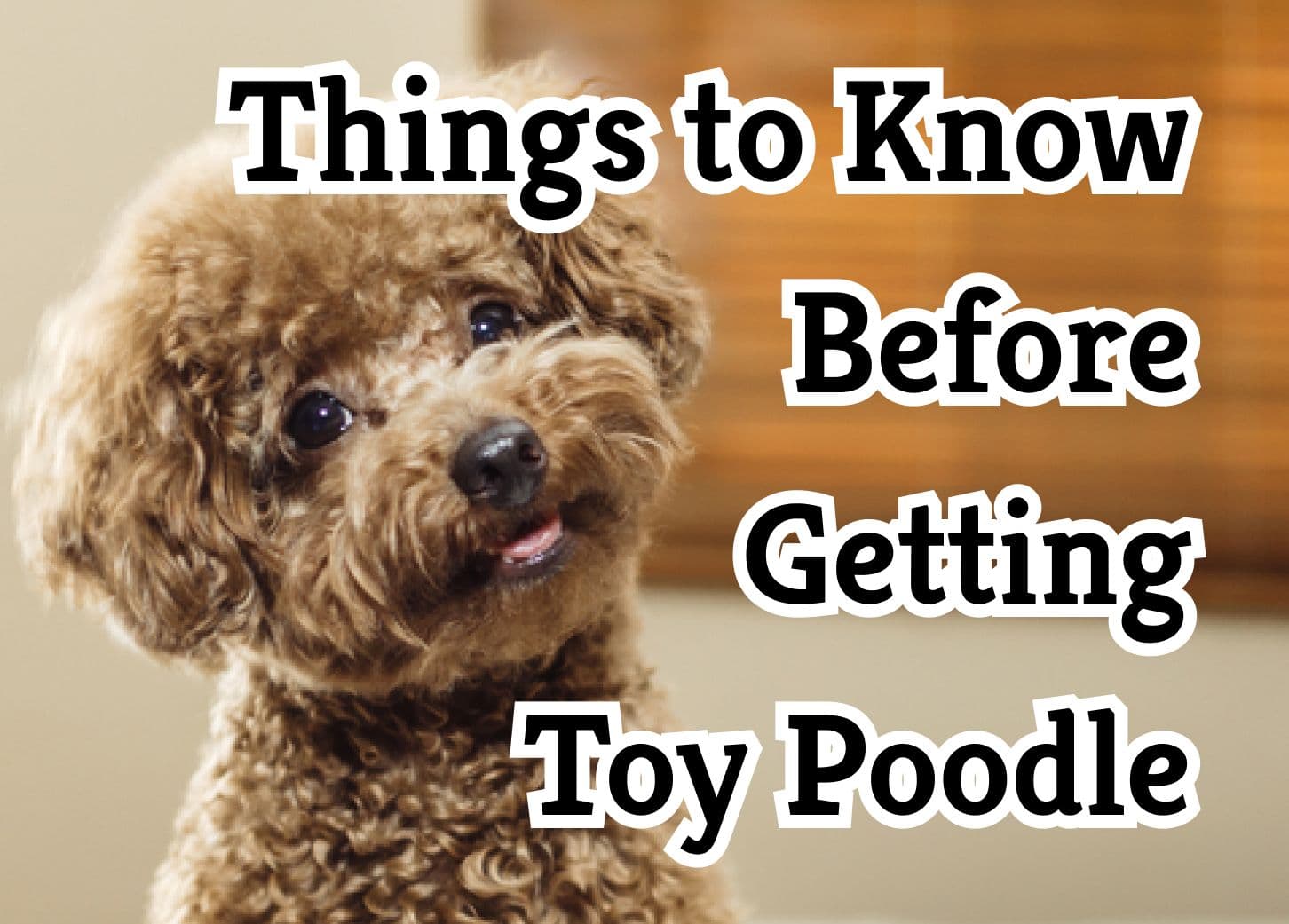
You're thinking about bringing a Toy Poodle into your life, but you're terrified of making the wrong choice.
After all, getting a dog is a 15-year commitment. The last thing you want is a high-maintenance pet that completely clashes with your lifestyle.
In this guide, we'll give you the raw, unfiltered truth about owning a Toy Poodle.
You'll discover the hidden financial costs, the single health issue 80% of them face, and why their genius-level intellect is actually a double-edged sword.
Let's start with the quick numbers:
Here's the kicker:
But there's a catch — we'll uncover the biggest mistake most new owners make later in this guide.
Is a Toy Poodle Actually Right for You?
Let's be brutally honest for a second.
Before you fall in love with a curly-haired puppy, run through this checklist.
It could save you from a heartbreaking mismatch. The best owners aren't necessarily experienced dog trainers — they are just realistic about their daily routines.
Pros
This dog is a great fit if you…
- Work from home or are home most of the day
- Live in an apartment or city setting
- Are a first-time owner who's committed to training
- Have allergies and want a low-shedding dog
- Want a long-lived companion (12–18 years)
Cons
You might want to reconsider if you…
- Have very young toddlers at home (injury risk is real)
- Are away from home 8+ hours most days
- Are looking for a low-maintenance, easy-going pet
- Are on a tight budget (grooming + vet costs are real)
Now, here's where it gets interesting:
5 Toy Poodle Myths (That Are Dead Wrong)
Most of what you've heard about toy poodles is completely backwards.
Tap each myth below to uncover the real story.
Toy poodles are athletic water retrievers at heart. They love to run, swim, and learn tricks. Without daily activity and mental stimulation, they get destructive fast.
No dog is 100% hypoallergenic. Toy poodles produce far less airborne dander, but the proteins causing reactions also live in saliva and urine. Always spend time with the breed before committing.
That intelligence cuts both ways. An under-stimulated toy poodle will "train itself" to bark, demand attention, or outsmart baby gates. You have to channel the smarts, not ignore them.
Toy poodles need 20–30 minutes of real physical activity daily, plus mental work. Skip this consistently and you'll pay for it in anxious, destructive behavior.
Their small size is actually the problem with very young kids. A 5-pound dog can be seriously injured by a toddler sitting on or dropping them. Supervision is non-negotiable.
But wait, how big do they actually get?
Tiny Body, Big Dog Energy
Toy poodles are not fragile little teacups.
According to the AKC breed standard, they stand exactly 10 inches or under at the shoulder.
Their weight usually hovers between 4 to 6 pounds. However, some athletic builds can push up to 8 pounds.
Don't let the "toy" label fool you. These dogs are remarkably agile, energetic, and built to run.
Let's break it down. Here is how they stack up against the Miniature and Standard sizes:
| Variety | Height | Weight |
|---|---|---|
| Toy | ≤ 10″ | 4–6 lbs |
| Miniature | 11–15″ | 10–15 lbs |
| Standard | Over 15″ | 40–70 lbs |
Coat Colors: A Rainbow of Options
Toy poodles come in an amazing variety of colors.
In fact, the AKC officially recognizes 10 standard coat colors.
There are also 18 non-standard colors, plus striking patterns like parti-color (white base with colored patches) and phantom. The most popular shades include:
- Black
- White
- Red
- Apricot
- Cream
- Blue
- Silver
- Brown
But here is a secret most breeders won't tell you:
Some coat colors literally change over time.
For example, Blue Poodles often start out pitch black. They gradually fade to a slate gray over their first two years.
We'll explore how to groom those beautiful coats later. First, let's talk personality.
Smart, Social, and Deeply Sensitive
Toy poodles are incredibly affectionate.
They bond with their families on a surprisingly deep level.
The AKC perfectly describes them as having "a bright intelligent sparkle" in their eyes.
Because they are so sensitive, heavy-handed training will backfire immediately.
They thrive on positive reinforcement and patience.
“I've had dogs my whole life. My toy poodle was the first one who learned 'go to your place' in a single afternoon — and actually did it reliably. The flip side? She follows me to the bathroom every single time.”
Highly Intelligent
Eager to please and easy to train — picks up new commands in under 5 repetitions.
Deeply Affectionate
Forms very strong bonds with owners; happiest when they're close to you.
Playful & Lively
High-spirited energy that stays sharp well into old age.
Alert & Watchful
Can be reserved around strangers — early socialization matters a lot.
The Silent Struggle: Separation Anxiety
Here is the harsh truth.
Toy poodles absolutely hate being left alone.
Their deep loyalty makes them highly prone to separation anxiety. If ignored, this leads to destructive chewing, non-stop barking, and house-soiling.
If you work long hours away from home, you need a solid backup plan.
Think dog walkers, family drop-ins, or doggy daycare. Otherwise, this breed might not be your best fit.
So, just how smart are they? Let's look at the data.
The Genius Inside the Curls
Toy poodles are among the smartest animals on the planet.
In Stanley Coren's famous intelligence survey of 130 breeds, the Poodle ranks #2 overall. They are second only to the legendary Border Collie.
What does that mean for you?
A top-tier breed like the Toy Poodle learns a new command in fewer than 5 repetitions.
They also obey on the first command about 95% of the time. For comparison, an average dog takes 25 to 40 repetitions.
But this genius-level intellect is a double-edged sword.
Without enough mental stimulation, they get bored and invent their own "jobs" (like destroying your shoes).
The chart below proves just how fast they learn compared to other popular small breeds:
Reps to Learn a Command
Fewer is smarter — Toy Poodles tie for #1 with Papillons.
| Breed | Tier | Reps | Obeys |
|---|---|---|---|
| Toy Poodle | Brightest | < 5 | ~95% |
| Papillon | Brightest | < 5 | ~95% |
| Yorkie | Above avg. | 15–25 | ~70% |
| Shih Tzu | Lowest | 80–100+ | ~25% |
Now, let's talk about the part most people try to avoid.
The Brutal Truth About Toy Poodle Costs
Let's break down the real financial commitment.
A pet-quality puppy from a reputable breeder costs between $1,000 and $2,500.
If you want show lines, expect to pay $3,000 to $6,000+. Adopting a rescue is much cheaper, usually running $150 to $600.
A quick warning:
Be extremely suspicious of puppies priced under $700.
These almost always come from puppy mills with zero health testing. The first year will hit your wallet the hardest.
You'll spend roughly $3,500 to $4,500+ on the puppy, crate, vet visits, and vaccines.
After that, expect to budget around $111 every single month.
The graph below breaks down these expenses clearly:
First Year vs Annual Costs
First-year: ~$4,580 | Ongoing: ~$2,430/yr
Annual Cost Breakdown
| Expense | Annual Cost |
|---|---|
| Food & Treats | $400–$650 |
| Pro Grooming | $400–$800 |
| Vet / Prev. Care | $200–$500 |
| Pet Insurance | $400–$800 |
| Supplies & Toys | $300–$570 |
| Est. Annual Total | $1,800–$3,620 |
“I thought I could groom him myself to save money and watched a hundred YouTube tutorials. Three months in, I took him to a groomer and never looked back. The $80 is absolutely worth it.”
Why are vet bills so high? That brings us to the most critical section of this guide.
Health, Lifespan, and the 80% Rule
Here is some amazing news.
Toy poodles are one of the longest-lived dog breeds in the world.
Their typical lifespan stretches an impressive 12 to 18 years.
Some legendary poodles, like New York's "Uncle Chichi", lived to be 24. Smaller dogs age slower and put less strain on their organs.
This chart illustrates their incredible longevity:
Lifespan Comparison
Minimum lifespan + possible additional years
The Disease That Affects 80% of Toy Poodles
But there is a major catch.
Dental disease is the absolute biggest health threat to this breed.
By age two, roughly 80% of all dogs develop dental issues. Toy poodles are uniquely vulnerable because their tiny jaws crowd their teeth together.
This creates hidden pockets where plaque aggressively builds up.
If you ignore their teeth, dental disease can rob your dog of 1 to 3 years of life. It can also lead to fatal heart, liver, and kidney damage.
Other notable health conditions include:
- Patellar luxation (loose kneecaps) affects 7.6% of the breed.
- Progressive Retinal Atrophy (PRA) slowly causes vision loss in about 2% of dogs.
- Ear infections happen frequently because their floppy ears trap moisture.
The visual breakdown below shows the exact prevalence of these issues:
Health Issue Prevalence
Dental disease dominates — and it's almost entirely preventable
Why Weather Matters More Than You Think
Because they are so small, toy poodles cannot handle extreme weather.
You have to be proactive about their comfort. Here is what to watch for:
Speaking of protection, let's look at that famous coat.
The Low-Shedding, High-Maintenance Reality
Toy poodles are famous for being "hypoallergenic".
While no dog is 100% allergy-proof, these dogs come remarkably close.
They grow hair instead of fur. Because of this, you'll find virtually zero dog hair on your furniture.
However, allergy-triggering proteins also live in a dog's saliva and urine. Always spend time with the breed before bringing one home.
Now, here is the kicker:
That beautiful, low-shedding coat requires intense daily work.
If you don't brush them, mats will form behind their ears, in their armpits, and on their belly.
Mats are incredibly painful and often lead to skin infections. Professional grooming will run you $55 to $160 every 4 to 6 weeks.
This table shows your exact grooming schedule:
| Task | How often |
|---|---|
| 🪮 Brushing | Daily / every other day |
| 🛁 Bathing | Every 2–4 weeks |
| ✂️ Pro Grooming | Every 4–6 weeks |
| 🪥 Teeth | Daily |
So, if they don't shed, do they need much exercise?
Ditch the "Lap Dog" Stereotype
Do not be fooled by their dainty looks.
These dogs need serious daily exercise. Experts recommend 20 to 30 minutes of active physical movement every single day.
When you add in mental games, expect to spend 30 to 60 minutes tiring them out.
Remember, their ancestors were water retrievers.
If you skip their daily walk, they will burn that energy by destroying your house.
Next up: How much should a 5-pound dog actually eat?
Small Portions, High Quality
Toy poodles eat very little, but the quality of their food is vital.
A healthy 10-pound adult needs only 200 to 275 calories per day.
You must buy high-quality kibble designed specifically for small mouths.
| Stage | Meals |
|---|---|
| Puppy (2–10 mo) | 3–4 / day |
| Adult (1–7 yrs) | 2 / day |
| Senior (7+ yrs) | 2 / day |
Here is a crucial tip:
Do not feed them table scraps.
Even a tiny piece of cheese can cause dangerous weight gain in a dog this size. And be careful with training treats — they add up fast.
So where did this tiny powerhouse come from?
From Rugged Duck Hunters to Royal Companions
Despite their glamorous reputation, poodles have muddy, hardworking roots.
The word "Poodle" comes from the German word Pudel, meaning "to splash in water".
They actually started as rugged duck hunters in Germany.
Check out this timeline of their fascinating evolution:
15th century
Origin in Germany
Standard Poodles bred as working water retrievers. The iconic "poodle clip" started as a practical cut to protect joints in cold water.
17th–18th c.
French aristocracy adopts the breed
Poodles become status symbols for French nobility. Smaller "Miniature" versions bred as fashionable companions.
18th century
Toy Poodle emerges
Breeders selectively bred the smallest Miniatures to create the Toy variety — the ultimate companion dog.
19th century
Circus fame across Europe
Their trainability made toy poodles star circus performers. Complex tricks, acrobatics, and routines that stunned audiences.
1887
AKC recognition
The American Kennel Club officially registers the Poodle as a breed. Today all three sizes compete as one breed.
Today
#5 most popular breed in America
The Poodle (all sizes) ranks 5th for three consecutive years. The Toy variety remains the top choice for city dwellers and seniors.
Let's get back to that genius-level intellect.
Training a Genius (Without Losing Your Mind)
Because they are so smart, toy poodles are remarkably easy to train.
But you must use positive reinforcement. If you yell or yank the leash, they will shut down completely.
Praise, patience, and tiny treats are your best tools.
The golden rules for training a toy poodle
- Keep sessions to 5–10 minutes max.Their attention is intense but short. End while they're still winning.
- Always end on a success.Ask for something easy right before you wrap up. They'll remember the win.
- Use tiny treats.Training treats should be pea-sized — you'll go through 20+ in a session.
- Be consistent about rules.If jumping on the couch is sometimes okay, it will always be okay to them.
- Never punish — redirect.If they do something wrong, interrupt calmly and show what you want instead.
The Milestones You Need to Hit
Start training the day you bring them home.
Here is a realistic timeline for a well-trained toy poodle:
| Age | Focus |
|---|---|
| 8–12 wks | Sit, Name recall |
| 10–16 wks | Crate / potty training |
| 3–5 mo | Down, Stay, Leave it |
| 5–8 mo | Loose-leash walk |
| 8–12 mo | Tricks, advanced recall |
Don't Fall into the Crate Training Trap
Most new owners either skip the crate or use it as a timeout zone.
Both are massive mistakes.
The crate should be a cozy, safe den. Start with the door open, toss treats inside, and let them explore.
If your poodle loves their crate, traveling and vet visits become a breeze.
Try these brain games to tire them out:
Puzzle Toys
Kong stuffed with peanut butter or kibble — a 5-minute snack becomes 20 minutes of focus work.
Nose Work / Sniff Walks
Let them sniff freely on walks rather than pulling them along. 15 minutes of sniff time tires them out more than a mile of heeling.
Trick Training
Roll over, spin, fetch by name — tricks aren't just cute, they're mental fuel. Aim for one new trick per week.
Agility
Toy poodles consistently dominate small-dog agility competitions. Even basic backyard obstacle courses give them a purpose.
“My poodle learned 'touch' (nose to hand) in literally two sessions. I use it now to redirect her when she starts barking at the doorbell. It's like having a reset button.”
Are you ready to find your puppy? Read this next section carefully to avoid getting scammed.
How to Find the Perfect Toy Poodle
This is where most people make a devastating mistake.
Buying from a puppy mill to save a few hundred dollars will cost you thousands in vet bills later.
You have three main options for bringing a poodle home.
Let's break down the pros and cons of each:
Reputable Breeder
Pros
- Known health history
- Breeder support for life
- Predictable temperament
- Puppy socialization done right
Cons
- Higher upfront cost
- Long waitlist
- Puppy energy for 2+ years
Rescue / Shelter
Pros
- Lower cost
- Often already trained
- Adult temperament is known
- You're saving a life
Cons
- Unknown early history
- May have behavioral baggage
- Less predictable health baseline
Pet Store / Online Listing
Pros
- Immediate availability
Cons
- Likely puppy mill sourced
- No health history
- Hidden vet costs ahead
- No breeder support
How to Spot a Shady Breeder
A world-class breeder cares where their puppies go.
They will interrogate you just as much as you question them.
Use this checklist to spot the red flags instantly:
- Health tests on both parents (PRA, patellar luxation, vWD)
- Will let you visit and meet the mother
- Asks YOU questions before selling
- Provides written health guarantee
- Puppies raised in the home, not a kennel
- Registered with AKC or UKC
- No puppies available immediately — has a waitlist
- Price under $700 with no health certs
- Ships puppies without meeting you first
- Multiple breeds/litters always available
- Won't share vet references or health records
Puppy vs. Adult?
Puppies are adorable, but they are exhausting.
Adult dogs skip the biting phase and settle in much faster.
Which one is right for your lifestyle?
Pros
Get a puppy if…
- You want to shape their personality and training from scratch
- You have time for multiple daily sessions and potty trips for 3–6 months
- You can handle the energy and mouthing phase without burning out
Cons
Get an adult if…
- You work part-time or have a more structured schedule
- You want a dog whose temperament you can actually assess before committing
- You'd rather skip the chaos of puppyhood and get straight to the good part
Let's wrap this up.
The Final Verdict: Is a Toy Poodle Worth It?
Toy poodles are not for everyone.
But for the right person, they are absolute magic.
First, a quick word on family life: toy poodles are incredibly gentle and playful, making them excellent companions for older kids, cats, and friendly dogs. But because they weigh only 5 pounds, they are incredibly fragile — a stumbling toddler can easily cause a serious injury, so they are not recommended for homes with very young children. See how they mix with different family members below:
Toddlers (under 5)
RiskyAccidental injury is the real danger. Supervise every interaction.
Kids 6–12
GreatOld enough to learn gentle handling. Poodles love the play energy.
Other Dogs
GoodUsually fine — introduce slowly and avoid very large breeds.
Cats
Often fineWith early intro, most toy poodles coexist peacefully with cats.
Here is the honest, at-a-glance scorecard for the breed:
| Category | Rating |
|---|---|
| Trainability | |
| Affection | |
| For Apartments | |
| Exercise needs | |
| Grooming | |
| Alone time | |
| With toddlers | |
| Lifetime cost | |
| Lifespan | |
| Health |
So what does this mean for you?