Bernese Mountain Dog vs Bernedoodle: Which One Actually Fits Your Home Better?
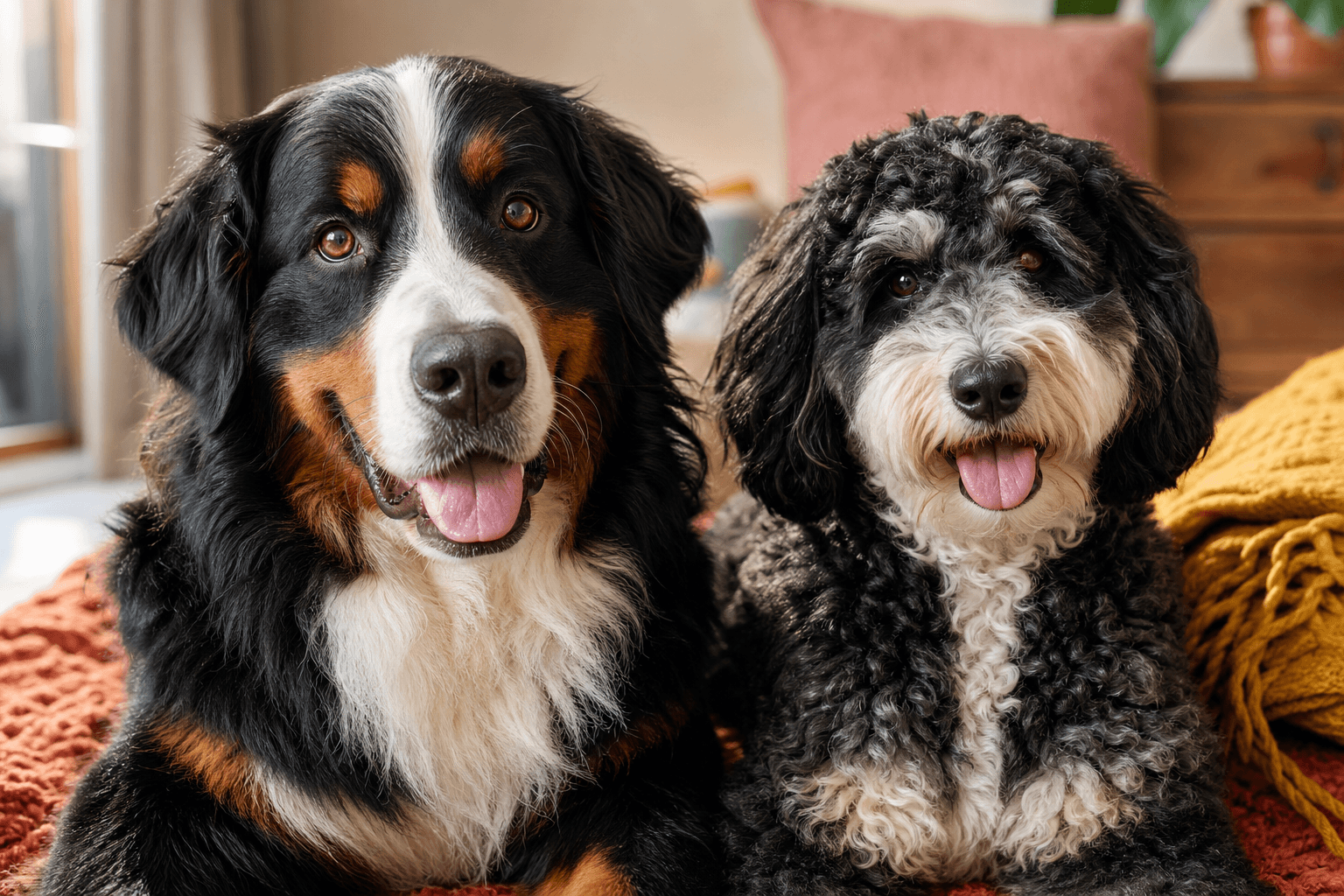
You love the big, gentle, tri-color look — but which daily reality fits your home better?
We have lived with both the purebred calm of the Berner and the bouncy charm of doodles. Here is the fast, practical comparison you actually need.
By the end, you will know which dog lines up with your space, schedule, allergies, and budget.
1. Space and Size Reality
Bernese Mountain Dogs are true giants: large frames, broad chests, and a sweeping tail that clears coffee tables without trying.
Standard Bernedoodles are usually similar in footprint, though minis exist; standards still feel like a couch with legs.
If you live in an apartment, you can make either work with elevator access, daily exercise, and a calm temperament — but a yard makes life easier for both.
Pick a Bernese if...
You want a steady, predictable giant with classic mountain-dog presence and you have room to sprawl.
Pick a Bernedoodle if...
You like the Berner look but want a potentially lighter-shedding, more playful companion; consider mini sizes for tighter spaces.
2. Shedding and Grooming Commitment
Berners shed. A lot. Spring and fall blowouts, plus steady tumbleweeds the rest of the year. A deshedding tool and vacuum become part of the family.
Bernedoodles can range from wavy to curly. Curly coats may shed less, but they mat fast and demand brushing several times a week and professional grooming every 6 to 10 weeks.
3. Temperament and Family Fit
Berners are famously gentle, people-oriented, and soft. They tend to be mellow indoors once exercised and adore kids when supervised.
Bernedoodles inherit Berner sweetness plus poodle pep. Expect more goofiness, a dash of mischief, and slightly higher social energy — wonderful for active families who like training games.
4. Energy and Exercise Needs
Berners need daily walks and sniffing time, but they are not endurance athletes. Think steady hikes, not marathon runs.
Standard Bernedoodles often have an extra gear. Many are happiest with structured play, training sessions, and puzzle toys layered into those walks.
5. Trainability and First-Time Owners
Berners aim to please and do best with kind, consistent guidance. They are sensitive; harsh methods shut them down.
Bernedoodles are usually quick studies thanks to poodle smarts. That intelligence cuts both ways — boredom invites creative chaos. Keep sessions short, upbeat, and varied.
6. Health, Lifespan, and Vet Bills
Berners face big-dog concerns: hip and elbow dysplasia, certain cancers, bloat, and a shorter average lifespan for their size category.
Bernedoodles may benefit from genetic diversity, but they are not guaranteed healthier. Screened parents matter more than labels. Expect potential orthopedic issues and ear/skin care with curlier coats.
7. Climate Tolerance and Lifestyle
Both breeds wear thick coats. They thrive in cool weather and can struggle in heat.
If you live where summers are hot, plan early/late walks, shade, cooling mats, and air conditioning. Water play beats midday jogs for either dog.
8. Cost to Buy and Keep
Berners from ethical breeders and standard Bernedoodles from health-tested lines typically sit in a similar premium bracket.
Lifetime costs diverge in grooming: Berners rack up vacuum bags and deshedding tools; Bernedoodles rack up salon appointments. Big-dog food, beds, and meds cost more for both.
9. Allergies and Dander Expectations
No dog is truly hypoallergenic. Curly Bernedoodles may shed less hair and dander, which helps some allergy sufferers, but individual reactions vary.
Test by visiting adult dogs with the coat type you want. Your nose will tell you more than promises on a website.
10. So...Which Fits Your Home?
Choose a Bernese Mountain Dog if you want a calm, classic, heavily shedding giant with a big heart and can accept a shorter average lifespan and serious shedding.
Choose a Bernedoodle if you want Berner sweetness with more play, potentially less shedding, and you are ready for routine grooming and the unpredictability of a mixed breed.