7 Things to Know Before Getting a Turkish Angora
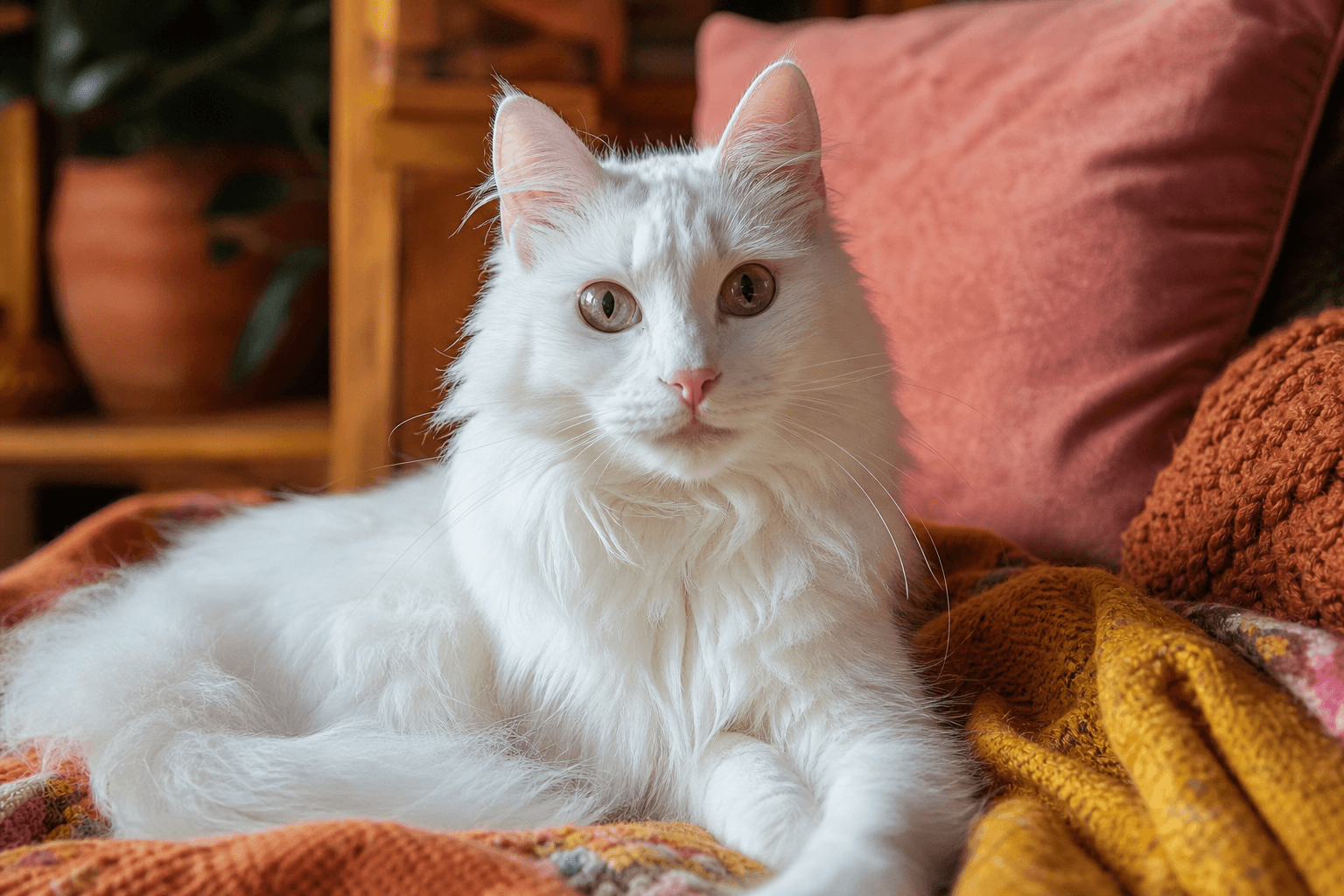
You fell for that silky tail and bright, intelligent gaze. We did too.
Before you bring a Turkish Angora home, here are the seven things we wish we knew on day one.
It will help you skip the surprises and start strong.
1. They Are People-Oriented, Not Lap-Obligated
Turkish Angoras bond hard with their people. Expect a shadow cat who supervises everything from emails to laundry.
They are affectionate on their terms. Many enjoy cuddles, but they prefer perching near you, riding shoulders, and chatting over long lap marathons.
If you want a cat who notices you, chooses you, and participates, this is your match.
2. Playful, Athletic, and Surprisingly Agile
That floaty coat hides a spring-loaded athlete. Angoras love vertical territory and fast chases.
Plan on two daily play sessions of 10–15 minutes with wand toys or fetch. High shelves and a sturdy cat tree are non-negotiable to prevent counter-surfing.
Best toys
Feather wands, wire teasers, lightweight fetch balls, puzzle feeders.
Home setup
Tall cat tree, window perches, secure shelves, clear landing zones.
Keep that beautiful coat happy without overthinking it
3. Low-Maintenance Coat, High-Maintenance Shedding
Angoras have a single, fine coat that resists mats more than many longhairs. That said, loose hair adds up.
Brush 2–3 times a week with a soft slicker or comb. Increase to daily during seasonal sheds. A quick pass under the arms and behind the ears prevents tangles.
4. Health Watch: Deafness, HCM, and Joint Care
White Angoras with blue or odd eyes have a higher risk of congenital deafness in one or both ears. Many live full, happy lives—just adjust training to visual cues.
Hypertrophic cardiomyopathy (HCM) occurs in the breed. Responsible breeders screen breeding cats with echocardiograms. Ask to see proof.
They are light-framed athletes, so joint injuries from risky leaps can happen. Provide safe climb paths and stable furniture.
- Request HCM screening results from parents
- BAER test for hearing in white, blue/odd-eyed kittens
- Skip breeder who says “our line never has HCM”
5. Brainy Cats Need Jobs
Angoras are clever problem-solvers. Without structure, they will invent hobbies like opening cabinets.
Rotate puzzle feeders, teach tricks (sit, spin, high-five), and schedule play. Five minutes of nose work—treats hidden in boxes—can relax an over-wired Angora.
Stimulation rules that work
- Rotate weeklySwap toys and puzzle locations every 7–10 days to keep novelty high.
- Hunt sequencePlay in the order: chase, catch, eat, groom, sleep. Finish with a snack to avoid post-play zooms.
- Micro-tricks1–2 minute sessions, 2–3 times daily, beat one long session.
6. Social With Pets—If You Set the Rules
Many Angoras thrive with other cats and even cat-friendly dogs. Their confidence can read as bossy, so introductions matter.
Use scent swaps and room rotations for at least a week. Reward calm look-aways. Supervise early play—Angoras go big with chase games.
Pros
Often a great multi-pet fit
- Playful energy matches other active cats
- Human-focused but not jealous with good management
- Curious and adaptable when properly introduced
Cons
Potential friction points
- Can overwhelm shy resident cats
- High perches become contested real estate
- Chasey play can stress mellow dogs
7. Reputable Sources and Realistic Costs
True Turkish Angoras are recognized by major registries and come in many colors, not just white. Beware of generic longhairs labeled as Angora without papers.
Expect a waitlist from ethical breeders who provide registration, health guarantees, and HCM/hearing documentation. Adoption is also possible through breed rescues and shelters—ask about history and temperament.
Annual Cost Breakdown
| Expense | Annual Cost |
|---|---|
| Quality food | $400–$700 |
| Litter & supplies | $200–$350 |
| Wellness care | $200–$400 |
| Insurance (optional) | $300–$600 |
| Toys, trees, enrichment | $150–$400 |
| Grooming tools | $40–$100 |
| Est. Annual Total | $1,290–$2,550 / year |
No. They shed and produce Fel d 1 like other cats. Some individuals may bother allergies less, but there is no hypoallergenic guarantee.
Generally yes with respectful, school-age kids. Teach gentle handling and provide high retreats so the cat can choose space.
They are medium, fine-boned cats—often 5–10 lb, with males toward the higher end. They look larger because of the coat and plume tail.
Most do not need regular baths. Brushing and a healthy diet manage the coat. Bathe only if soiled or per vet advice.
Yes—ideally. Provide vertical space, window views, and structured play to meet their athletic and mental needs.