7 Things to Know Before Getting a Ferret
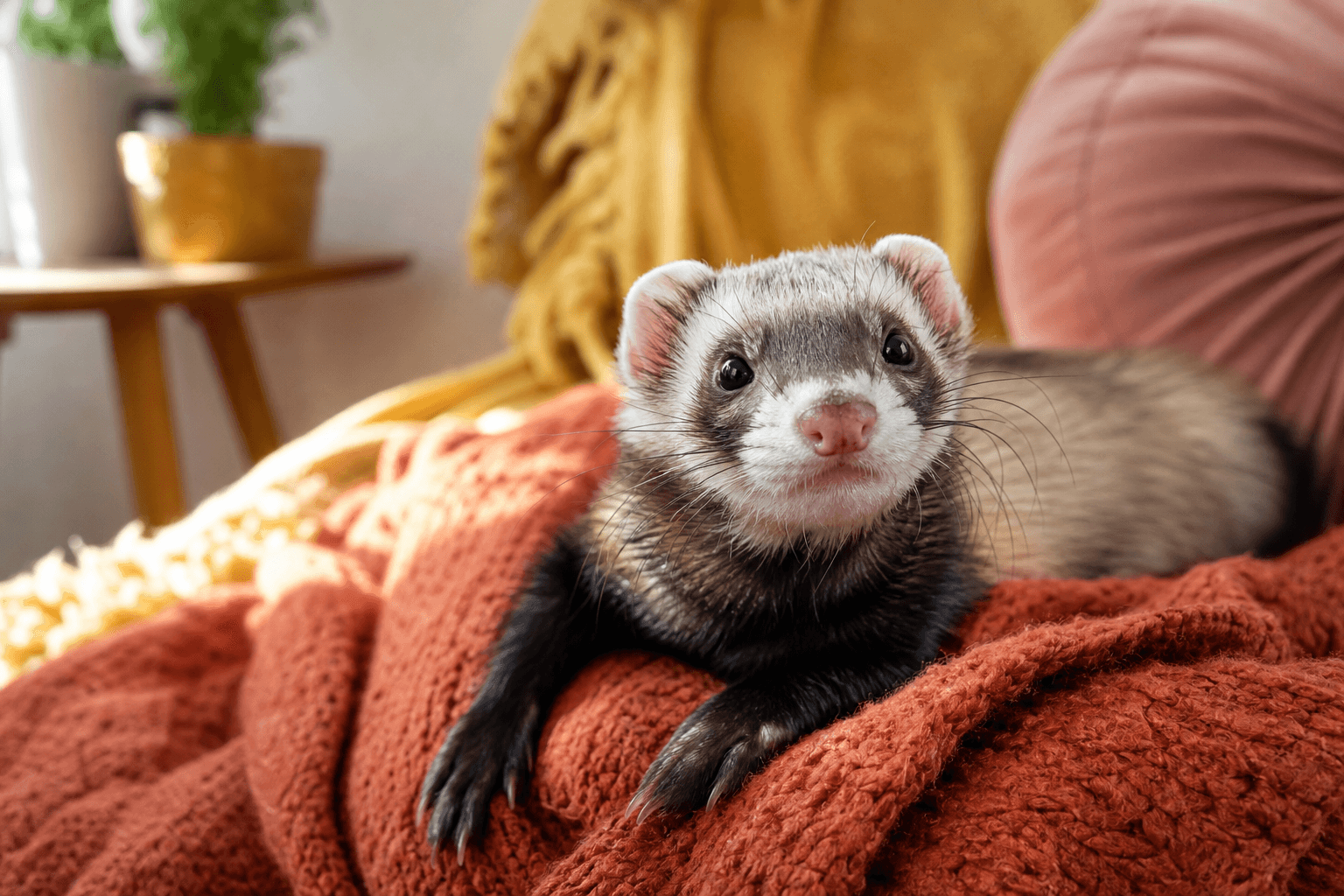
You saw a playful ferret and thought, that energy would be perfect for us.
We agree—ferrets are hilarious, affectionate, and wildly entertaining.
But they are also a real commitment. Here are the seven things we wish everyone knew before bringing one home.
1. Check the Legal Rules First
Before you fall in love, confirm you are allowed to own a ferret where you live.
Some regions restrict or ban ferrets, and landlords or HOAs may have their own rules.
Okay to own? Great. Now build the right home base.
2. Their Housing Needs Are Specific
Ferrets sleep a lot, but they are not cage pets. You need both a safe enclosure and a ferret-proofed play area.
Cage Basics
Multi-level, solid floors or well-spaced bars with ramps, secure latches, and room for a bed, litter pan, food, and water. Bigger is better.
Bedding & Litter
Use fleece or soft blankets; avoid dusty litters. Paper-based litter in a corner pan works best.
Enrichment
Tunnels, dig boxes (paper pellets or rice), crinkle sacks, and rotate toys weekly to prevent boredom.
Ferret-Proofing
Block gaps wider than a couple of inches, cover vents, secure recliners, stash cords, and keep foam/rubber out of reach.
3. Daily Out-of-Cage Time Is Non‑Negotiable
Plan on 3–4 hours of supervised play and exploration spread through the day.
This is when the bonding, training, and goofy war dances happen—and where most behavior issues are prevented.
- Two play blocks daily (morning and evening) of at least 60–90 minutes each
- Rotate tunnel courses and hide-and-seek games to burn energy
- Leave them out unsupervised
4. The Smell Is Real (and Manageable)
Ferrets have a natural musky odor even when descented. It is part of who they are.
What you can control: cleanliness and diet.
Clean Routine
Scoop litter daily, launder bedding weekly, wipe cage shelves, and air out the room.
Bathing Truth
Baths strip oils and can make odor worse. Spot clean; bathe only when truly dirty.
Diet Link
High-quality, meat-first diets reduce stool odor and volume.
Room Hacks
Use washable rugs, an air purifier with charcoal, and open windows when possible.
5. Health Care Is Specialized and Ongoing
Ferrets are considered exotic pets, so you need a vet who routinely treats them.
Annual exams are a must, and many ferrets will need care for adrenal disease, insulinoma, or dental issues as they age.
Annual Cost Breakdown
| Expense | Annual Cost |
|---|---|
| Annual exam (exotics vet) | $80–$160 |
| Vaccinations (where recommended/required) | $20–$50 each |
| Preventatives (fleas/heartworm as advised) | $60–$150 |
| Quality food & treats | $200–$400 |
| Litter/bedding & cleaning supplies | $120–$250 |
| Emergency fund (recommended) | $300–$500+ |
| Est. Annual Total | $780–$1,510+ per year (not including major illness) |
6. Diet Matters More Than You Think
Ferrets are obligate carnivores with short digestive tracts. They thrive on high-protein, high-fat, low-fiber diets.
Look for meat as the first ingredients and avoid high plant content.
Kibble Criteria
≥35% protein, ≥18% fat, minimal fiber; animal proteins up front.
Fresh Water
Offer both a bowl and a bottle; many prefer bowls and drink more from them.
Treats
Tiny, meat-based treats only. Skip sugary or dairy snacks.
Feeding Rhythm
Multiple small meals or free-feed quality kibble; ferrets eat often.
7. They Are Smart, Social, and a Little Chaotic
Ferrets are puzzlers. They stash, dig, and test boundaries because it is fun and mentally satisfying.
Most do best with another ferret for company, though you still need to be part of the play.
House manners that actually work
- Litter training is about cornersPlace pans in favored corners; reward immediately. Expect misses on new surfaces.
- Bite training is gentle and consistentRedirect to a toy, end play briefly when nips get hard, and praise soft mouths.
- Rotate challengesPuzzle feeders, dig boxes, and tunnel rearrangements keep mischief productive.
They need daily, extended out-of-cage time for health and behavior.
Over-bathing increases oil production and can worsen odor.
Ferrets are high-energy carnivores that need supervision and structured play.
Sometimes. Calm, respectful pets can coexist with careful introductions and supervision. High-prey-drive dogs are a no-go.
Typically 5–8 years with good care, diet, and regular vet visits.
Personality varies more by individual. Spayed/neutered ferrets are easier to keep; intact animals have stronger odors and hormonal behaviors.
You can get to “mostly.” Provide pans in every play area corner and reward successes. Expect occasional misses.