7 Things to Know Before Getting a Blue-Tongued Skink
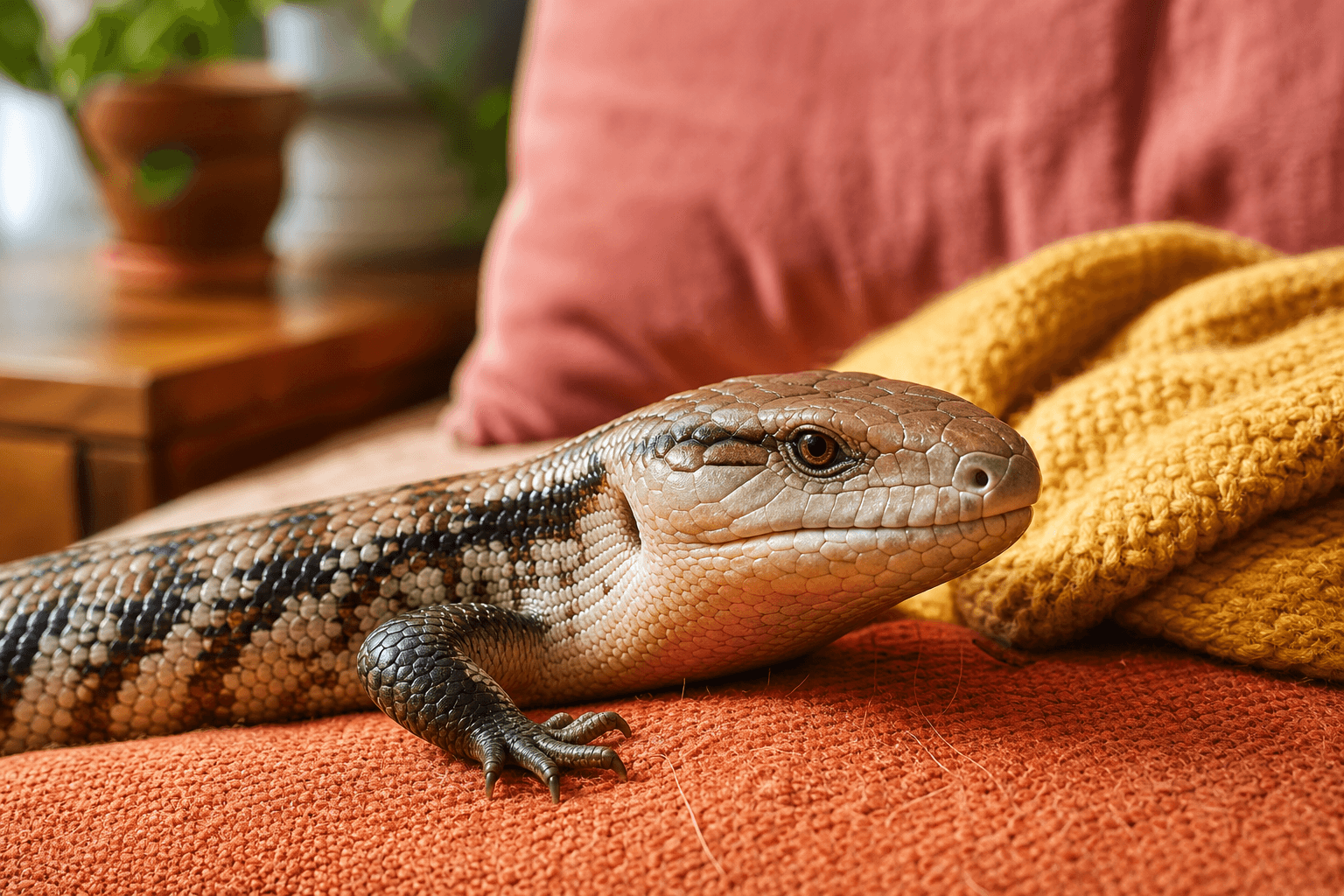
You saw that brilliant blue tongue and thought, wow. Same here.
Blue-tongued skinks are calm, curious, and surprisingly dog-like. But they are also powerful, long-lived reptiles with very specific needs.
Here are the seven things we wish we knew before bringing one home—so you can skip the guesswork and get it right from day one.
1. Adult Size and Real Housing Needs
Blue-tongued skinks reach 18–24 inches and are chunky, ground-dwelling lizards. A baby fits in your palm; an adult fills two hands easily.
Plan for a minimum 48x24x18 inch enclosure for most species. Bigger is better—these tanks need floor space, not height.
They appreciate multiple hides, a sturdy water dish, and clutter: cork rounds, branches laid low, and visual barriers. If your setup looks like a studio apartment with furniture, you’re close.
Warmth and light are what make the habitat livable
2. Heat and UVB Are Non-Negotiable
Skinks thermoregulate all day. You must provide a basking spot of about 95–100°F and a cool side around 75–82°F, with nighttime above the mid-60s.
Use a dome heat lamp with a dimmer or thermostat, and confirm with a probe thermometer (not just stick-ons). Surface temp at the basking site matters more than air temp.
While some keepers debate it, quality UVB (e.g., T5 HO 10–12% mounted appropriately) supports vitamin D3 synthesis, bone health, and appetite. Replace UVB bulbs on schedule.
Substrate and Cleaning
Use a loose, low-dust mix that holds humidity without getting soggy, like a soil/coco/bark blend. Spot-clean waste promptly and deep-clean monthly.
3. Omnivore Diet, Not Just Bugs
Blue-tongued skinks are omnivores. Think mixed salads plus protein, not cricket-only meals.
Base meals on dark leafy greens (collards, mustard greens, dandelion), add vegetables (squash, green beans), modest fruit as treats, and rotate proteins: high-quality grain-free dog food in small amounts, cooked lean turkey or chicken, boiled egg, and occasional insects like roaches or snails (from safe sources).
Adult feeding
3–4 days per week; variety over volume. Avoid overfeeding to prevent obesity.
Calcium & vitamins
Light dusting of calcium; use D3 judiciously if you provide strong UVB.
What to avoid
Onion, garlic, avocado, rhubarb, fireflies, and wild-caught insects.
Hydration
Fresh water always; watery veggies help. Soaks only if needed for shed.
Friendly does not mean fragile
4. Temperament: Calm, But Strong
Handled gently, most blue-tongues are mellow and tolerant. They learn routines and will watch you like a little reptile neighbor.
Respect signals: huffing, puffing, a wide mouth, and that famous blue tongue are warnings. Bites are rare with good handling, but their jaws are powerful.
- Support the whole body—no dangling.
- Short, frequent sessions beat long stressful ones.
- Supervise kids closely; never grab from above.
- Skip handling during shed or illness.
5. Humidity and Shedding Quirks
Most blue-tongue species prefer moderate humidity—often 35–60%, with a slightly more humid hide to aid shedding. Indonesian species tend to like it higher than Australian species.
Provide a humid hide stuffed with damp sphagnum and keep at least one area drier. Good airflow prevents respiratory issues.
Not if your humidity and husbandry are right. Occasional soaks are for stuck shed, not routine.
Species and local origin matter. Research your exact type (e.g., Northern vs. Indonesian) and adjust.
6. Lifespan and Vet Reality
With solid care, blue-tongued skinks can live 15–20+ years. This is a long commitment, similar to a small dog.
Find an exotics vet before you buy. Routine fecals for parasites, help with stuck sheds, and guidance on nutrition are part of responsible care. Not every town has a reptile-savvy clinic, so plan your travel route and budget.
Annual Cost Breakdown
| Expense | Annual Cost |
|---|---|
| Electricity (heat & UVB) | $120–$250 |
| Food & supplements | $200–$350 |
| Substrate & enclosure supplies | $120–$250 |
| Vet fund (set aside) | $150–$300 |
| Est. Annual Total | $590–$1,150 / year (after setup) |
7. Upfront Cost and Daily Time
The lizard is the cheapest part. A proper 4-foot enclosure, heating, UVB, decor, and reliable thermostats can run $600–$1,200+ before your skink even moves in.
Daily, expect quick checks: temps, fresh water, spot-cleaning, and interaction. Feeding is a few times a week; deeper maintenance happens weekly and monthly.
Pros
Why they win hearts
- Calm, engaging pets that tolerate handling well
- Diurnal and visible—fun to watch
- Omnivore diet is flexible once you learn it
Cons
What gives people pause
- Large enclosure and strong heat/UVB needs
- Upfront cost adds up fast
- Finding a good exotics vet can be challenging
Northern (Tiliqua scincoides intermedia) is popular for moderate humidity needs and hardy temperaments. Indonesian types can be wonderful but often prefer higher humidity.
A clean, well-ventilated setup with spot-cleaning does not smell. Odor usually means it is time to clean substrate or the water dish.
Generally, no. They are solitary and may fight or stress each other. House separately except for brief, supervised breeding by experienced keepers.
Juveniles shed every few weeks; adults every few months. Provide a humid hide and do not peel stuck shed—soften and assist gently only if necessary.
Verify surface temps with a probe, check for drafts, and ensure hides are not only on the cool side. If husbandry is correct and appetite drops, see an exotics vet.