7 Things to Know Before Getting a Bernese Mountain Dog
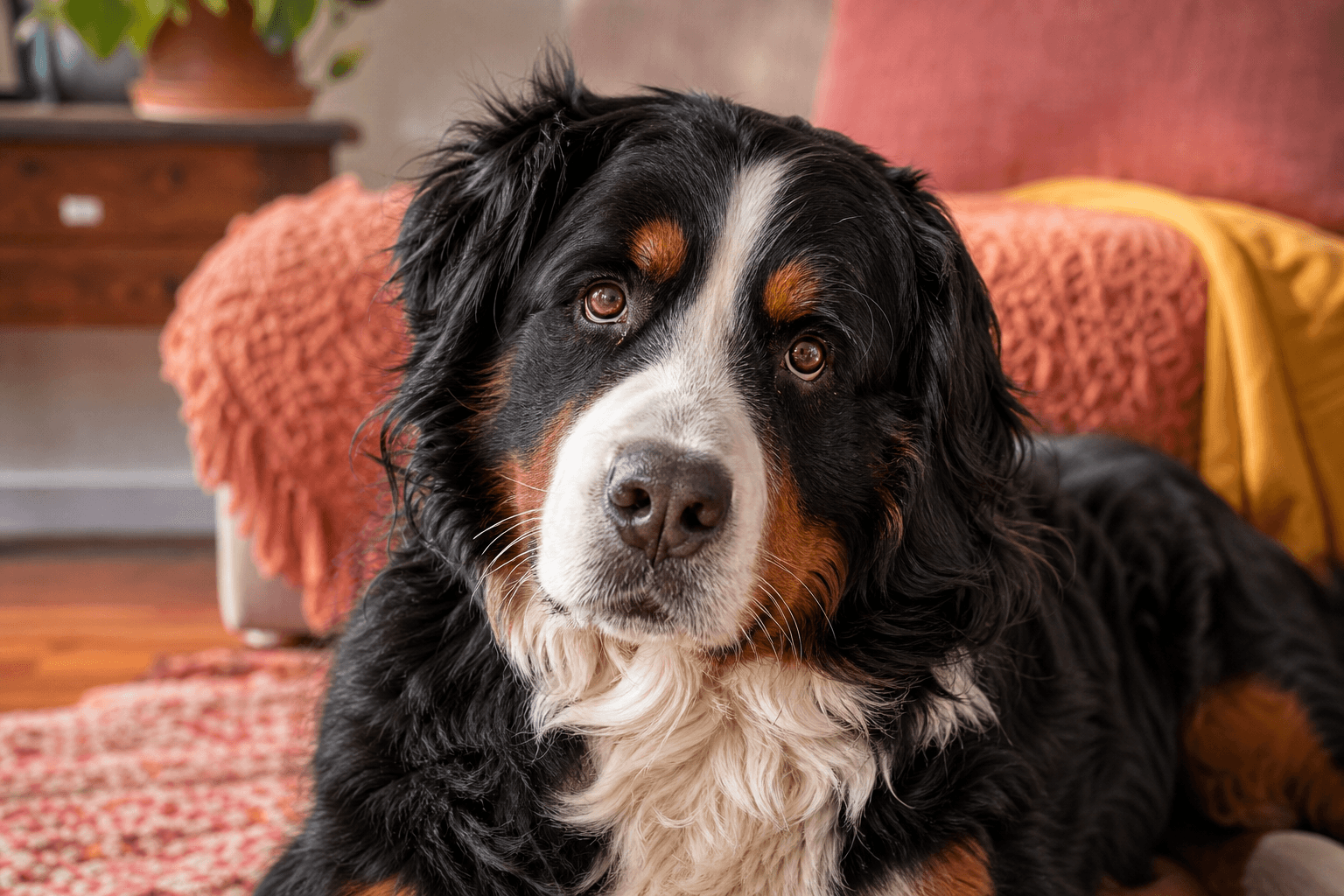
You fell for the big smile, tricolor coat, and those gentle eyes. We did too.
Before you bring home a Bernese Mountain Dog, here are the seven truths that make life with a Berner wonderful and workable.
Read this now, thank yourself later.
1. They Are Truly Giant (and Still Think They’re Lap Dogs)
Adult Bernese Mountain Dogs routinely weigh 70–115 pounds and stand tall enough to counter-surf without trying.
They grow fast during the first year, so floors get slippery, stairs matter, and cars need a plan. A hatchback with a low lift-over or an SUV with a sturdy ramp makes life easier.
Despite the size, many Berners lean and sit on you. It is endearing until your coffee is involved. Teach polite greeting early and invest in non-slip rugs.
Love the coat? Here’s the trade-off.
2. The Gorgeous Coat Sheds. A Lot.
That silky tricolor double coat blows seasonally and still sheds year-round. You will own a good vacuum and lint rollers.
Routine brushing (2–3 times weekly) keeps mats from forming behind ears, in the pants, and under the collar. During spring and fall, daily sessions help manage the shed and keep skin healthy.
Baths every couple of months, nail trims, and ear checks are standard. Never shave a double coat; it can damage insulation and regrowth.
Grooming Kit Musts
Slicker brush, undercoat rake, steel comb, nail grinder or clippers, gentle dog shampoo.
Shedding Survival
Robot vacuum, washable throws, doormats at every entry, quick daily brush during coat blow.
3. Health and Lifespan Realities
Berners are prone to certain issues: hip and elbow dysplasia, some cancers, bloat (GDV), and orthopedic strains from rapid growth.
Work with responsible breeders who screen hips, elbows, and hearts, and discuss family history. Pet insurance is worth serious consideration for this breed.
Lifespan often ranges 7–10 years. It is the hardest part of loving a Berner. The trade-off is deep, devoted companionship in the years you share.
4. Temperament: Sweet, Sensitive, and People-Oriented
Well-bred Berners are famously gentle and eager to please. They bond hard and often prefer being wherever you are.
They read your tone. Harsh corrections shut them down; calm, consistent guidance builds confidence. Many are naturally polite with kids when supervised, but their size still calls for management.
Pros
Why People Love Berners
- Affectionate, stable family companion
- Generally friendly with people and pets when socialized
- Adaptable energy indoors when needs are met
Cons
What Can Be Hard
- Sensitive to tension and loud corrections
- Can be clingy; not ideal for long daily absences
- Sheer size amplifies any manners gap
5. Exercise Needs: Moderate Body, Busy Brain
Berners are not marathoners, but they are working dogs. Aim for 60–90 minutes of combined activity daily split into walks, sniffaris, and short play.
Protect growing joints: keep jumping and repetitive stairs limited until growth plates close (often 18–24 months). Choose low-impact like grass play, swimming, and controlled leash walks.
Great Outlets
Carting/drafting basics, nose work, rally, hiking in cool weather, puzzle feeders.
Skip or Limit
Endless fetch on hard surfaces, long runs with young dogs, hot mid-day outings.
6. Training and Socialization Start Early
At 10 weeks they are adorable; at 10 months they are 80 pounds. Manners must scale with the dog.
Start with name response, recall, settle on a mat, loose-leash walking, and a rock-solid “leave it.” Positive reinforcement works beautifully with this breed’s soft nature.
Day-One Training Priorities
- Polite GreetsFour feet on the floor earns attention; jumping gets nothing.
- Doorway MannersWait cue before going outside to prevent accidental bolting.
- Place/MatTeach an off-switch for guests, mealtimes, and delivery chaos.
- Handling ConfidenceDaily gentle paws/ears/mouth handling to prep for grooming and vet care.
7. Your Lifestyle and Climate Matter
Berners were bred for cool Swiss mountain work. Heat is their kryptonite. In warm climates, plan for early-morning walks, shade, AC, and cooling mats.
They thrive when included: school drop-offs, patio coffee, weekend hikes. Long daily isolation often fuels nuisance barking or anxiety. If you work away from home for extended hours, line up walkers, daycare, or a trusted neighbor.
- You can afford giant-breed food, beds, crates, and vet bills.
- You have a heat-management plan for summer.
- You enjoy daily training and gentle structure.
- You are often away 10+ hours with no help.
Generally yes when well-bred and socialized. Their gentleness shines, but always supervise due to size and teach both kids and dogs appropriate interactions.
Expect several cups of quality large-breed food split into two meals, adjusted for age, activity, and body condition. Avoid rapid growth in puppies.
Yes, if there is an elevator or safe stair strategy, daily exercise, and heat management. The key is time with you and predictable routines.
Most Berners drool less than heavy jowl breeds, but many will drool around food, water, or excitement. Keep towels handy.
Drafting/carting, therapy visits, nose work, hiking in cool weather, and rally obedience match their build and temperament.