6 Essential Facts About Sheepadoodles That Every New Owner Should Know
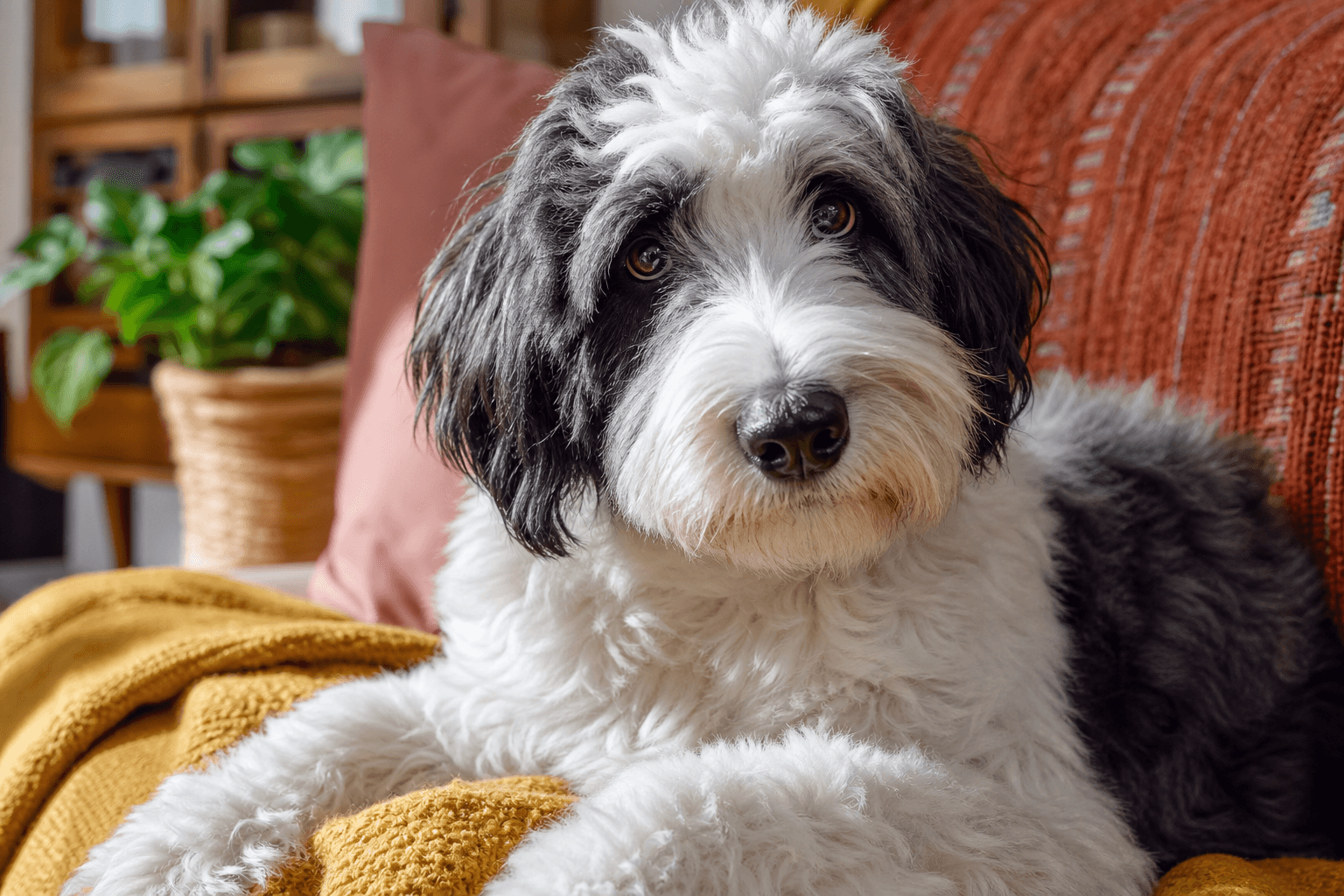
You clicked because you want the real scoop on Sheepadoodles, fast.
We live with these fluffy clowns, and here are the six things that actually shape daily life.
Skim the list, pick your action steps, and you will be ahead of most first-time owners by tonight.
1. The Coat Is Low-Shedding, Not Low-Maintenance
Most Sheepadoodles shed very little, but that fluffy, wavy coat mats fast without care.
Plan on brushing three to four times a week and professional grooming every six to eight weeks; puppies can need more frequent quick brushes while their adult coat comes in.
Mats start in friction zones like armpits, behind ears, collar line, and the base of the tail, then spread quietly; once tight, they can only be shaved out.
Brush routine
Slicker brush to lift, then a metal comb to the skin. If the comb stops, there is a tangle.
Bath timing
Only bathe after a full brush out. Water tightens hidden mats.
Drying matters
Thoroughly dry and brush as you go. Damp curls invite mats and odor.
Face and feet
Wipe tear lines daily and trim paw hair to prevent slips and debris.
2. They Need Daily Exercise and Brain Work
Under-exercised Sheepadoodles invent jobs like counter-surfing and herding your ankles.
Most adults thrive on 60 to 90 minutes of activity split across the day, plus short training or puzzle sessions.
Mix cardio with sniffing and problem solving to take the edge off without creating a mileage monster.
3. Expect Medium-to-Large Size and Real Presence
Standard Sheepadoodles commonly land between 50 and 80 pounds, with minis often 25 to 45, but bone, coat, and height still make them feel bigger in tight spaces.
They ride low and wide like an Old English Sheepdog, then spring up with Poodle agility; teach doorway manners early so the enthusiasm does not bowl guests.
Apartment living can work if you commit to daily exercise, elevator etiquette, and a consistent potty schedule.
Personality is the payoff — and the project.
4. Goofy, Gentle, and Velcro — With Herding Quirks
Expect a people oriented shadow who wants to help with everything and checks your mood regularly.
They are playful and gentle with kids when supervised, but herding ancestry can show up as nudging, circling, or mouthing during high excitement.
Redirect movement chasing into toys, tug, and structured games, and give excitable kids a calm down plan to keep everyone happy.
5. Smart Dogs Need Clear Training and Early Socialization
Sheepadoodles learn fast and just as quickly learn your loopholes; inconsistent rules create chaos.
Use reward based training, short upbeat sessions, and tight management of the environment to prevent practicing bad habits.
House rules that pay off
- Default settle spotTeach place on a mat so you can park the dog during meals, guests, or deliveries.
- Polite greetingsReward four paws on the floor; add sits for petting.
- Handle early, gentlyPaws, ears, tail, grooming table, and blow dryer paired with treats prevent future battles.
Socialize early to friendly dogs, new floors, city noise, and alone time; without practice, some develop separation distress or timid streaks.
6. Health Watchouts and Real-World Costs
Common concerns in this cross include hip dysplasia, elbow dysplasia, eye conditions like progressive retinal atrophy, bloat in deep chested lines, autoimmune endocrinopathies from Poodle heritage, and ear infections in floppy, hairy canals.
Ask breeders for orthopedic and eye clearances on both parents and discuss bloat prevention, ear care, and a healthy growth curve that avoids rapid weight gain in puppies.
- Weekly ear check and clean after swims or baths
- Keep nails short to protect joints and posture
- Free feed a growing pup to speed growth
- Skip insurance; doodles are always healthy
Annual Cost Breakdown
| Expense | Annual Cost |
|---|---|
| Professional grooming every 6 to 8 weeks | $600–$1,200/yr |
| Food and treats | $600–$1,000/yr |
| Routine vet care and preventives | $400–$800/yr |
| Training classes and enrichment | $200–$600/yr |
| Insurance or emergency fund | $500–$900/yr |
| Est. Annual Total | $2,300–$4,500/yr |