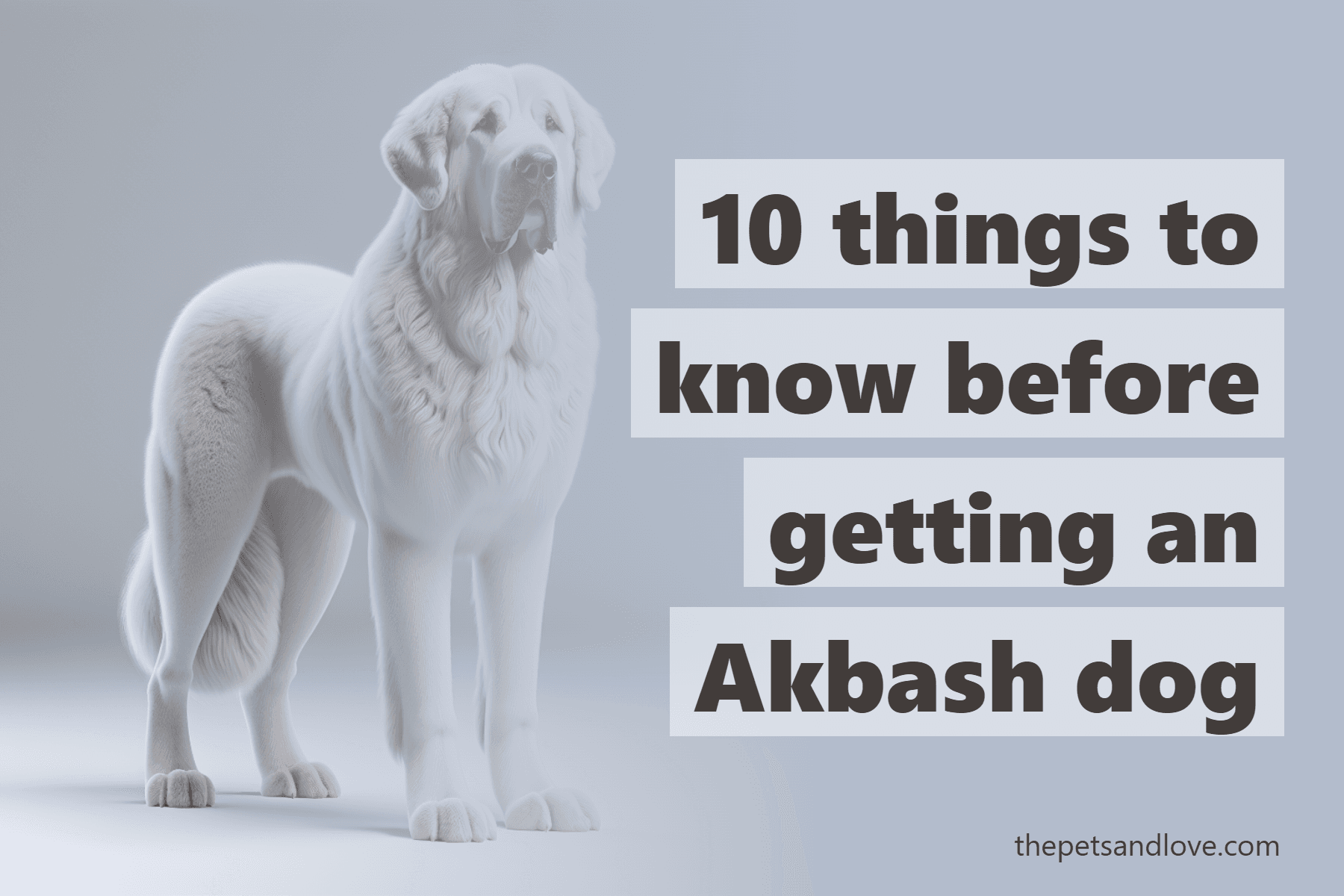
10 things to know before getting an Akbash dog
You want a dog that's loyal to the bone, protective without being hyper, and calm enough to nap while it stands guard over everything you love.
The Akbash might be exactly that dog — but only if you know what you're getting into.
This big, white livestock guardian from Turkey was bred to think for itself, protect fiercely, and switch off the moment the job's done. That combination makes it one of the most impressive breeds around — and one of the easiest to get wrong.
So before you fall in love with those calm eyes and that snowy coat, here's everything you need to weigh first.
First off: they're huge (and strong)
Let's not bury the lead — this is a seriously large dog.
Akbash dogs tip the scales at anywhere from 75 to 140 pounds and can stand over 30 inches tall.
They're lean yet powerful — think of a cross between a sighthound and a mastiff.
Don't let the mellow demeanor fool you. When an Akbash decides to move, it's surprisingly fast and agile.
That slightly arched back gives them a springy, ground-covering stride — a handy trait when they're patrolling for predators.
But size is only half the story. Their instincts run even deeper.
Guardian instincts are baked in
Here's the fascinating part: you don't teach an Akbash to protect. It already knows.
These dogs were bred over centuries to guard livestock, so the watchfulness is hardwired.
They're naturally calm, alert, and independent thinkers — the type of dog that quietly surveys the horizon rather than begging for attention.
Naturally watchful
They notice everything — a car door, a stranger, a shadow that moved when it shouldn't have.
Calm under pressure
A well-raised Akbash isn't aggressive. It assesses first, reacts only when needed.
Independent by design
They were bred to make decisions alone in a field, so they won't always look to you for direction.
Vocal alerters
Expect barking at anything unfamiliar. It's not a flaw — it's the job.
So what does this mean for you? If you have livestock or a large property, this breed truly shines.
But if you're picturing a laid-back suburban companion, the Akbash may be more dog than you bargained for.
“An Akbash doesn't ask what to do. It decides — and expects you to trust its judgment.”
Not for first-time dog owners
Let's be honest: this is not the breed to cut your teeth on.
The Akbash needs a handler who is calm, confident, and consistent — every single day.
You'll need to socialize early and often, train with a firm-but-fair hand, and accept that this is a dog who doesn't always want your input.
Pros
Great fit if you…
- Have prior experience with large or working breeds
- Own rural land or livestock to guard
- Can commit to lifelong socialization and structure
- Want a protector, not a lapdog
Cons
Reconsider if you…
- Are getting your first-ever dog
- Live in a small apartment or dense neighborhood
- Want an obedient, always-eager-to-please companion
- Can't provide secure fencing and daily engagement
They can be stubborn — especially as youngsters — and they take their time maturing both physically and mentally.
Plan on roughly three years before your Akbash is truly "grown up."
And there's one thing that matters more than any training technique.
Socialization is everything
If you take one thing from this guide, make it this: socialization is the single biggest factor in how your Akbash turns out.
A well-socialized Akbash can be a wonderful, gentle family dog.
Skip it, and you may end up with a dog that's suspicious, territorial, and genuinely hard to handle.
- Introduce new people, places, and sounds early in puppyhood
- Keep socializing throughout their life — not just the first year
- Raise them alongside kids and other pets when possible
- Assume an unsocialized adult will automatically be gentle
- Leave a strong, large dog unsupervised around toddlers
Here's the catch with size: even a friendly adult Akbash can knock over a small child without meaning to.
Adults who've never been around children are trickier still — their sheer power demands supervision.
Grooming and shedding
Good news: that gorgeous coat is lower-maintenance than it looks.
The Akbash sports a thick double coat — short or long — that sheds moderately most of the year.
Then come the seasonal blowouts, when the fur really flies.
Your simple grooming routine
- Brush weeklyStep it up to several times a week during heavy seasonal shedding.
- Bathe rarelyOnly when they roll in something truly regrettable.
- Trim nails regularlyOvergrown nails affect their gait and comfort.
- Check ears and teethRoutine ear checks and dental care prevent bigger problems later.
The takeaway: a brush, some nail clippers, and a consistent habit are basically all you need.
Exercise: low energy, but still needs space
You might be wondering how much a 100-pound dog needs to run. Less than you'd think.
Despite their size, Akbash dogs are not high-energy athletes.
They'd rather lounge and survey their kingdom than chase a ball across the yard.
| Category | Rating |
|---|---|
| Daily energy | |
| Space needs | |
| Jogging buddy | |
| Mental stimulation |
They still need daily walks and room to roam — just not marathon workouts.
One warning, though: forget underground or invisible fences.
Bottom line here: give them space, a little mental enrichment, and a secure perimeter — and they're content.
Now, before they mellow into calm guardians, there's a chaotic phase to survive.
Puppies chew — a lot
That serene adult Akbash starts life as a furry wrecking ball with teeth.
Puppies chew, dig, and find mischief the moment they're bored or unsupervised.
Health: mostly sturdy, but watch for weight
Here's some reassurance: Akbash dogs are generally hardy and healthy.
Still, like many large breeds, they can be prone to a few conditions worth watching.
Hip dysplasia
Common in big breeds. Keep them lean and ask breeders about screening.
Bloat (GDV)
A serious, fast-moving emergency. Avoid heavy exercise right after meals.
Other conditions
Some lines can see epilepsy or heart issues — routine vet checks catch problems early.
Obesity
The biggest everyday risk, thanks to their low activity level.
Because they're not especially active, it's alarmingly easy to overfeed them.
Can you guess?
What's the single most preventable Akbash health problem?
They need to be part of the family
Here's something that surprises people about such an independent breed: they crave connection.
Yes, an Akbash can live outdoors and thrive in rural settings.
But they still bond deeply with their people and want to feel like part of the pack.
“Leave an Akbash tied up and ignored in the yard, and you'll create the very problems you were hoping to avoid.”
Isolation breeds trouble. Inclusion brings out the loyal, steady guardian this breed is famous for.
Quick poll
Which Akbash trait fits your lifestyle best?
Frequently Asked Questions
Generally, no. Their independence, size, and guardian instincts demand an experienced, confident handler who can stay consistent with training and socialization from day one.
Yes — alert barking is part of their DNA as guardians. They'll vocalize at anything unfamiliar. Training can shape when and how much, but expect a naturally watchful, vocal dog.
When raised with kids and properly socialized, they can be gentle and protective. But their size alone can accidentally knock over a toddler, so supervision is always wise — especially with adults who weren't raised around children.
If raised alongside other animals, they can coexist well. Without early exposure, though, they may view unfamiliar dogs or animals as threats. Early, ongoing socialization is key.
Less than most large breeds. Daily walks, a securely fenced yard to patrol, and some mental enrichment are enough. They're loungers by nature, not jogging partners.
They tolerate outdoor rural living better than most breeds, but they still need real interaction and connection with their family. Left isolated, they can become difficult and unhappy.
Plan for roughly three years to reach full physical and mental maturity. Expect a chewy, stubborn, mischievous puppy phase before that calm adult guardian emerges.
Their independence. This isn't a dog that lives to please you — you have to earn trust, stay consistent, and respect that they often think they know best.