15 Things You Must Know Before Bringing Home a Pomsky Puppy
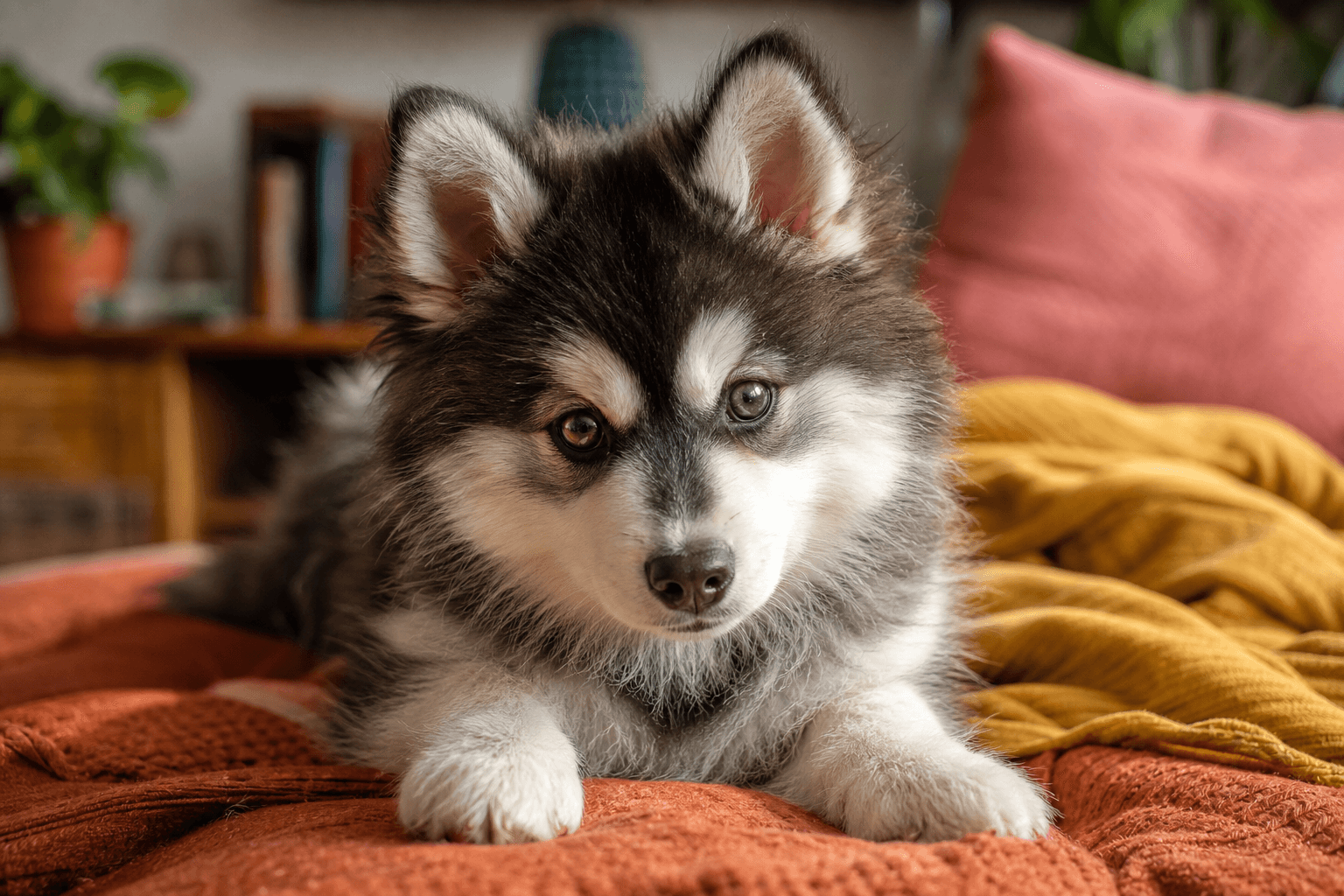
You clicked because Pomskies are adorable—and you want the real picture before one zooms into your life.
We have you covered with the essentials breeders, trainers, and owners wish you knew on day one.
Skim this, screenshot what matters, and bring your Pomsky home prepared.
1. Size Is Unpredictable (and It Matters)
Pomskies are a Pomeranian x Siberian Husky mix, and crossbreeds don't “average out” neatly.
Even from the same litter, adults can range roughly 12–30 pounds, sometimes smaller or larger depending on lines and generation.
Plan for the biggest end of the range when choosing crates, harnesses, and your living setup—your future self will thank you.
2. Expect Big-Dog Energy In a Smaller Body
Husky drive meets Pomeranian spunk, which means a playful, curious dog who needs daily outlets.
As adults, many thrive on 60–90 minutes of activity split through the day, plus short training bursts.
Puppies need age-appropriate exercise: think multiple 5–10 minute sessions instead of long, joint-stressing walks.
3. The Coat Sheds—Often and in Seasons
Pomskies typically inherit a double coat and blow coat seasonally.
Expect hair on clothes and furniture—lint rollers, a good vacuum, and a brushing routine make cohabitation happy.
4. Grooming Is Routine, Not Optional
Brush 2–4 times a week to prevent mats and reduce shed; during seasonal sheds, daily brushing helps.
Skip close shaving; it can damage the double coat and affect temperature regulation.
Book nail trims every 2–4 weeks, clean ears monthly, and add daily tooth brushing—small-dog genetics can mean crowded teeth.
5. Temperament Is a Blend, Not a Switch
Expect affectionate, people-focused behavior with a dash of independence and mischief.
Prey drive from the Husky side can appear—small pets and off-leash freedom need thoughtful management.
If you have kids, supervise; Pomskies can be sturdy or delicate depending on size, and enthusiasm goes both ways.
6. Smart but Stubborn: Train for Focus
They learn fast—and get bored faster. Keep sessions short, upbeat, and varied.
Focus on name recognition, hand-targeting, settle on a mat, and recall foundations right away.
7. Early Socialization Prevents Future Drama
Expose your puppy (safely, after initial vaccines) to elevators, umbrellas, kids on scooters, and calm big dogs.
Pair new sights with treats and retreat options. Confidence now pays off when adolescence hits.
8. Vocal Tendencies Are Real
Pomskies can bark and even “woo” like Huskies. It's cute—until it's not.
Teach a quiet cue early, reward calm, and avoid rehearsing window patrol. Frosted glass film or strategic furniture placement can reduce triggers.
9. Exercise and Enrichment: More Brain Than Miles
You don't need marathon runs; you need smart outlets.
Sniffy walks
Let them lead for ten minutes—mental work that relaxes.
Puzzle feeders
Use meals for problem-solving and slow eating.
Flirt pole (gentle)
Short, controlled chases with planned “downs” to prevent over-arousal.
Shaping games
Reward tiny steps toward a behavior (like going to a mat).
10. Health Topics to Ask Breeders About
Ask for health testing and records on both lines: hips and elbows (Husky), patellas and trachea (toy breeds), eyes (CERF/CAER), thyroid, and dental notes.
Discuss risks like luxating patella, hip dysplasia, eye conditions (cataracts, PRA), alopecia X, and dental crowding.
Insurance in the first 48 hours can save heartbreak—and your savings—later.
11. Choosing an Ethical Breeder (or Rescue)
Responsible breeders prioritize welfare over size trends. Be wary of “teacup” marketing and no-questions-asked sales.
Look for contracts, health guarantees, vet references, and lifetime take-back policies; meet at least the dam and see where puppies are raised.
Rescues and shelters do get Pomskies—ask about foster notes on energy, noise, and compatibility.
12. Apartment Life: Possible with Structure
Yes, with management. Elevators, neighbors, and thin walls mean you'll train quiet, crate, and calm from day one.
Two brisk outings, one sniffy session, and a couple of training bursts can meet daily needs—plus chew breaks.
13. Feeding a Pomsky Puppy
Choose a high-quality puppy diet that fits your vet's size projection (small-to-medium breed formulas are common for Pomskies).
Feed measured meals 3–4 times daily at first, then taper. Growth should be steady, not rapid; keep them lean to protect joints.
Rotate proteins gradually to build a resilient gut, and use part of meals for training.
14. The Real Costs—Upfront and Ongoing
Purchase or adoption fees vary widely; responsible-breeder Pomskies are often in the $1,500–$4,000 range.
Budget for vaccines, spay/neuter, microchip, crate, grooming tools, training, and pet insurance.
Monthly: quality food, preventives, toys, and occasional grooming—plus a rainy-day medical fund.
15. Long-Term Commitment and Lifestyle Fit
Pomskies live around 12–15 years. They thrive with time, structure, and play—less so with chaos and long daily absences.
If you love training, don't mind fur on your hoodie, and enjoy a clever companion, you'll adore this mix.
- I can handle daily brushing and seasonal shedding.
- I have 60–90 minutes for activity and training most days (scaled for puppy age).
- I will prioritize early socialization and positive reinforcement.
- I can budget for insurance, vet care, and quality food.
- I expect “talking” and will train quiet cues early.
- I want a silent, low-energy lap dog.
- I plan to shave the double coat short in summer.
- I need guaranteed tiny adult size.