15 Things to Know Before Getting a Praying Mantis
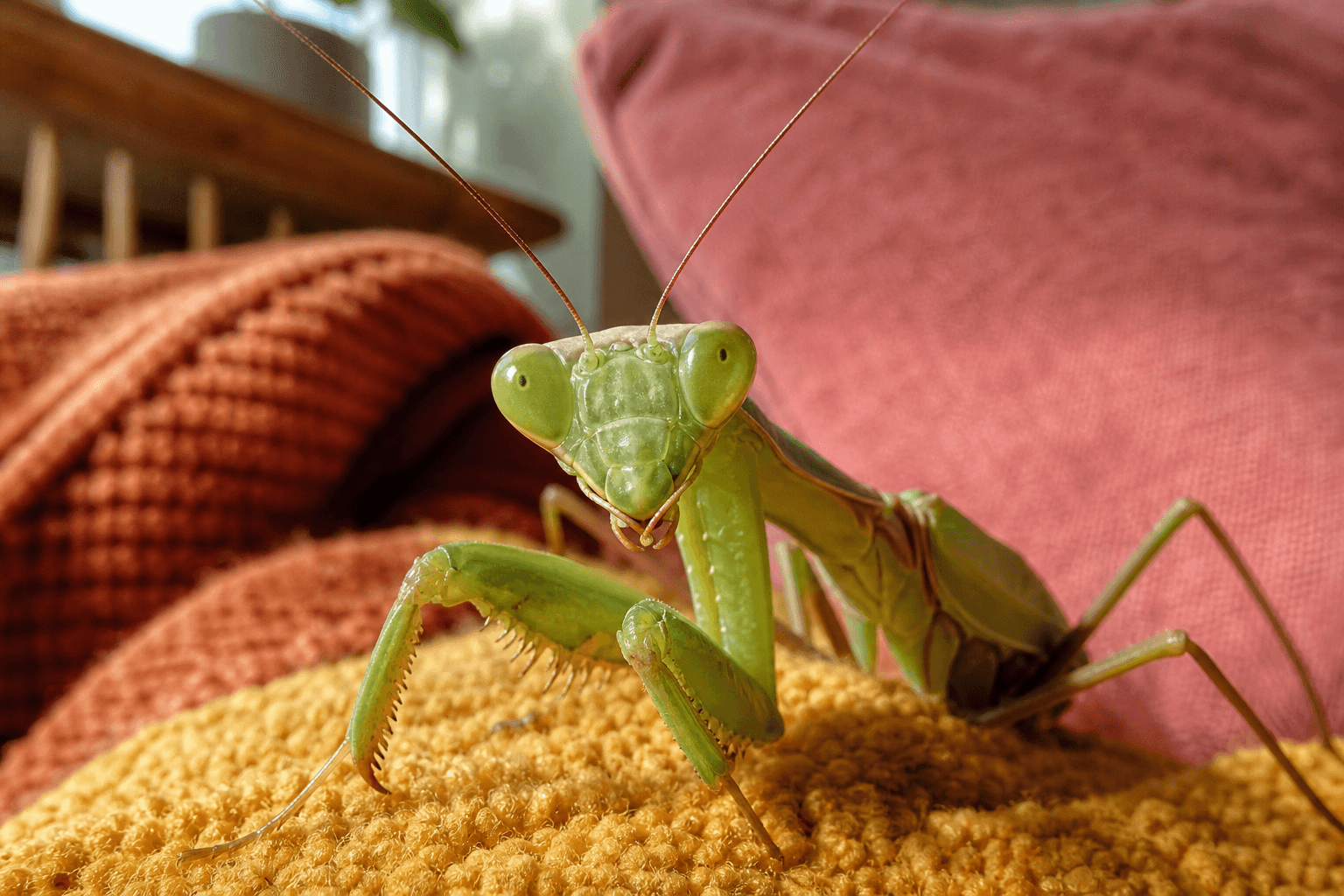
You saw that hypnotic head tilt and raptor arms and thought… could a mantis be my first exotic pet?
Great choice — if you know what you are signing up for.
Here are the quick, real-world things we wish someone told us before we brought home our first mantis.
1. Species Matters More Than You Think
Not all mantises behave the same. Beginners do best with hardy, forgiving species like Chinese (Tenodera sinensis), Giant Asian (Hierodula membranacea), or Ghost (Phyllocrania paradoxa).
Ornamental types like Orchid (Hymenopus coronatus) are stunning but picky about heat, humidity, and prey size.
2. Their Lifespan Is Short
Most pet mantises live 6–18 months from hatch to natural death, depending on species and sex.
If you want a longer experience, adopt a juvenile (L3–L5) rather than an adult so you can enjoy more molts and growth.
3. The Enclosure Must Fit Their Style
Vertical, arboreal species need tall enclosures; ground or shrub species prefer more floor space. A safe rule: height at least 3× body length to allow molting, with secure mesh for grip.
Fine cross-ventilation prevents stale, wet air. Start small for nymphs so they can find prey; size up as they grow.
Good Starter Size
For subadults: roughly 8–12 in tall with front-opening door and fine mesh lid.
Substrate
Paper towel for easy cleaning or bioactive soil for stability; keep dry-to-slightly-damp per species.
Perches
Twigs, cork, and mesh near the top so they can hang to molt without obstruction.
Security
Tight-fitting lids; fruit-fly-proof vents for small nymphs.
4. Molting Is High-Stakes
Your mantis will hang upside down, split its old skin, and slide out. Any obstruction or low humidity can deform wings or limbs.
Give them clear vertical space, do not feed 24 hours before a molt, and avoid vibrations or handling until they harden.
5. Humidity and Ventilation Are a Balancing Act
Ghosts and other dry-tolerant species like moderate humidity; orchids and devils need it higher. Mist lightly on decor, not directly at the mantis.
Wet plus stagnant air breeds problems. Aim for humidity that dries between mists and always pair it with airflow.
6. They Need Gentle Heat (Usually)
Room temperature works for many hardy species (around low-to-mid 70s F). Tropicals prefer a warm spot in the mid-to-high 70s to low 80s F.
Use a low-watt heat mat on the side or a small heat panel with thermostat. Never bake the enclosure or heat from below.
7. Live Food Is Non-Negotiable
Mantises are ambush predators and rarely accept dead prey. You will keep feeder cultures: fruit flies for tiny nymphs, then houseflies, bluebottle flies, small roaches, or crickets as they grow.
Flies are cleaner and safer than crickets for many keepers. Gut-load feeders and avoid wild-caught bugs (pesticides risk).
8. Feeding Frequency Changes With Age
Nymphs eat small meals every 1–2 days. Subadults and adults do well with a larger feeder every 2–4 days. A slightly rounded abdomen is fine; balloon-shaped means overfed.
Skip feeding a day or two before and after a molt to prevent injury and give them time to harden.
9. Handling Is Limited and On Their Terms
They are delicate. Let them walk onto your hand rather than picking them up. Avoid handling during premolt, postmolt, or when gravid.
Falls can be fatal, and sudden drafts stress them. Enjoy them mostly by observation.
Small husbandry habits make a big difference
10. Escapes Happen — Plan Ahead
Even careful keepers get a loose mantis now and then. Close doors and curtains, turn off fans, and search near warm lights or window edges.
Use a cup to gently coax them back. Prevention is best: check lids and feed through a small service door.
11. Sexing and Cannibalism Realities
Females are typically larger with shorter antennae; counting abdominal segments helps at later stages. Do not house mantises together — they are solitary and will cannibalize, especially around molts or feeding time.
Breeding is advanced-keeper territory. Supervised introductions only, and be ready to separate fast.
12. Decor Is Not Just Pretty — It Is Safety
They need multiple textured perches: twigs, dried stems, and mesh so claws can grip. Avoid sticky plants or anything that sways wildly under their weight.
Silk or live plants both work; prioritize stable, vertical anchor points near the top.
13. Cleaning Is Light but Consistent
Spot-clean frass and old shed skins weekly. Replace paper towel substrate every 1–2 weeks or refresh bioactive as needed.
Avoid strong chemicals; warm water and a reptile-safe cleaner are enough. Always dry surfaces before returning your mantis.
14. Costs Are Small but Add Up
Annual Cost Breakdown
| Expense | Annual Cost |
|---|---|
| Enclosure and decor (initial) | $30–$80 one-time |
| Heat/thermostat (if needed) | $20–$60 one-time |
| Feeder insects & cultures | $8–$20/month |
| Misting bottle/hygrometer | $10–$25 one-time |
| Replacement decor/substrate | $20/year |
| Est. Annual Total | $100–$200 first year, then ~$100/year |
15. Ethical and Legal Considerations
Buy captive-bred when possible to reduce wild collection pressure and hitchhiking pests. Some regions restrict releasing non-native species and may regulate shipping live insects.
Never release a pet mantis outdoors. If you cannot keep it, rehome with another enthusiast.
They do not have stingers. They can nip if grabbed, but it is mild. The real risk is to them — rough handling can injure a leg or abdomen.
No. Mantises are solitary and will usually cannibalize, even as juveniles. Separate enclosures are mandatory.
Chinese, Giant Asian, and Ghost mantises are hardy, forgiving with diet and humidity, and widely available captive-bred.
Look for thin, wrinkled abdomen and lethargy. Offer droplets on leaves and increase light misting while improving airflow to prevent stagnation.
Usually not enough vertical clearance or poor grip surface, sometimes low humidity. Provide firm upper perches, fine mesh, and avoid feeding or vibrations near molt time.