15 Things to Know Before Getting a Jumping Spider
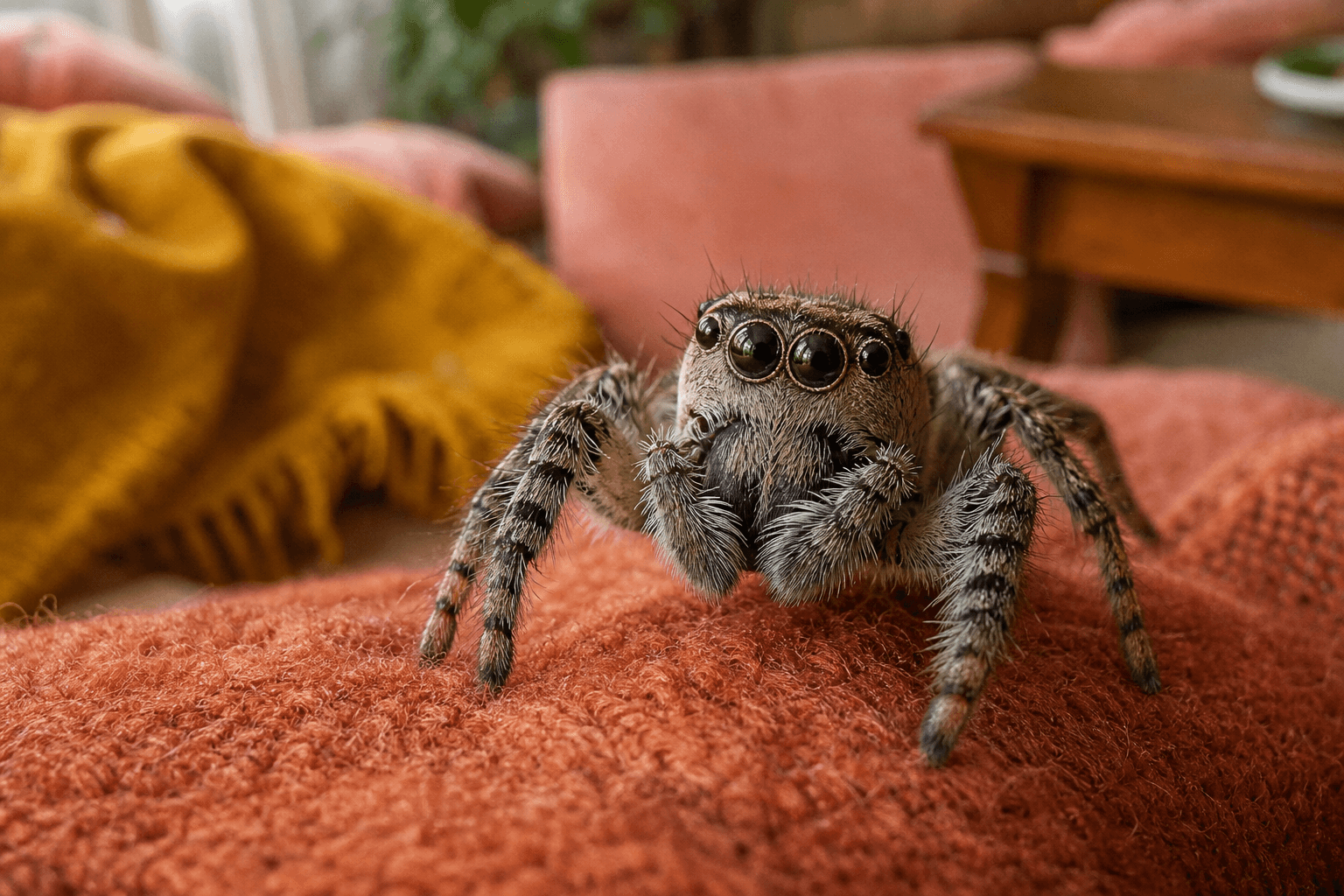
You saw those big curious eyes and tiny toe beans, and now you are spider-curious.
We keep jumpers and love them — but there are a few things to know so you and your spider both thrive.
Here are the fast, true essentials we wish we had on day one.
1. Species Matters
"Jumping spider" covers many species, but most pet keepers start with Phidippus regius (Regal) or Phidippus audax (Bold).
They have big eyes, visible personalities, and tolerate captive life well.
Know your species' adult size and preferred temperature; it guides enclosure and feeder size.
2. Their Lifespan Is Short
Most females live 1 to 2 years; males often less.
Enjoy the day-to-day — training your eye to notice small behaviors makes the short timeline feel rich.
3. Check Local Laws and Ethics
Some areas restrict collecting natives or mailing live invertebrates.
Whenever possible, buy captive-bred slings from reputable breeders; it supports the hobby and reduces wild impact.
4. Tiny Spider, Tiny Habitat (But Not Too Tiny)
Jumpers thrive in small, secure vertical enclosures.
Rule of thumb: at least 3x the spider's leg span in height for slings, 5-8 inches tall for adults.
Front-opening enclosures reduce escapes and stress during maintenance.
Good
Small acrylic arboreal terrarium with fine vents and a latch.
Avoid
Huge tanks, mesh lids with large holes, or tall plants that touch the lid.
5. Ventilation Beats Humidity
Jumping spiders come from varied climates, but they universally hate stale air.
Provide cross-ventilation and let the enclosure dry between light mistings; damp, still air invites mold and mites.
6. Room Temp Usually Works
Most Phidippus do well at 70-78 F (21-25 C).
If your home is cooler, a gentle heat source outside the enclosure can help — never hot spots, and always give a gradient.
Set the stage, then make it interesting.
7. Vertical Decor > Floor Space
They web hammocks up high and ambush from perches.
Offer cork bark, fake leaves, and a main anchor near the top. Leave open runways so they can jump comfortably.
8. Live Prey Only
They need moving food: fruit flies for slings, then small crickets, roaches, or flies sized no bigger than the spider's body.
Feed 2-3 times a week and remove uneaten prey within 24 hours, especially during molts.
They are visual predators that cue on motion. Occasional honey water is a treat, not a diet.
Oversized prey can injure or stress jumpers. Match prey to body size.
9. How They Drink
No water dishes. A light mist on the wall or leaf every day or two lets them sip droplets.
Mist in the morning so it dries by night.
10. Handling Is Optional
Many will walk onto a finger, but handling is always at the spider's pace and close to a soft surface.
Never blow on them or restrain them; use a catch cup if they bolt.
- Let them choose to step up; do not scoop.
- Handle over a bed or inside a bathtub.
- Avoid handling during pre-molt or right after molt.
- No handling around pets or open windows.
11. Molting Means Do Not Disturb
Before a molt, they often web a sealed hammock, stop eating, and darken slightly.
Do not feed, do not mist directly on the hammock, and avoid vibrations until they harden a few days post-molt.
12. Cleaning Is Simple — If You Do It Right
Spot clean frass and old web anchors with tweezers weekly.
Full resets stress them; instead, rotate out one or two decor items at a time and let them re-web.
13. Escape-Proofing Is Everything
They are small, curious, and fast.
Use fine-mesh ventilation, gasketed doors or tight magnets, and check for hardware gaps. Work over a bin so a jumper lands inside, not on the floor.
14. Costs Are Low, But Ongoing
Startup: enclosure, decor, vented lid, tweezers, mister, and feeder cultures.
Ongoing: feeders, occasional enclosure upgrades, and shipping if you buy live prey.
Annual Cost Breakdown
| Expense | Annual Cost |
|---|---|
| Enclosure + decor (first year) | $30–$70 |
| Feeders/cultures | $5–$15 per month |
| Misc. supplies (misters, tweezers) | $10–$20 |
| Est. Annual Total | $100–$250 in year one (lower in later years) |
15. Great for Curious Kids — With Boundaries
They are fantastic for teaching observation, gentleness, and routine.
Set clear rules, supervise handling, and celebrate small natural behaviors rather than forcing interaction.
Family ground rules
- Lids first, hands secondOpen and close slowly, watch the spider’s position, then decide if handling is appropriate.
- Eyes, not fingersWe observe more than we touch; use a catch cup when needed.
- Quiet countsNo loud bangs or breaths near the spider.
Bites are rare and usually defensive. Healthy adults typically have mild, bee-sting-level reactions. Avoid handling if you are sensitive to insect bites and always let the spider choose to interact.
No. They are solitary and may cannibalize. House individually.
For juveniles, small meals 2–3 times weekly. Adults often do well on 1–2 feedings weekly. Remove uneaten prey within 24 hours.
Common reasons: pre-molt, cooler temps, or stress after a rehouse. Check for a sealed hammock and give them space; resume feeding a few days after a molt.
No UV needed. Bright ambient room light helps activity and hunting; avoid hot, close lamps.