15 Things to Know Before Getting a Great Dane
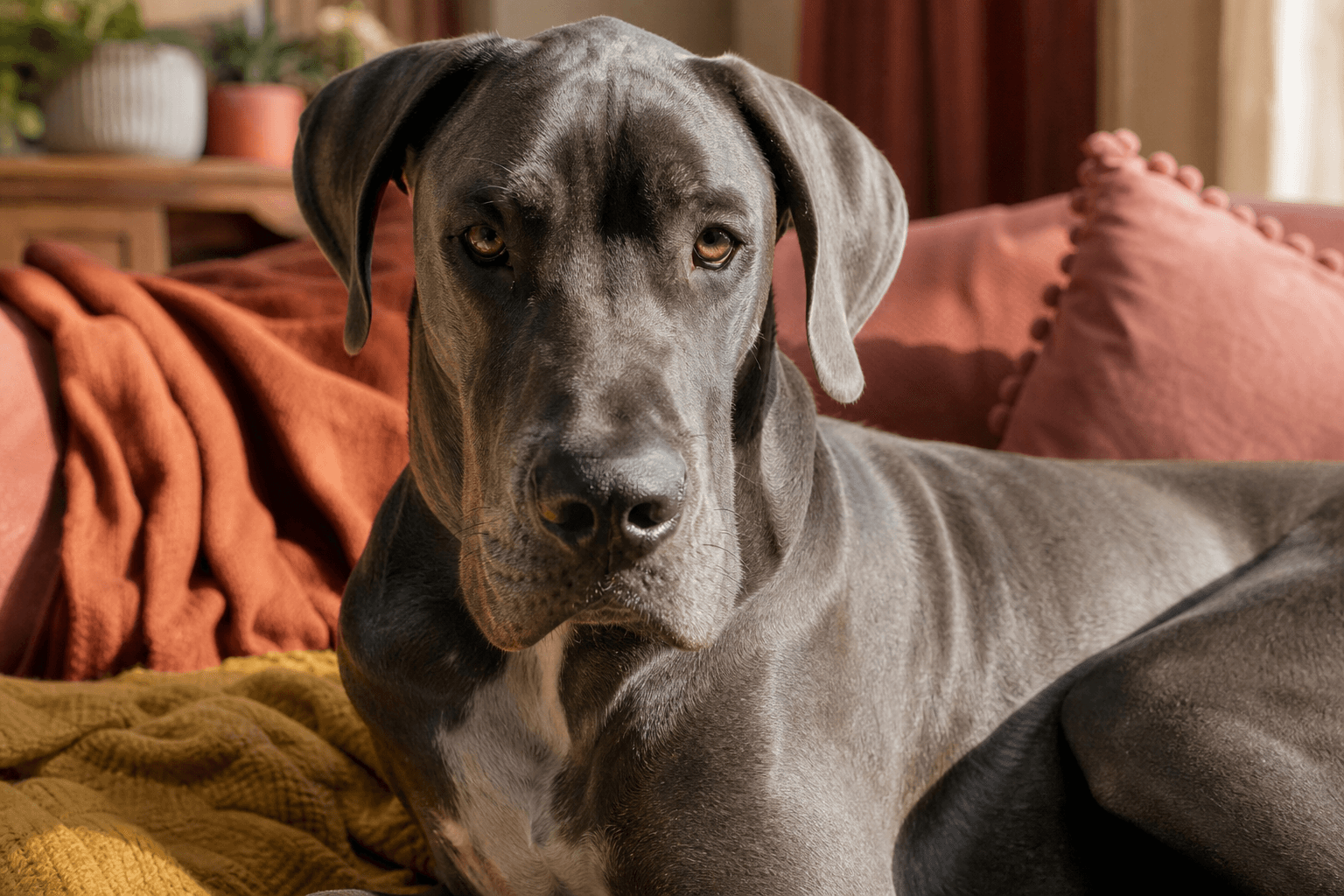
You love the idea of a gentle giant leaning into you on the couch.
Same — but with Great Danes, size changes everything from your car to your budget.
Here are the real-world things we wish we knew before our first Dane, so you can say yes with eyes open.
1. Size Changes Your Life
Adult Great Danes stand eye-level with your kitchen counters and can weigh as much as you do.
They need wide hallways, sturdy furniture, and floor space for a bed the size of a small mattress.
Expect tail swishes to clear coffee tables and enthusiastic lean-ins to test your balance.
2. A Shorter Lifespan
Most Danes live around 7 to 10 years.
It is the hardest part of loving a giant breed, and it makes preventive care and daily joy feel urgent and worth it.
3. Apartment vs. House
Yes, Danes can thrive in apartments if you commit to exercise and elevator manners.
What they care about is time with you and enough chances to stretch out and potty on schedule, not a big backyard they never use.
Let’s talk day-to-day living needs
4. Exercise Needs
Think steady, not sprinty: two to three moderate walks and play breaks beat a single marathon session.
Young Danes need controlled activity to protect growing joints; avoid forced running and stairs until growth plates close.
5. Feeding a Giant Breed
Choose a giant-breed formula to support slow, even growth and balanced calcium-phosphorus.
Feed multiple small meals and use a bowl height that keeps the neck comfortable without encouraging air gulping.
Puppy schedule
3-4 small meals to avoid rapid growth and tummy upset.
Adult schedule
2 meals daily; measure portions and watch body condition.
Treat strategy
Train with part of their daily kibble to avoid piling on calories.
Supplements
Ask your vet before adding joint or calcium supplements.
6. Big-Dog Health Risks
Hips, elbows, heart (dilated cardiomyopathy), thyroid, eyes, and bone issues are on the radar.
Work with a breeder or rescue that screens parents and be ready for larger-dog anesthesia, imaging, and medication doses.
7. Bloat Is an Emergency
Danes are high-risk for gastric dilatation-volvulus.
Know the signs: restlessness, non-productive retching, a tight or swollen abdomen, drooling, and rapid breathing.
Talk to your vet about a preventive gastropexy when your Dane is spayed or neutered.
When in doubt, go now
- Suspect bloat?Do not wait it out or Google. Drive to the emergency clinic immediately.
- Prevention helpsMultiple small meals, calm after eating, and slow-feed tools can reduce risk.
8. Training and Manners Matter
A 140-pound dog who jumps to say hi is not cute in public spaces.
Start on day one: reinforce four paws on the floor, loose-leash walking, and a solid settle on a mat.
Use rewards and consistency — Danes are sensitive and respond best to calm, clear guidance.
9. Socialization Is Non-Negotiable
Expose your Dane puppy to friendly dogs, different people, vet handling, slick floors, and car rides in a positive way.
We aim for calm curiosity, not overexcitement; quality reps beat crowded dog parks.
10. Grooming and Drool
Short coat, big output: weekly brushing, regular nail trims, ear checks, and dental care keep them comfortable.
Drool happens — especially after water and excitement. Keep drool cloths handy and embrace the "Dane splash" on walls.
11. The Real Costs
Everything scales up: food, meds, bedding, crates, even vehicles.
Plan for giant-breed vet bills and consider pet insurance early while your dog is healthy.
Annual Cost Breakdown
| Expense | Annual Cost |
|---|---|
| Quality food | $900–$1,500 |
| Routine vet care | $300–$600 |
| Preventatives & meds | $300–$500 |
| Training & classes | $150–$400 |
| Gear & beds | $150–$350 |
| Pet insurance | $600–$1,000 |
| Est. Annual Total | $2,400–$4,350/yr (typical range) |
12. Cars, Crates, and Travel
Measure your vehicle before pickup — many Danes outgrow standard SUVs for safe travel setups.
Look for crash-tested harnesses or custom-sized crates, and practice loading calmly while they are young.
13. Kids and Other Pets
Danes are usually gentle, but their size can topple toddlers and startle cats.
Teach kids to be statues during zoomies, and give small pets escape routes and Dane-free zones.
- Teach a default sit for greetings
- Supervise kid-dog interactions
- Let them jump on guests “just this once”
14. Weather Sensitivity
Short coat, thin skin: Danes feel cold and overheat quickly.
Use a well-fitted coat in winter, avoid midday summer exercise, and watch for heat stress on warm days.
15. Finding Your Dane People
Join Great Dane clubs, rescues, and online groups for vetted gear tips, reputable breeders, and giant-breed-savvy vets.
The right community saves money, time, and heartache — and celebrates every goofy sploot and lean with you.
Yes, for prepared owners. Their temperament is typically gentle and trainable, but their size amplifies mistakes. Commit to early training, socialization, and budget planning.
More floor space than yard. They need room to stretch out, a bed they fully fit on, and clear walking paths. Apartments work with daily exercise and good manners.
It varies by age and activity, but expect several cups of quality giant-breed food daily split into 2–4 meals. Keep them lean; you should feel ribs under a light layer.
Yes, moderately year-round. Weekly brushing and good nutrition help. The short coat is easy, but there is a lot of dog attached to it.
Often, with careful introductions and management. Teach impulse control, provide safe zones for smaller pets, and supervise until you trust the routine.