15 Things to Know Before Getting a Degu
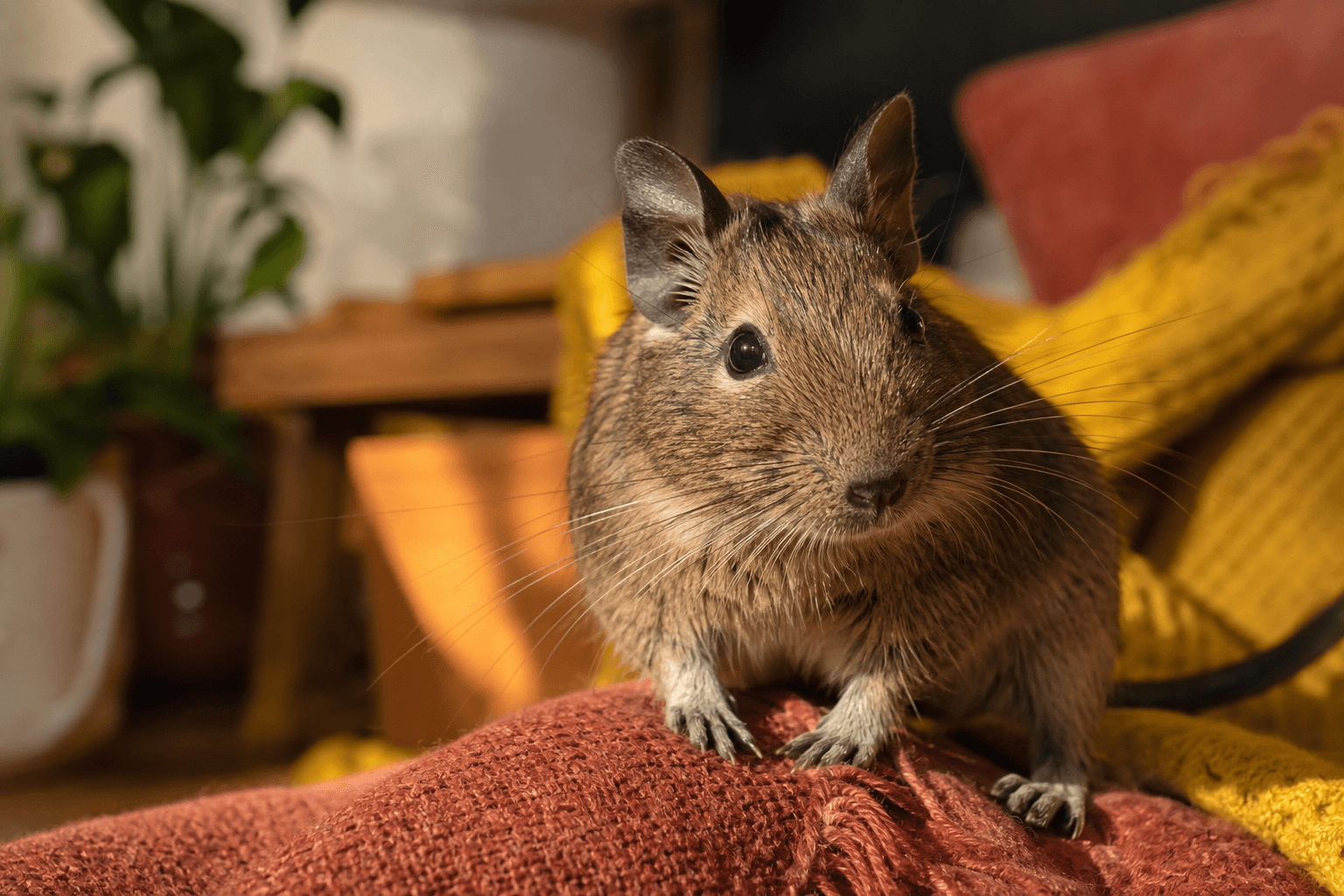
You saw those bright eyes and whiskers and thought, maybe a degu is our next little roommate.
Great pick—if you know what you are signing up for.
Here are the key things we wish we knew on day one, so you can skip the guesswork and give your degus the life they deserve.
1. Degus Need Companions
Degus are highly social and do best in same-sex pairs or trios. A solo degu often becomes anxious, vocal, and destructive.
If you already have one, plan careful introductions using split-cage methods and scent swapping. Don’t rush; bonding takes days to weeks.
2. Vertical Space Over Floor Space
They climb, bounce, and leap. Think multi-level rather than sprawling.
A sturdy metal bar cage with at least three tiers, full-width shelves, ramps, and platforms beats a glass tank every time for airflow and enrichment.
3. Strict No-Sugar, High-Fiber Diet
Degus are prone to diabetes. Avoid fruit, sweet treats, and molasses-laced pellets.
Base the diet on unlimited grass hay (timothy, meadow), a measured portion of degu-safe pellets, and small amounts of leafy greens like chicory and dandelion. Treats? Dried herbs or a single oat—sparingly.
4. Heat Is Riskier Than Cold
Degus overheat fast. Keep the room around 18–22°C (64–72°F) with good airflow and shade.
Offer granite tiles or frozen water bottles wrapped in a towel on hot days. Never place the cage in direct sun or near heaters.
5. Handle With Patience, Not Grabs
They learn you by voice, scent, and routine. Start with hand-feeding hay or pellets, then gentle scoops with both hands close to the body.
Short, calm sessions beat long wrestling matches. If they pancake or tail-flick, pause and try later.
6. Never Pull the Tail
Degus can shed tail skin as a defense. Never lift or restrain by the tail—you can cause permanent injury.
Scoop from underneath, or guide into a small carrier for transfers.
7. A Proper Wheel Prevents Injuries
They love to run, but the wrong wheel can harm spines and toes.
Choose a solid running surface wheel, ideally 28–33 cm (11–13 in) diameter. No mesh or rung wheels. Mount securely to prevent wobble.
Good
Solid metal or cork-lined wheel, 12-inch diameter, closed back.
Avoid
Wire rung wheels, small diameters, plastic that can be chewed.
8. Chew-Proofing Is Mandatory
Those teeth never stop growing. Provide safe woods (apple, willow, hazel), pumice, and cardboard to spare your shelves and hideouts.
Expect to rotate enrichment weekly: tunnels, sand-safe ceramic houses, and forage boxes keep minds busy and bars quiet.
9. Dust Baths, Not Water Baths
Twice-weekly chinchilla sand baths keep coats clean. Use true sand or dust labeled for chinchillas/degus; avoid talc and scented products.
Offer for 10–15 minutes, then remove to keep cages tidy.
10. Daytime Buddies, Not Night Owls
Degus are diurnal-crepuscular—active in morning and late afternoon. They suit households that are busy by day and quiet at night.
Build a routine: feeding and out-of-cage time at similar times reduces stress and nips in-cage squabbles.
11. Find an Exotics Vet Early
Not every clinic sees degus. Line up an exotics-savvy vet before you need one, and schedule a wellness check within the first month.
Watch for overgrown teeth, drooling, weight loss, or eye discharge—these are urgent in small mammals.
Yearly wellness exams are a good baseline; sooner if you spot changes in eating, weight, or behavior.
They can be, with adult supervision. Degus are quick and fragile; children should sit on the floor for handling and never chase or grab.
No. House degus separately from chinchillas, rats, or guinea pigs to avoid stress, disease transmission, and fighting.
A well-ventilated metal bar cage with spot cleaning and the right substrate has minimal odor. Ammonia smells mean it is time to refresh bedding.
12. They Live Longer Than You Think
With good care, degus often reach 5–8 years. That is a real commitment to daily feeding, enrichment, and regular cleaning.
Plan care coverage for holidays and life changes before you adopt.
13. Odor Control Is About Substrate
Skip scented bedding. Use paper bedding plus hay or hemp, and add a dig box to concentrate mess in one spot.
Spot clean daily; deep clean every 1–2 weeks. Keep at least one hide untouched so their scent remains and stress stays low.
14. The Real Budget: Cage and Vet
The upfront cost is the cage, wheels, shelves, and toys. Buy quality once and you will save in the long run.
Annual Cost Breakdown
| Expense | Annual Cost |
|---|---|
| Quality multi-level metal cage | $180–$400 (one-time) |
| Wheel, shelves, hides, chews | $80–$200 (one-time) |
| Hay and pellets | $120–$200/year |
| Bedding/substrate | $100–$180/year |
| Vet fund (exam + contingency) | $150–$300/year |
| Est. Annual Total | $550–$1,000 first-year (approx.) |
15. Travel and Boarding Are Tricky
Degus do not travel as easily as dogs or cats. Many boarders do not accept them, and car rides can stress them.
Have a quiet travel carrier with familiar bedding, hay, and a slice of cucumber for moisture on short trips. For vacations, line up an experienced small-mammal sitter well in advance.
Ready to commit? Here is the quick checklist we use before bringing degus home.
- At least two same-sex degus planned
- Large, multi-level metal cage with solid shelves
- 12-inch solid wheel installed
- Unlimited timothy/meadow hay and sugar-free pellets
- Chinchilla sand for dust baths
- Exotics vet identified and savings buffer set
- Travel/holiday care arranged