15 Factors to Consider Before You Adopt a Mini Bernedoodle
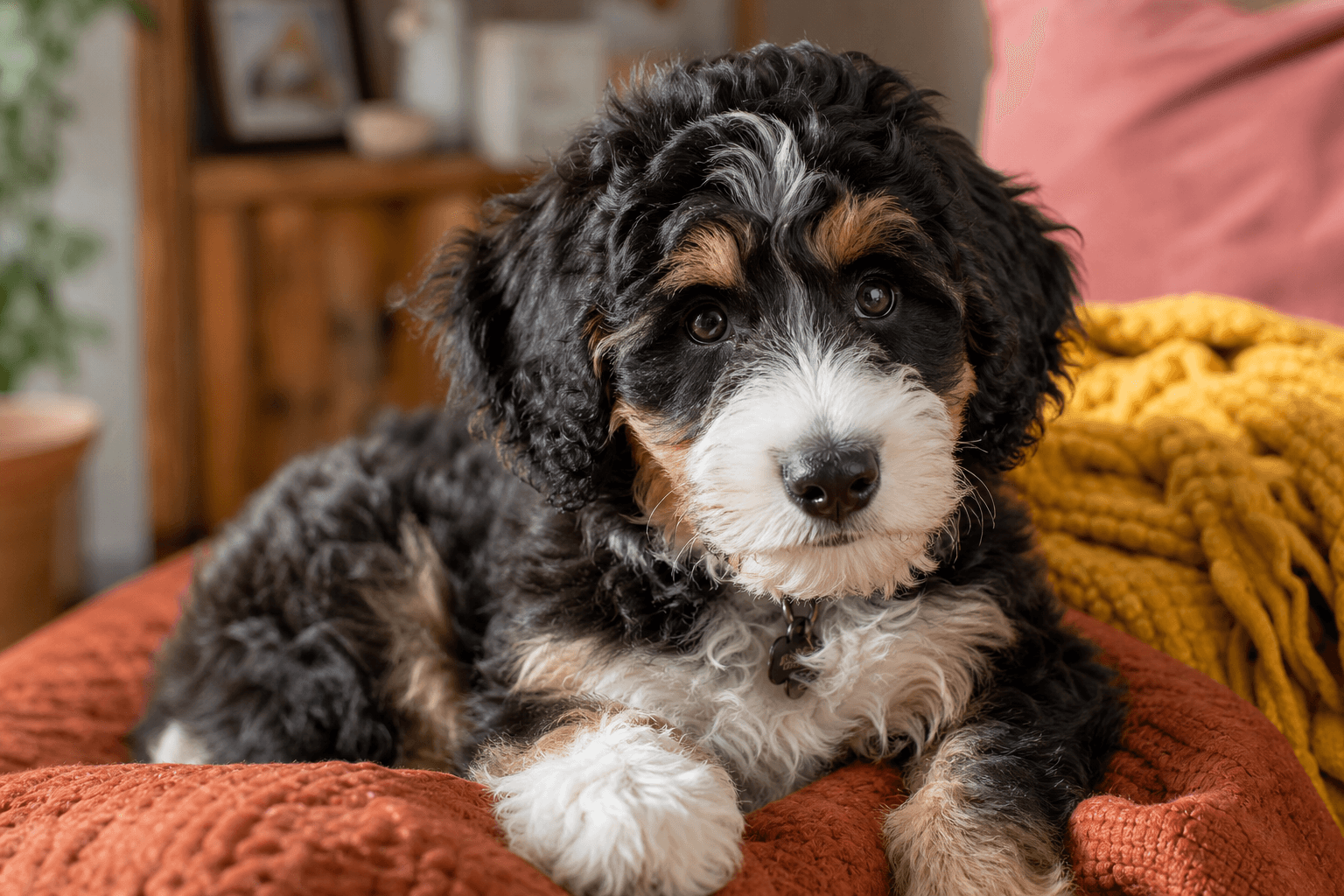
You clicked because Mini Bernedoodles look like living teddy bears and everyone says they are the perfect family dog.
They can be — if your lifestyle matches what this mix truly needs.
Here are the factors we wish every adopter considered before saying yes.
1. Size and Growth Curve
Mini Bernedoodles are a cross between a Bernese Mountain Dog and a Miniature (or small Moyen) Poodle, so adult size ranges widely.
Expect a sturdy, medium dog — often somewhere in the twenty to forty pound ballpark — with a puppyhood growth spurt that can surprise you if you are planning around a strict pet policy or small-car life.
2. Temperament and Energy Level
They tend to be affectionate, people-focused, and goofy, with a moderate energy level.
Most love to play and then crash, but expect a daily outlet; under-exercised Minis can become mouthy, barky, or destructive.
3. Coat Type and Grooming Commitment
Coats range from wavy to curly. Curly coats mat faster; wavy coats can tangle behind ears, in armpits, and at the tail base.
Plan on brushing several times a week and professional grooming every six to eight weeks. Skipping at-home maintenance leads to painful mats and a shave-down.
4. Shedding and Allergies Reality Check
Many Mini Bernedoodles shed less than average, but low-shedding is not the same as hypoallergenic.
Saliva and dander still trigger some allergy sufferers, and even low-shedding coats drop hair during seasonal changes or stress.
5. Training Style They Respond To
Smart like Poodles and sensitive like Berners, they thrive on upbeat, reward-based training.
Harsh corrections shut them down; clear structure, short sessions, and plenty of play keep them engaged.
6. Social Needs and Alone Time
These are companion dogs. Many do poorly when routinely left alone for long workdays without a plan.
Dog walkers, midday enrichment, or a reliable doggy day care can prevent separation issues from taking root.
7. Exercise and Mental Enrichment
Most Minis do well with about an hour of mixed activity split through the day — brisk walks, sniffaris, fetch, or training games.
Food puzzles, snuffle mats, and short trick sessions go a long way toward a calm evening.
8. Health Risks and Screening
Responsible breeders screen parent dogs for orthopedic and genetic issues common to the parent breeds.
Ask about hips and elbows, patellar luxation, eye exams, heart checks, and breed-relevant DNA panels. Ear infections and skin allergies are common in doodles; regular ear care helps.
9. Climate and Heat Tolerance
With Bernese lineage, some Minis overheat more easily than you would expect from a mid-sized dog.
Prioritize shade, water, and cooler walk times in warm months; keep summer haircuts practical but not skin-close to protect from sunburn.
10. Budget and Ongoing Costs
The purchase or adoption fee is just the start. Grooming, quality food, training, vet care, and pet insurance add up.
- Professional grooming every 6 to 8 weeks
- Daily brushing for curly coats
- Annual wellness exam and recommended vaccines
- Money set aside for emergencies or insurance
- Skip regular grooming to save money
- Assume low-shedding means zero maintenance
11. Breeder Ethics vs Rescue Options
Ethical breeders prioritize health, temperament, and transparency: health clearances, contracts, vet references, and lifetime take-back.
Rescues and doodle-specific shelters can be wonderful, too — just ask for full behavior notes and be ready to invest in decompression and training.
12. Generation and Genetics (F1, F1b, etc.)
F1 is Berner x Mini Poodle. F1b is an F1 bred back to a Poodle. Multigen pairings vary.
Generations do not guarantee coat or size, but F1b and multigen pairings more often lean curlier and lower-shedding. Meet adults from similar pairings whenever possible.
13. Family Fit: Kids, Cats, and Other Dogs
Well-bred Minis are typically gentle and playful, but they can be mouthy as pups and clumsy during growth spurts.
Supervise with young kids, teach calm greetings early, and introduce cats slowly with escape routes for the cat.
14. Apartment vs Yard Living
Minis can thrive in apartments if you commit to walks, training, and brain work.
Yards are nice but not required; a bored dog with a yard is still bored. Consistency beats square footage.
15. Travel and Lifestyle Flexibility
They travel well when socialized, crate-trained, and introduced to car rides early.
Hotels and rentals may have weight or breed-mix policies; confirm in advance and pack grooming tools because tangles happen on the road.
Pros
Why they win hearts
- Affectionate, people-oriented companions
- Trainable and eager to please
- Often lower-shedding than many breeds
- Adaptable to different homes with the right routine
Cons
Why they are not for everyone
- Grooming is a lifelong, non-negotiable expense
- Can be sensitive and prone to separation stress
- Size and coat vary more than many expect
- Health screening and ethical sourcing take homework