15 Essential Facts About Drentsche Patrijshonds That Every New Owner Should Know
You clicked because you want the real, practical picture of life with a Drentsche Patrijshond.
We live for dogs that can hunt all morning and cuddle all evening, and the Drent is exactly that — if you meet their needs.
Here are the essentials new owners actually use, so you can skip the guesswork and start strong.
1. A Versatile Dutch Gundog
The Drentsche Patrijshond hails from the Netherlands province of Drenthe, developed as a do-it-all partridge dog that points, retrieves, and tracks.
Think closer-working, family-oriented utility rather than a high-octane field trial specialist.
2. Medium, Field-Ready Size
Most Drents are medium and sturdy, with enough leg for miles yet compact enough for the car and couch.
Expect a balanced build that carries well over rough ground without feeling bulky at home.
3. Exercise Needs
Plan on daily, purposeful activity — not just laps around the block.
Ideal Weekday
40–60 minutes of mixed walking and sniffing, plus a 10-minute drill like retrieves or heelwork.
Brain Work
Nose games, hide-and-seek with kibble, simple tracking lines, puzzle feeders.
Weekend Upgrade
Field-style hikes, steadiness drills to birds or bumpers, swim retrieves where safe.
Rain Plan
Indoor place training, pattern feeding, and two short sniff walks.
4. Temperament
Drents are known for a soft, people-centered nature and deep attachment to their family.
They are affectionate without being clingy if their needs are met, and typically reserved but polite with strangers.
5. Training Style
They are biddable yet sensitive. Heavy-handed methods shut them down fast.
Fair, consistent boundaries bring out their best steadiness and cooperation.
6. Prey Drive & Recall
This is a hunting breed with a real nose. Expect interest in birds, rabbits, and squirrels.
7. Coat & Color
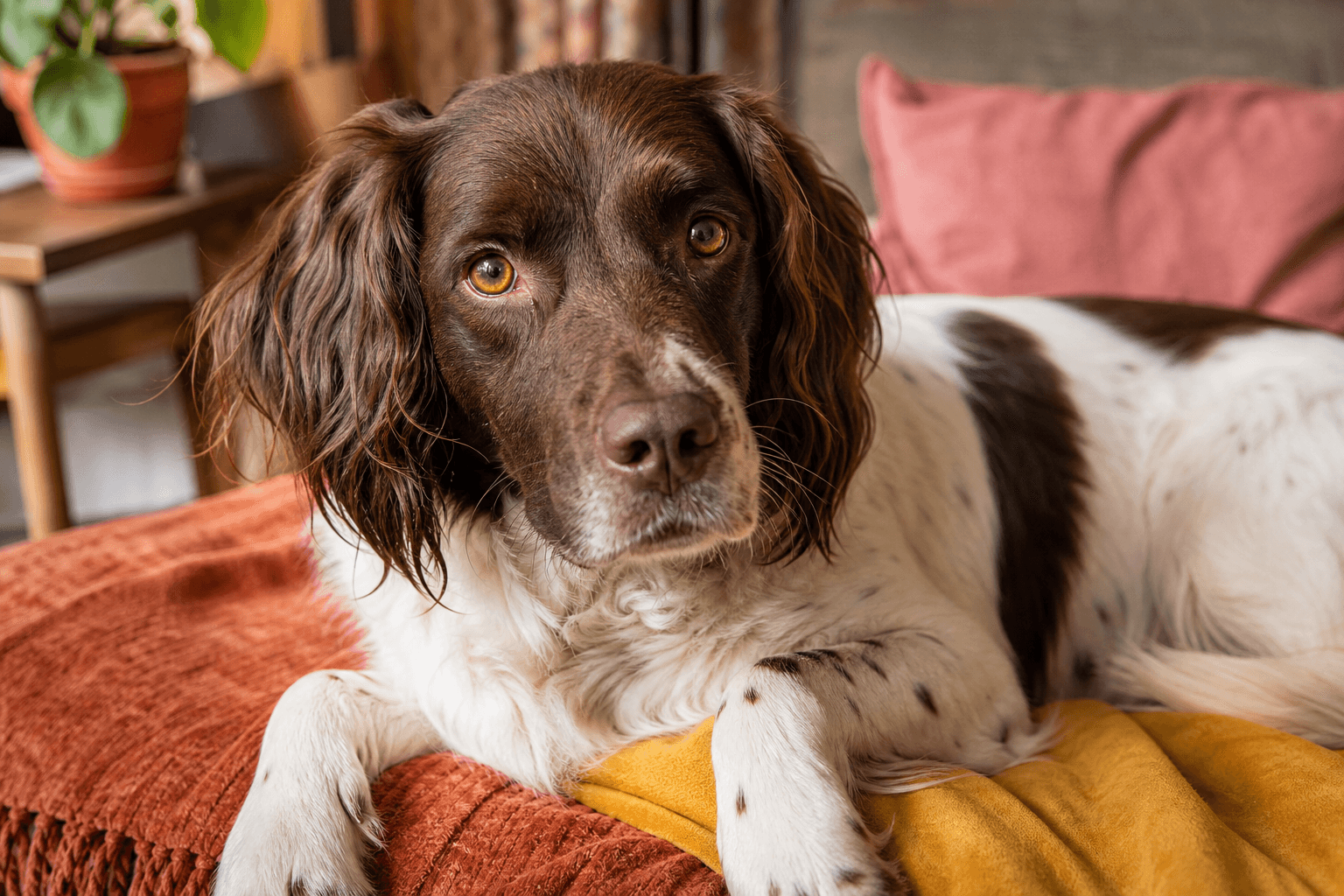
The coat is medium, slightly wavy with feathering on ears, chest, legs, and tail.
Color is typically white with orange or brown patches and ticking. The coat sheds seasonally but is low odor.
8. Grooming Needs
Brush 2–3 times weekly to prevent feathering mats and to keep burrs out after field time.
Check ears after wet or muddy outings; trim nails regularly to maintain efficient, quiet movement.
9. Health Watchouts
As a working breed, they can be robust, but responsible breeders screen for hip and elbow dysplasia, and some lines monitor for epilepsy.
Drop ears mean a higher risk of ear infections if moisture and debris linger. Lifespan commonly reaches the low to mid teens with good care.
10. Rarity & Finding A Puppy
Outside the Netherlands, Drents are uncommon. Expect waitlists and breeder questions about your lifestyle.
Ask for health testing proof, meet adult dogs if possible, and be open to a started youngster from hunting homes.
11. Family Life
Most Drents are gentle with kids when supervised and well-socialized.
They can live peacefully with other dogs and cats if introduced thoughtfully, but small pets may trigger chase.
12. Noise & Watchfulness
They are naturally observant and will announce visitors, then usually settle.
Channel that vigilance with place training at the door and reinforce quiet after one alert.
13. Outdoor Durability
The weather-resistant coat handles rain and cold better than heat.
In summer, work early or late, offer shade and water, and shorten sessions at the first sign of overheating.
14. Diet & Body Condition
Feed a quality diet matched to activity; lean is sound for joints and stamina.
Use a weekly rib-and-waist check, and measure meals instead of free-feeding to avoid creeping weight.
15. Jobs They Love
They thrive with purpose: field work, tracking, shed hunting, canicross, or advanced obedience with steadiness.
Give them a lane to use their nose and cooperation, and their famous homebody sweetness shines.