15 Essential Care Tips Every New Newfypoo Owner Should Know
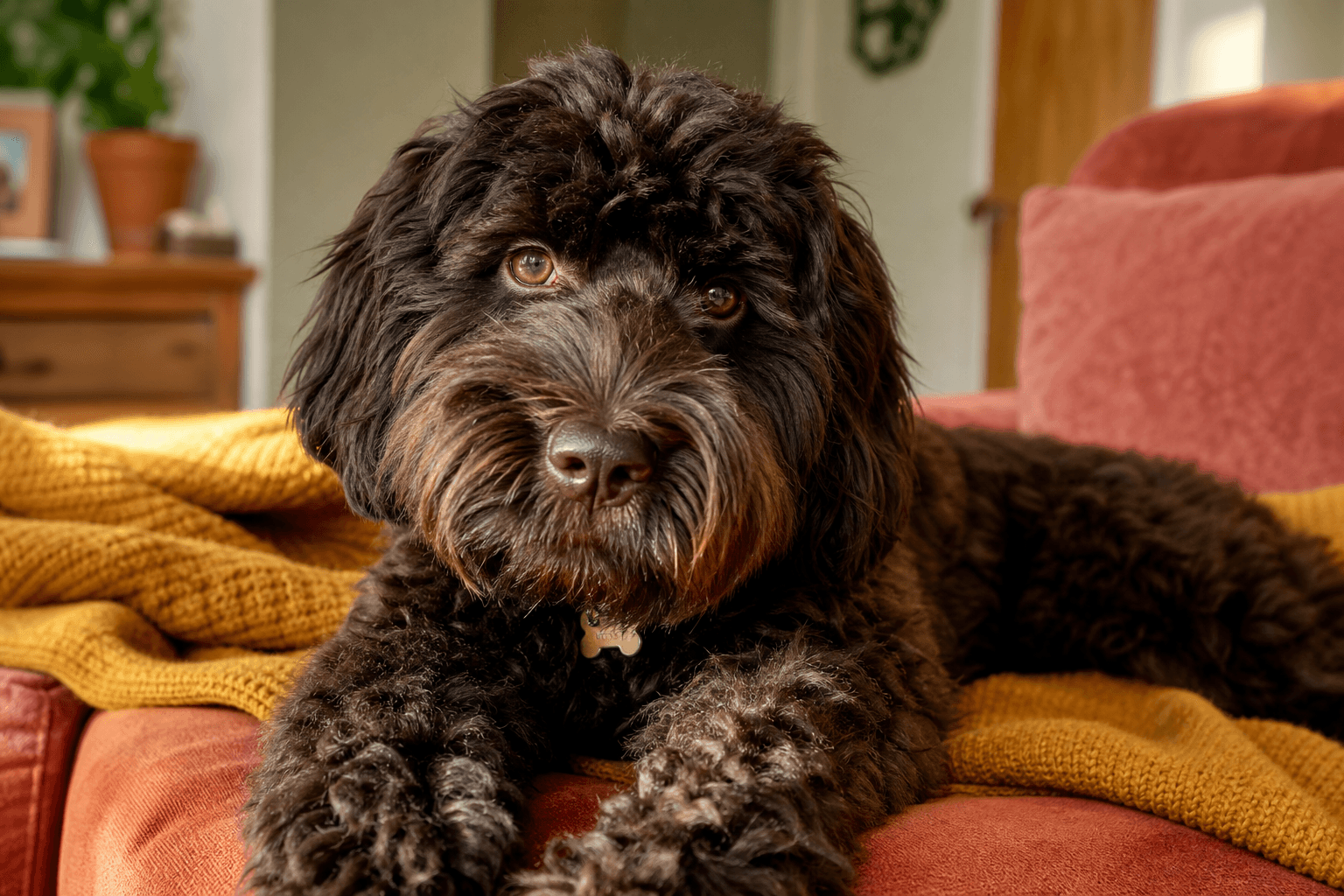
You brought home a fluffy, gentle giant with big feelings and bigger paws.
Here are the exact care habits that make Newfypoos thrive without the guesswork.
Skim the list, click what you need, and start strong today.
1. Begin With a Large-Breed Puppy Plan
Feed a large-breed puppy formula to control growth and lower joint stress. Rapid gains are hard on giant-breed hips and elbows.
Use measured meals, not free-feeding. Aim for a visible waist and easy-to-feel ribs under the coat.
2. Grooming Is Non-Negotiable
Most Newfypoos inherit a dense, wavy to curly coat that mats fast behind ears, in armpits, and under the collar.
Brush through to the skin 3 to 4 times a week and book professional grooms every 6 to 8 weeks. Keep the sanitary and paw areas tidy between visits.
Slicker + Stainless Comb
Slicker lifts tangles; comb confirms you reached the skin with no snags.
Detangling Spray
Light mist before brushing reduces breakage and pulling.
High-Quality Clippers/Trimmer
For paw pads, sanitary, and between grooms if comfortable.
Drying Routine
After baths or swims, dry thoroughly to prevent hotspots in that thick coat.
3. Ears, Teeth, and Eyes: The Weekly Trio
Floppy ears trap moisture. Check weekly, wipe outer ear with vet-approved cleaner, and dry well after swims. Ask your vet before removing any ear hair.
Brush teeth several times a week and add dental chews that suit big jaws. Wipe eye corners gently to prevent tear stains and gunk build-up.
4. Exercise Smart for a Giant Doodle
Daily movement matters, but growth plates need protection until about 18 months. Choose low-impact walks, sniffaris, and short play bursts over repetitive jumping.
5. Train the Calm You Want to See
They are eager-to-please, sensitive, and people-focused. Reward quietly offered behaviors like choosing to lie down, keeping four paws on the floor, and checking in with you.
Enroll in a positive reinforcement class early. Socialize to sights, sounds, grooming tables, and vet handling so their size never becomes a problem.
6. Heat Management Matters
Big, dark, and fluffy equals heat-prone. Walk at cooler hours, carry water, use shade breaks, and consider a cooling mat at home.
Watch for panting that does not ease, bright red gums, or wobbliness. Move to a cool place and call your vet if you see warning signs.
7. Know and Prevent Bloat (GDV)
Large, deep-chested mixes like Newfypoos can be at risk for bloat, a life-threatening stomach twist.
Use slow-feeder bowls, split meals, keep water available, and avoid hard exercise for about an hour before and after meals. Ask your vet about preventive gastropexy when your dog is spayed or neutered.
8. Protect Those Joints Early
Lay runners over slippery floors and teach a cue to use a ramp for cars and sofas. An orthopedic bed supports heavy frames.
Discuss omega-3s and joint-support supplements with your vet, especially if there is a family history of hip or elbow dysplasia.
9. Water Dog? Practice Safe Splashing
Many Newfypoos love water, but a heavy, waterlogged coat is tiring. Fit a floatation vest in open water and keep sessions short.
Rinse after pools or salt water and dry thoroughly to fend off hotspots and ear infections.
10. Size Up Your Gear
Choose a well-fitted Y-front harness, a sturdy 6-foot leash, and high-capacity bowls. Go for an XL crate they can stand and turn in, with a supportive mattress.
Keep nail trimmers or a grinder on hand and do quick touch-ups weekly. Long nails throw off posture and strain joints.
11. Expect Coat Changes and Some Shedding
Puppy coats often loosen around 6 to 12 months and can mat overnight. Increase brushing during the transition.
Most Newfypoos are lower shedding than Newfoundlands, but few are truly non-shedding. Plan for light tumbleweeds and regular vacuuming.
12. Plan for Drool and Drips
Drool varies by genetics. Some Newfypoos sling strings after drinks; others barely drool at all.
Keep absorbent mats by water bowls and a small towel near doors. Wiping chins reduces moisture rash.
13. Vet Screening and Insurance
Work with your vet on screenings appropriate to the lines: hips, elbows, eyes, and heart checks are common in parent breeds.
Consider pet insurance early; giant-breed claims can be costly, and coverage is best before issues appear.
14. Meet the Brain: Daily Mental Enrichment
They are bright and bondy. Rotate puzzle feeders, snuffle mats, scent games, and short training refreshers to prevent boredom barking or clinginess.
Five engaged minutes sprinkled through the day beats one long, chaotic session.
15. Car and Travel Safety for Big Fluffs
Secure them with a crash-tested harness attached to vehicle anchors or a properly sized crate. Loose giants become projectiles in sudden stops.
Pack a go-kit: water, collapsible bowl, towels, meds, poop bags, and a copy of vet records.