13 Things to Know Before Getting a Tree Frog
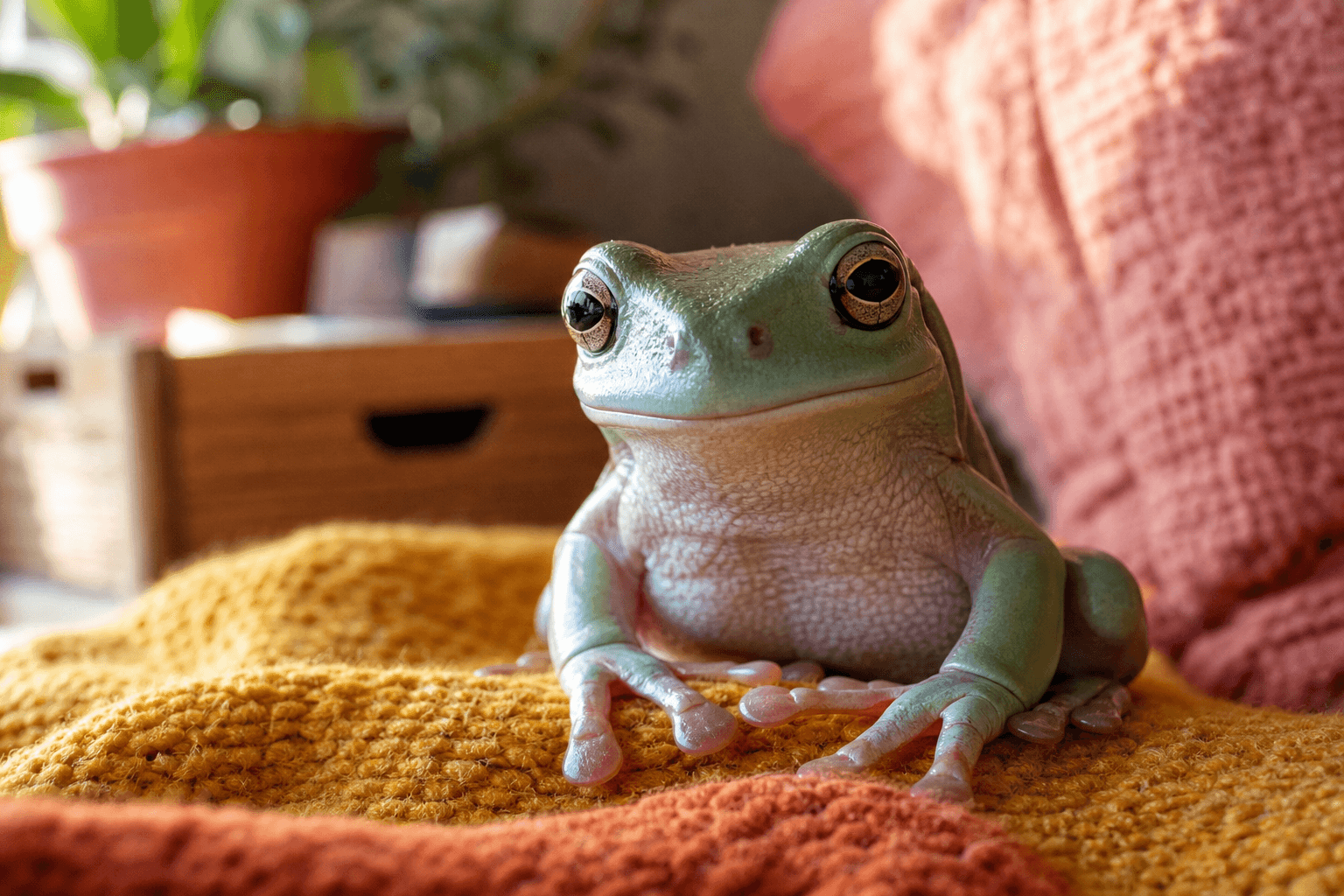
You fell for those big eyes and tiny toe pads. We did too.
Before you bring a tree frog home, here are the real-world details that make the difference between thriving and merely surviving.
Use this as your quick-start guide, then enjoy the nightly chorus.
1. Species Choice Changes Everything
White’s (Dumpy) Tree Frogs are forgiving and great for first-timers. Red-eyed tree frogs are stunning but more humidity-sensitive. American green tree frogs are smaller and shy.
Pick based on your room conditions and how much misting you’ll realistically do. Research adult size, temperament, and humidity range before you buy.
2. Vertical Enclosures Win
Tree frogs live up in the foliage. Go tall: a front-opening glass terrarium around 18x18x24 inches suits a small group of White’s; a 12x12x18 can work for a single small species.
Screen tops are fine if you can maintain humidity. Front doors make feeding and misting less stressful for your frog.
3. Humidity Is Not Optional
Most tree frogs want 50–80 percent relative humidity, with brief spikes after evening misting. Too dry leads to poor sheds and dehydration; too wet with no airflow invites bacteria and mold.
Boost humidity
Daily hand-misting, live plants, partial top cover, and a shallow water dish.
Avoid swampy air
Add ventilation and let things dry slightly between mistings.
4. Warm, Not Hot
Room-temperature friendly does not mean heat-lamp basking. Aim for 72–78 F by day with a gentle nighttime dip to 68–72 F, species depending.
Use a thermostat with any heat source. Overheating kills fast, especially in glass tanks without escape from radiant heat.
5. Lighting and UVB: Low But Beneficial
Tree frogs are nocturnal, so they don’t need intense basking light. However, low-level UVB (2.0–5.0) and a 12-hour day/night cycle support vitamin D3 synthesis, appetite, and natural rhythms.
Provide shaded zones with plants so your frog can choose light levels.
Now let’s make the floor and furniture frog-safe
6. Safe, Moisture-Holding Substrates
Use bioactive-safe mixes (coco fiber, sphagnum moss, leaf litter) or paper towels for quarantine. Avoid loose bark chips that mold quickly or can be accidentally ingested.
If you go bioactive, quarantine the frog first and seed cleanup crews (isopods, springtails) before moving them in.
7. Branches, Leaves, and Hides Up High
Provide multiple climbing routes: cork tubes, sturdy branches, and broad-leaf plants like pothos. Offer resting leaves near the top, not just ground hides.
Suction-cup ledges and magnetic planters create microhabitats and make feeding easier.
8. Water Quality Can Make or Break Health
Amphibian skin absorbs what it touches. Use dechlorinated or conditioned tap water for misting and bowls; never straight tap with chlorine/chloramine.
Change shallow water dishes daily and rinse decor periodically to prevent biofilm.
9. Live Insect Diet, Properly Supplemented
Crickets, dubia roaches, and the occasional black soldier fly larvae work well. Size prey so it’s no wider than the frog’s head.
Gut-load insects 24 hours before feeding and dust with calcium at most feedings plus a broad-spectrum vitamin weekly. Mealworms are poor staples for most frogs due to tough chitin.
10. Handling: Mostly Look, Rarely Touch
Tree frogs stress easily and absorb oils and residues from skin. Handle only when necessary, with rinsed, wet hands, and support the body without pinching.
They can leap suddenly; handle over a soft surface and keep sessions brief.
11. Night Owls With Surprising Longevity
Expect activity after lights out: climbing, calling, and hunting. Plan feeding at dusk.
With good care, White’s can reach 10–15 years; smaller species often live 5–8. This is a real commitment.
12. Quiet, Clean, and Mold-Controlled
Spot-clean poop and uneaten insects daily. Wipe glass weekly with plain dechlorinated water. If you smell musk or see film, you waited too long.
Encourage airflow to fight mold; prune plants and avoid constantly soggy substrate.
- Daily misting and water changes
- Direct handling for fun
- Thermostat and hygrometer installed
- Unquarantined wild-caught frogs
13. Real Costs Beyond the Frog
The frog is the cheapest part. Expect the enclosure, thermostat, UVB, plants, branches, supplements, and feeders to add up quickly.
Annual Cost Breakdown
| Expense | Annual Cost |
|---|---|
| Feeder insects + gut-load | $120–$240 |
| Supplements (calcium + vitamins) | $20–$40 |
| Bulbs and electricity | $40–$80 |
| Substrate and plants | $50–$120 |
| Misc. (water conditioner, replacements) | $20–$50 |
| Est. Annual Total | $250–$530/yr (after setup) |
Best practice is one species per enclosure. Different sizes and needs create stress and risk of disease transmission.
If your room stays 72–76 F, often no. If it dips lower, use a thermostat-controlled heat source to maintain a safe range.
Juveniles: small meals 5–6 nights a week. Adults: 3–4 nights a week, adjusting to body condition.
Not required, but live plants stabilize humidity, offer cover, and improve enclosure health. Choose sturdy, frog-safe species.
Check temperature, humidity, and stress. Newly moved frogs often need several quiet nights. Rule out oversized prey and ensure lights go fully off at night.