13 Things to Know Before Getting a Pacman Frog
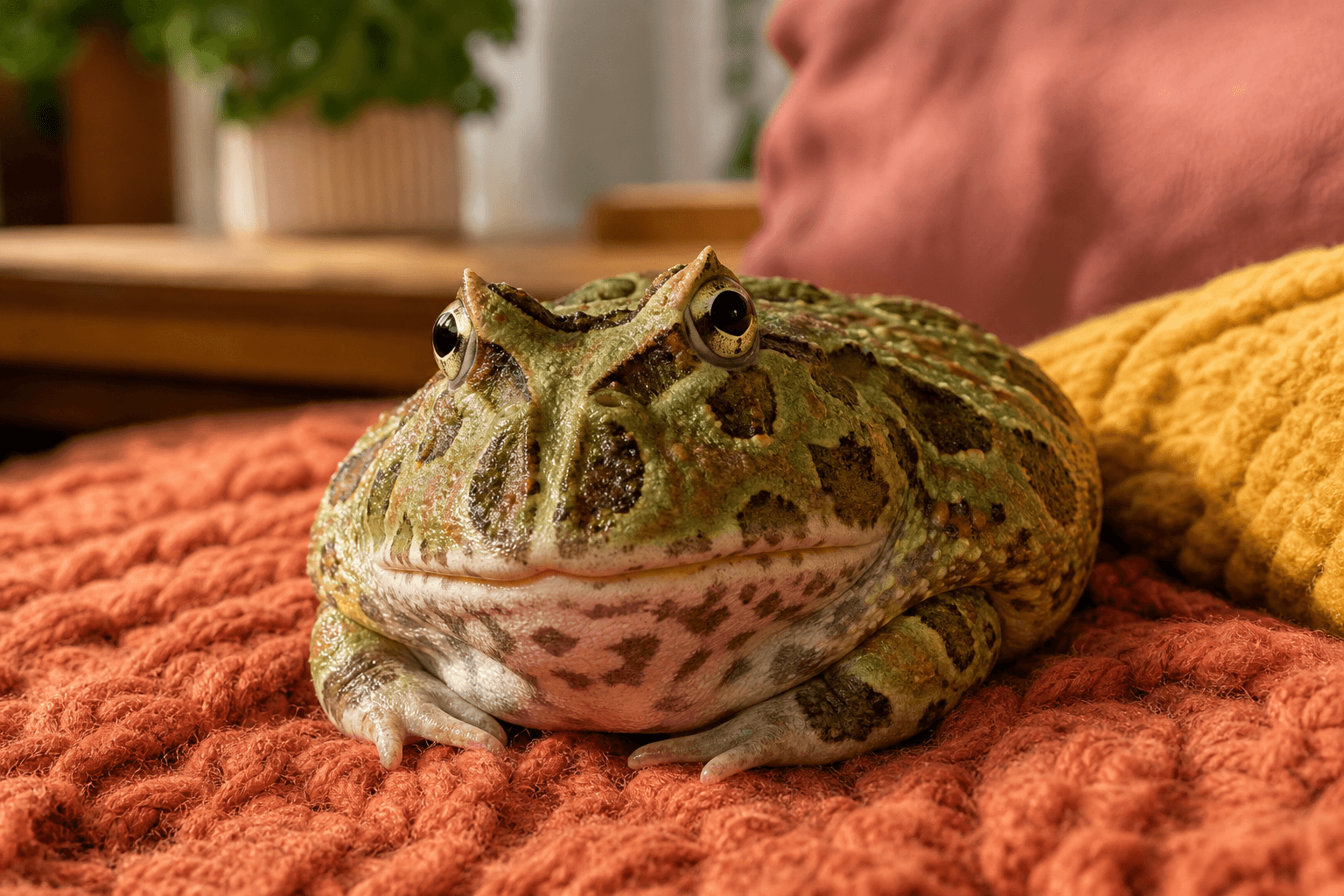
You love their grumpy little faces and that hilarious chomp. We get it.
Before you bring a Pacman frog home, here are the real-world care basics you need to avoid the classic newbie mistakes.
Set it up right once, and these chunky ambush predators are wonderfully low-drama pets.
1. They Are South American Ambush Predators
Pacman frogs are horned frogs from South America (Ceratophrys species). They bury, wait, and lunge.
That means they value security, steady heat, and easy ambush spots more than big climbing space.
2. They Get Big, Fast
Adults are stout: 4–7 inches snout to vent, with wide mouths that swallow prey nearly as large as their head.
Juveniles grow rapidly in the first year if fed properly, so plan for adult space and prey from day one.
3. Lifespan Is Longer Than You Think
With correct care, Pacman frogs commonly live 6–10 years, and over a decade is possible.
This is a slow-and-steady commitment, not a novelty pet.
4. A Small, Simple Enclosure Works Best
They don’t roam. A 10–15 gallon front-opening tank for an adult is plenty; juveniles can start in a secure 6–10 quart tub or small tank to ensure they find food.
Good picks
10–15 gallon tank, tight lid, front-opening door, shallow water dish, sturdy hide, leaf litter.
Skip these
Tall arboreal tanks, strong water features, sharp decor, loose gravel they can ingest.
Dial in the floor before you buy décor
5. Substrate Choice Matters
Use moisture-retentive, frog-safe substrate like coco fiber (coir), organic topsoil, or a mix with sphagnum moss on top.
Aim for 3–4 inches deep so they can burrow. Keep it damp, not sodden—if you can squeeze water out, it’s too wet.
6. Warmth and Humidity Make or Break Health
Target temperatures: 75–82 F daytime, a mild drop at night. A heat mat on the side (with a thermostat) or a low-watt radiant source works well.
Humidity: 60–80 percent with regular misting and a partially covered lid. Always provide a clean, shallow water dish for soaking.
7. Lighting: Low Light, Optional Low-Output UVB
They are crepuscular/nocturnal and don’t need bright lights. Ambient room light is fine.
Low-output UVB (2–5 percent) on a 10–12 hour cycle can support vitamin D and calcium balance if installed correctly with hides to escape the light, but it’s optional if diet and supplements are on point.
8. Diet: Variety Over Volume
They are insect-first eaters; juveniles can take the occasional pinky mouse, but routine rodent feeding leads to obesity and fatty liver.
Staples
Gut-loaded crickets, nightcrawlers/earthworms, dubia roaches, silkworms, black soldier fly larvae.
Occasional
Waxworms, hornworms, well-started pinky for large juveniles/adults very rarely.
Dust prey with calcium (no D3 if using UVB; with D3 if not) and a broad-spectrum multivitamin weekly.
9. Feeding Schedule and Technique
Juveniles: feed small meals every 1–2 days. Adults: 2–3 times per week, adjusting to maintain a solid, not bloated, body.
Use feeding tongs to prevent bites and control substrate intake. Offer prey that is about the width of the frog’s mouth, not larger.
10. Handling Is Minimal
Pacman frogs have sensitive, permeable skin and a strong bite reflex.
Handle only when necessary with clean, wet, gloved hands or a soft container. They can jump suddenly; keep movements close to the ground.
11. Keep It Clean Without Stressing Your Frog
Spot clean daily for waste and old food. Rinse and refill the water dish every day with dechlorinated water.
Stir or replace substrate as needed; full changes every 4–6 weeks work for simple setups. Bioactive enclosures can go longer with proper cleanup crew and plant care.
- Dechlorinate all water (dish and misting).
- Wash hands before and after any contact.
- Avoid strong cleaners in or near the tank.
- Never house two Pacman frogs together.
12. Temperament: Look, Don’t Cuddle
They are more like a living plant with a feeding schedule than a social pet.
Expect long periods of stillness, surprise lunges at food, and the occasional cranky posture. That’s normal and part of their charm.
13. Red Flags and Basic Health Care
Watch for refusal to eat beyond 2–3 weeks, swollen eyes or limbs, persistent soaking with lethargy, red leg (reddened underside), wheezing, or mouth rot.
They will try, but that doesn’t mean it’s safe. Avoid hard-shelled prey, large rodents, or anything wider than their mouth.
Bright, hot lamps dry them out. Gentle, regulated heat and humidity are safer.
Handling stresses Pacman frogs. Minimal contact keeps them healthy.
Not strictly, but low-output UVB can be beneficial if set up correctly. If you skip UVB, be consistent with calcium with D3.
No. They are solitary and will bite or attempt to eat each other.
Check temps and humidity first, then review prey size and stress. New arrivals often need a few days to settle.
Aim for 75–82 F with a slight night drop. Use a thermostat and monitor with a digital probe thermometer and hygrometer.