13 Things to Know Before Getting a Macaw
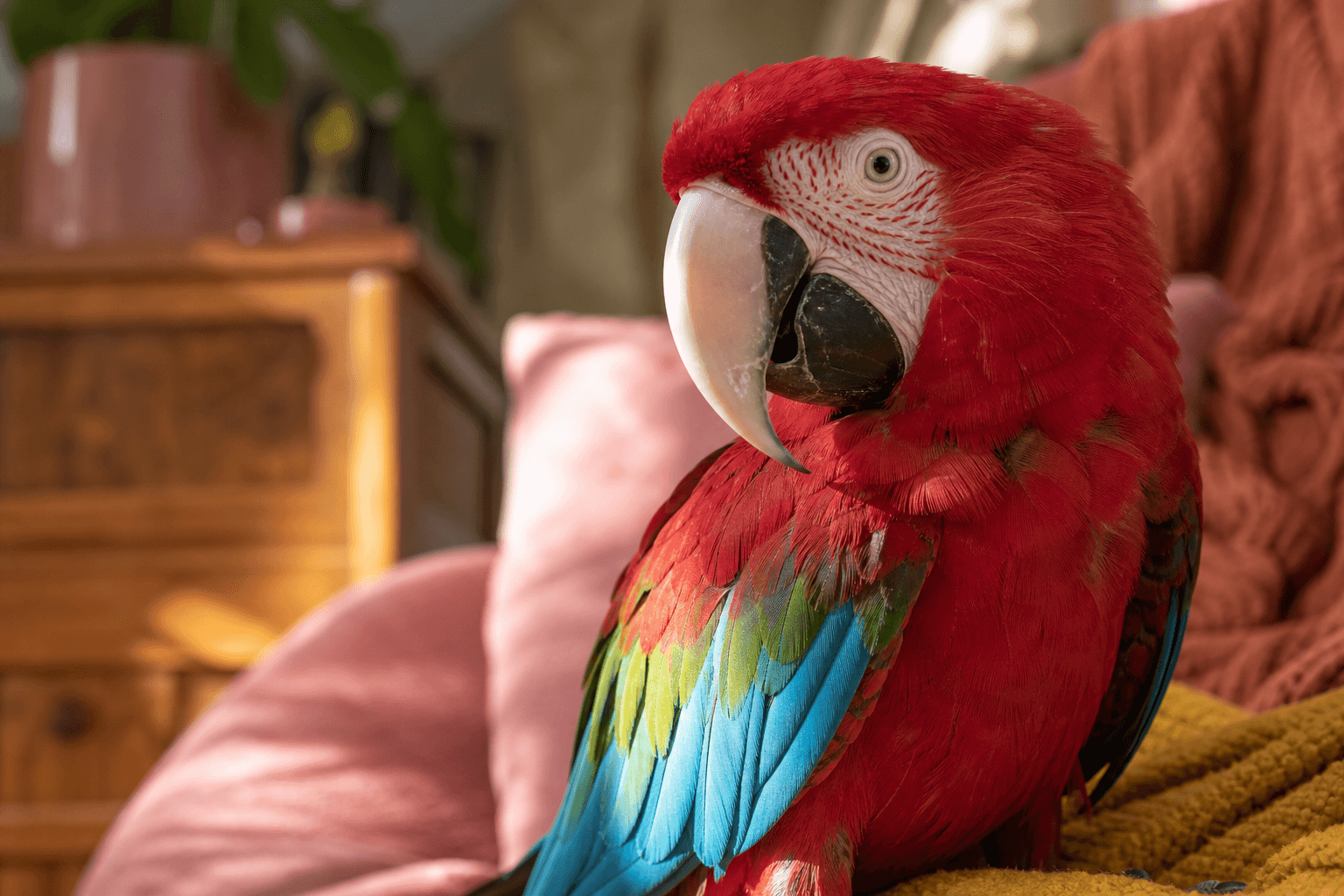
You love the idea of a brilliant, bond-for-life bird perched on your shoulder.
Before you say yes, here are the truths we wish we knew on day one—clear, kind, and practical.
If a macaw fits your life, they are extraordinary. If not, you just saved yourself (and a bird) a lot of heartache.
1. They Can Outlive You
Healthy macaws commonly live for decades—large species can reach middle age and keep going.
Make a care plan for the bird's lifetime, including a trusted guardian if something happens to you.
2. Space Is Non-Negotiable
Macaws are wings-on-furniture. They need a cage the size of a small closet and a dedicated play area.
If you can't offer safe, daily out-of-cage time in a bird-proofed room, a macaw will struggle.
3. They Are Loud—Really Loud
Even a content macaw does contact calls that carry through walls and into neighborly conversations.
Expect daily peak noise at dawn and dusk. Apartments and thin-walled homes are rarely a match.
If you can handle the volume, now plan for the cleanup
4. Prepare for Daily Mess
Feathers, hulls, fruit spray, and wood chips become your new decorating style.
Drop mats, easy-clean floors, and a handheld vacuum make life saner. You will clean something every day.
5. Time and Attention Are Fuel
Macaws are social athletes. Without interaction and structure, they scream or self-pluck.
Plan on several quality sessions daily: training, foraging setups, supervised play, and just hanging out.
Daily rhythm that works
- MorningUncover, greet, fresh food and water, quick training, 20–30 minutes of play.
- MiddayForaging activity or perch time near you while you work.
- EveningOut-of-cage play, training, showers as needed, calm wind-down before sleep.
6. Diet Is More Than Seed
Base diet should be a quality pellet plus fresh veg, some fruit, sprouted or cooked grains/legumes, and healthy nuts as training currency.
Avoid avocado, chocolate, caffeine, alcohol, onion/garlic in excess, and salty or sugary human snacks.
Great staples
Leafy greens, carrots, peppers, squash, broccoli, berries, cooked quinoa/beans.
Caution foods
High-fat nuts only as rewards; no avocado, chocolate, or alcohol.
7. Avian Vets Are Essential
Not all vets see parrots. You want a board-certified avian vet or an experienced exotics clinician.
Budget for wellness exams, labs, nail/beak care, and emergencies. Travel time to the nearest avian clinic matters.
8. Big Beak, Big Feelings
Macaws read your energy and mirror it. Training is about clarity and consistency, not dominance.
Use positive reinforcement: mark and reward what you like, manage what you don't. Bites teach—usually that we missed earlier signals.
They thrive on trust and predictable routines. Coercion backfires and erodes safety.
Most bites follow ignored cues—pinned eyes, stiff body, lunging—so learn their language.
9. The Right Cage and Perches
Think widest cage you can fit, with bar spacing appropriate to species and strong, bird-safe construction.
Offer varied perches: natural wood, textured, and a soft platform for resting. Skip uniform dowels; they stress joints.
10. Chew, Forage, Destroy (On Purpose)
A bored macaw will remodel your doorframes. Give them permission to destroy the right things.
Layer toys: wood blocks, palm leaves, cardboard, paper cups with treats hidden inside. Rotate weekly.
- Daily foraging setup (easy to hard)
- Fresh wood or shreddables to destroy
- Rotate toys to avoid boredom
- Unsupervised access to furniture
11. Home Safety Is Different With Parrots
Non-stick cookware fumes (overheated PTFE/PFOA), scented candles, aerosols, and smoke can be dangerous.
Secure windows and doors, cover mirrors initially, and manage other pets. Flighted birds need safe recall habits.
12. The Real Costs Add Up
The bird is just the start: cage, play stand, toys you will replace often, fresh food, and vet care.
Annual Cost Breakdown
| Expense | Annual Cost |
|---|---|
| Food (pellets, produce, nuts) | $500–$900 |
| Toys and enrichment | $400–$1,000 |
| Routine vet care | $200–$400 |
| Supplies (perches, cleaners, liners) | $150–$300 |
| Est. Annual Total | $1,250–$2,600+ / year (not including emergencies) |
13. Ethics and Sourcing Matter
Choose a reputable, domestic breeder or a rescue that understands parrots. Never support wild-caught trade.
Meet the bird more than once, ask about weaning, socialization, and medical history, and be honest about your lifestyle.
Pros
Why people love macaws
- Deep bond and incredible intelligence
- Stunning presence and interactive communication
- Rewarding training and enrichment possibilities
Cons
Reality check
- Noise and mess are daily realities
- Significant time and financial commitment
- Long lifespan requires long-term planning
They can be, but only if you have time, space, coaching from an avian-savvy mentor or trainer, and realistic expectations about noise and mess.
No. Many thrive fully flighted with training and a safe environment. If clipping is considered, do it only with an avian vet and a training plan.
Aim for several sessions totaling a few hours daily, mixed with independent foraging to prevent clinginess.
Many learn words and sounds, but it varies by individual. Focus on communication, not performance.
Stable, draft-free indoor temps are fine for most; avoid sudden drops and keep humidity moderate to support skin and feathers.