13 Things to Know Before Getting a Green Iguana
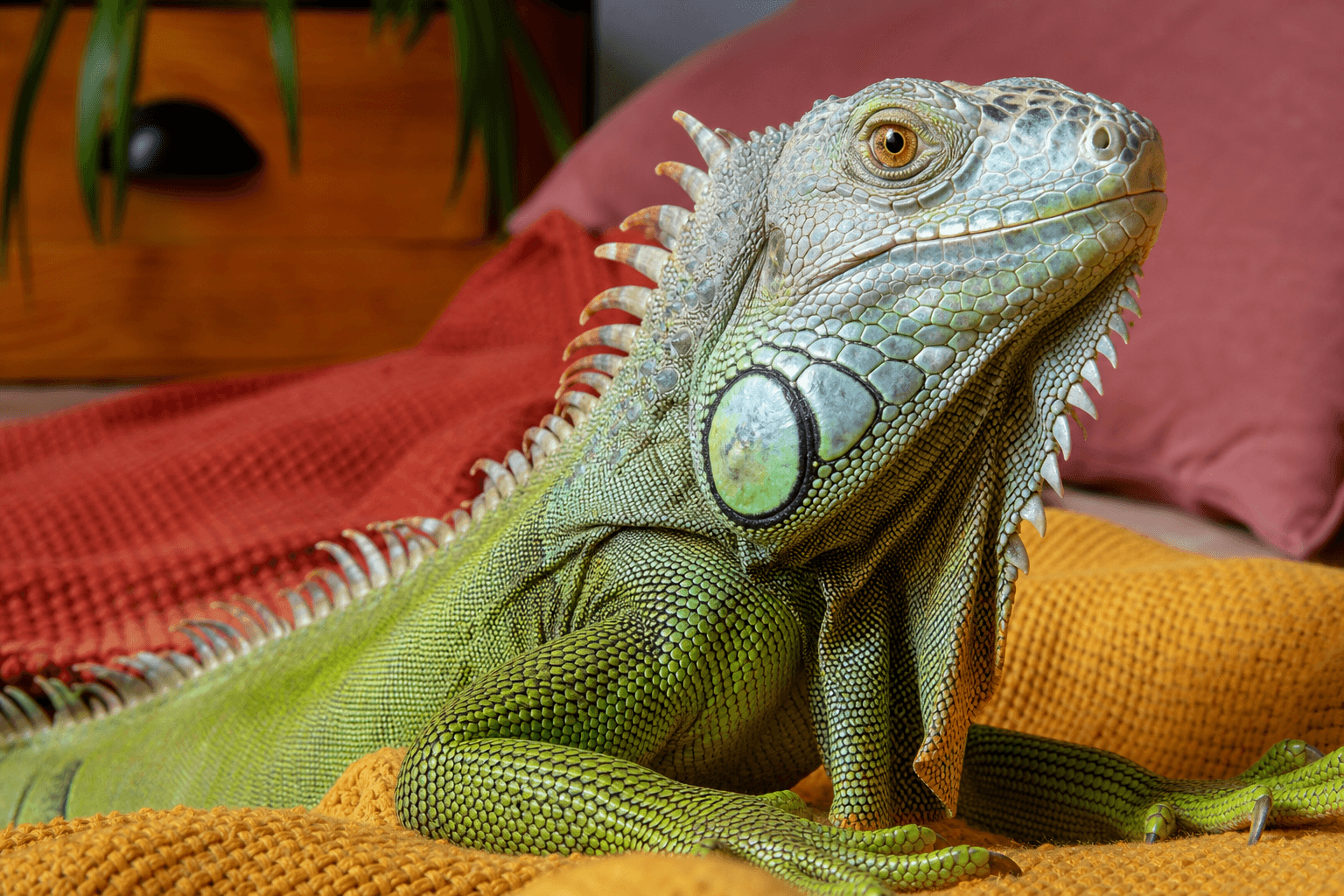
You love that prehistoric look and the chill vibe of an iguana.
Before you bring one home, here are the things that actually matter, from space and heat to behavior and budgets.
We keep this short, practical, and honest so you can set up right the first time.
1. They Get Big — Really Big
Green iguanas routinely reach 5–6 feet from nose to tail, with muscular bodies and powerful tails.
Babies look manageable; adults need two hands and real respect.
2. The Enclosure Is Furniture-Sized
Think walk-in wardrobe, not aquarium. A realistic indoor enclosure for an adult is around 8 ft long x 4 ft wide x 6 ft tall, with vertical climbing, branches, and shelves.
Free-roaming sounds romantic, but you still need a safe heated base habitat you can control.
Heat, light, and humidity make or break iguana health
3. Heat and UVB Aren’t Optional
Provide a daytime basking spot of about 100–105°F, ambient 80–86°F, and a mild nighttime drop (mid-70s°F works for many homes).
Use a quality UVB tube (T5 HO 10.0 or equivalent) spanning much of the enclosure, replaced per manufacturer schedule.
4. Humidity Needs Are High
Target 60–70% relative humidity with daily misting, live plants, large water tubs, and partially covered screens.
Low humidity leads to stuck sheds and dehydration; swampy conditions invite mold. Balance is the game.
5. They’re Strict Herbivores
Forget crickets and dog food. Adult green iguanas thrive on a varied, leafy diet: collards, turnip greens, mustard greens, dandelion greens, escarole, endive, hibiscus leaves/flowers, squash, green beans, and occasional fruits as treats.
Avoid spinach and beet greens as staples due to oxalates, and skip animal protein entirely.
Daily Staples
Collards, mustard, turnip, dandelion, escarole, endive, squash mix.
Nice Add-Ins
Hibiscus, nasturtium, okra, prickly pear pads (de-spined), green beans.
Use Sparingly
Kale, fruits; they’re fine as rotation items, not the base.
Skip
Animal protein, iceberg lettuce, heavily oxalate greens as staples.
6. Calcium and Lighting Prevent Bone Disease
Dust salads with plain calcium (no D3 if UVB is correct; with D3 if UVB is limited) a few times a week, plus a multivitamin lightly once weekly.
Metabolic bone disease is preventable with the right combo of UVB + calcium + balanced diet.
7. Tame-Looking Doesn’t Mean Easy to Handle
Even socialized iguanas can whip, scratch, and bolt. Young ones are skittish; adults are strong.
Short, calm sessions, support the whole body, and never grab the tail. Earn trust; don’t force it.
- Approach from the side, not above
- Support chest, belly, and base of tail
- Stop if you see gape, dewlap flare, or tail-cocking
- Allow kids to carry or chase the iguana
8. Territorial in Breeding Season
Males especially can become defensive seasonally, displaying head bobs, dewlap extension, and tail strikes.
Have a plan for hands-off days and secure barriers when hormones surge.
9. This Is a Long Commitment
With correct care, green iguanas can live 10–15 years, sometimes longer. That’s a decade of electricity, food prep, and enclosure maintenance.
If you move often or rent, check that future spaces can accommodate the habitat.
10. You’ll Need a Reptile Vet
Find an exotics vet before you buy. Annual wellness checks, fecals for parasites, and guidance on diet and lighting save headaches.
Transport requires a secure, warm carrier—plan ahead to avoid cold stress.
11. Safety for Kids and Other Pets
Iguanas can transmit Salmonella like many reptiles. Wash hands after handling and keep food prep separate.
Dogs and cats may see a tail to chase; supervise or separate. Iguanas can injure small pets with a single tail whip.
12. The Real Costs Add Up
The lizard is the cheapest part. Expect enclosure materials, lighting fixtures, UVB tubes, thermostats, radiant heat panels or bulbs, timers, hygrometers, branches, and plants.
Annual Cost Breakdown
| Expense | Annual Cost |
|---|---|
| Electricity (heating/lighting) | $150–$350/yr |
| UVB replacements | $60–$120/yr |
| Greens/produce | $400–$800/yr |
| Vet (annual + fecal) | $120–$300/yr |
| Substrate/maintenance | $80–$150/yr |
| Est. Annual Total | $810–$1,720/yr (after initial build) |
13. Source Ethically and Legally
Choose captive-bred when possible; wild-caught animals are stressed, parasite-prone, and deplete ecosystems.
Confirm local laws and permits—some areas restrict iguanas due to invasive species risks.
Babies can start in a well-furnished 4x2x4 ft to reduce stress, but plan and build toward ~8x4x6 ft or larger for an adult with vertical space and safe heat/UVB zones.
Some tolerate it after patient socialization, but many prefer minimal handling. Focus on cooperative care—target training and stationing—over cuddling.
Sealed floors with easy-clean mats, bioactive with proper drainage, or large tiles work well. Avoid loose, ingestible substrates for young iguanas.
Only in secure, escape-proof outdoor pens within their safe temperature/humidity range. Always provide shade and retreat boxes; bring indoors when conditions drop.
Use a Solarmeter 6.5 or equivalent to check UVI at the basking zone. Replace bulbs per schedule and ensure no fine mesh blocks most UVB.