13 Things to Know Before Getting a Goldendoodle
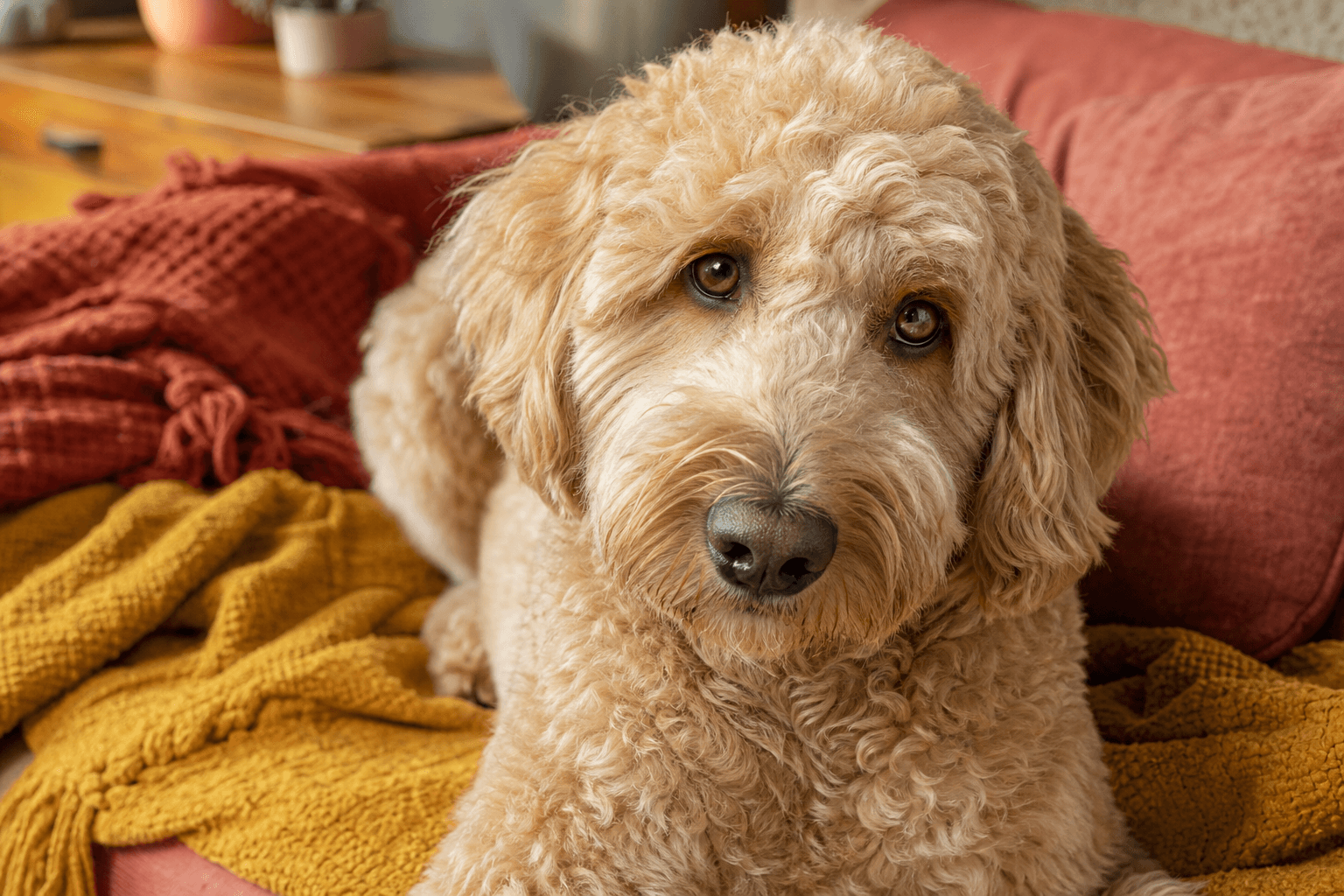
You love the sweet teddy-bear face and the family-dog vibe. Same.
Before you bring a Goldendoodle home, here are the real-life details that make the difference between dreamy and overwhelming.
These are the things we tell friends who ask us, no fluff.
1. They Are Energetic Athletes In a Fluffy Suit
Under the curls is a retriever engine. Expect a dog that wants to move, fetch, learn, and be with you.
Plan on real activity most days — not just a quick yard break. If you run, hike, or love training games, you will click.
2. The Coat Is Not Automatically Low-Shed
Goldendoodles can have straight, wavy, or curly coats depending on genetics, not marketing.
Some shed lightly, some barely, and some shed a surprising amount. Ask breeders for coat and shedding history of related dogs, not promises.
3. Grooming Is Time and Money
Curls mat. Behind ears, armpits, collar line, and tail are hot spots.
Most families do a professional groom every 6–8 weeks plus brushing 3–4 times a week. Skipping the brush often leads to a full shave-down.
Home care
Slicker brush, steel comb, detangler; 10–15 minutes per session.
Pro grooms
Bath, blowout, de-mat, tidy; expect regular appointments.
4. Size Ranges Matter More Than Labels
"Mini," "medium," and "standard" vary wildly by breeder.
Ask for expected adult weight from multiple related litters and the parents’ measurements. A few pounds changes crate size, car space, and apartment life.
5. Smart, Social, and Sometimes Extra
Poodle brains plus retriever enthusiasm means fast learning — for good or mischief.
Reward-based training shines. Keep sessions short and playful to prevent overstimulation and barking.
Training basics that work
- Pay early, pay oftenTreat the first 2 seconds of the behavior you want.
- Use a release wordPrevents creeping on sits and downs.
- Channel the mouthTeach fetch and tug so they do not practice nipping.
6. They Do Not Love Long Alone Time
Velcro tendencies are common. Without practice, you can see whining, pacing, or destruction.
Crate or pen train from day one, and gradually build up alone-hours. Puzzle feeders help.
7. Health Testing Is Non-Negotiable
Ask to see proof of testing for hips and elbows (OFA or PennHIP), eyes (CAER), and breed-relevant DNA panels for both parents.
Screening reduces, not eliminates, risk for hip dysplasia, eye disease, and certain endocrine issues.
Genetics do not ignore poor breeding. Health-tested parents and thoughtful pairing matter.
X-rays and ophthalmologist checks catch things a swab cannot.
8. Allergy-Friendly Is Not Allergy-Proof
Allergies vary by person and by dog. Dander and saliva proteins still exist.
Visit adult relatives of the litter, handle them after play, and trial a shirt-carry method at home if you are sensitive.
Now let us talk about daily life happiness for you and your doodle
9. Daily Exercise and Brain Work Keep the Peace
Two 20–30 minute walks plus a fetch or training block is a solid baseline for most adults.
On rainy days, swap to scent games, food-stuffed toys, and short trick sessions. A sniffy walk beats a rushed march.
- Morning walk with training reps
- Midday potty and puzzle feeder
- Evening fetch or sniff safari
- Skip all activity for two days in a row
10. The Real Costs Add Up
Between grooming, quality food, training classes, and vet care, budgets matter.
Annual Cost Breakdown
| Expense | Annual Cost |
|---|---|
| Grooming (6–8 grooms/year) | $600–$1,200 |
| Food and treats | $500–$900 |
| Routine vet care | $250–$500 |
| Training/classes | $150–$400 |
| Toys/supplies/insurance | $400–$1,200 |
| Est. Annual Total | $1,900–$4,200+ |
11. Generally Great With Kids and Dogs, With Guidance
Friendly and bouncy is the default, which is lovely — and a lot for toddlers or shy dogs.
Teach calm greetings, settle-on-a-mat, and gentle mouth skills. Supervise any kid-dog time, always.
Pros
Often wonderful family fit
- Affectionate and people-oriented
- Eager to train and play
- Usually polite with other dogs
Cons
Watch-outs
- Boisterous jumping in greetings
- Mouthy adolescence if not channeled
- Can develop separation distress
12. Water-Loving, Mud-Loving, Life-Loving
Many Goldendoodles adore water and any mess it brings.
Rinse after swims, dry thoroughly to prevent skin issues, and comb out before mats set. A light, sport-length trim is practical for active dogs.
13. Long Game: 12–15 Years of Routine and Joy
Expect a loyal shadow who learns your habits and wants in on every plan.
Consistency pays off: training, grooming, movement, and vet checks keep them thriving into the teens.
No dog is truly hypoallergenic. Many people with mild allergies do well with curlier coats, but dander and saliva proteins can still trigger symptoms.
Most adults do well with 60–90 minutes split across walks, play, and training, plus mental enrichment.
Brush several times a week and book professional grooms every 6–8 weeks to prevent matting.
Match expected adult size from the parents; many mediums fit a 36-inch crate, standards a 42-inch, but confirm by measurements.
They can be quick to alert. Give them jobs, practice quiet on cue, and avoid reinforcing door reactivity.