13 Things to Know Before Getting a British Shorthair
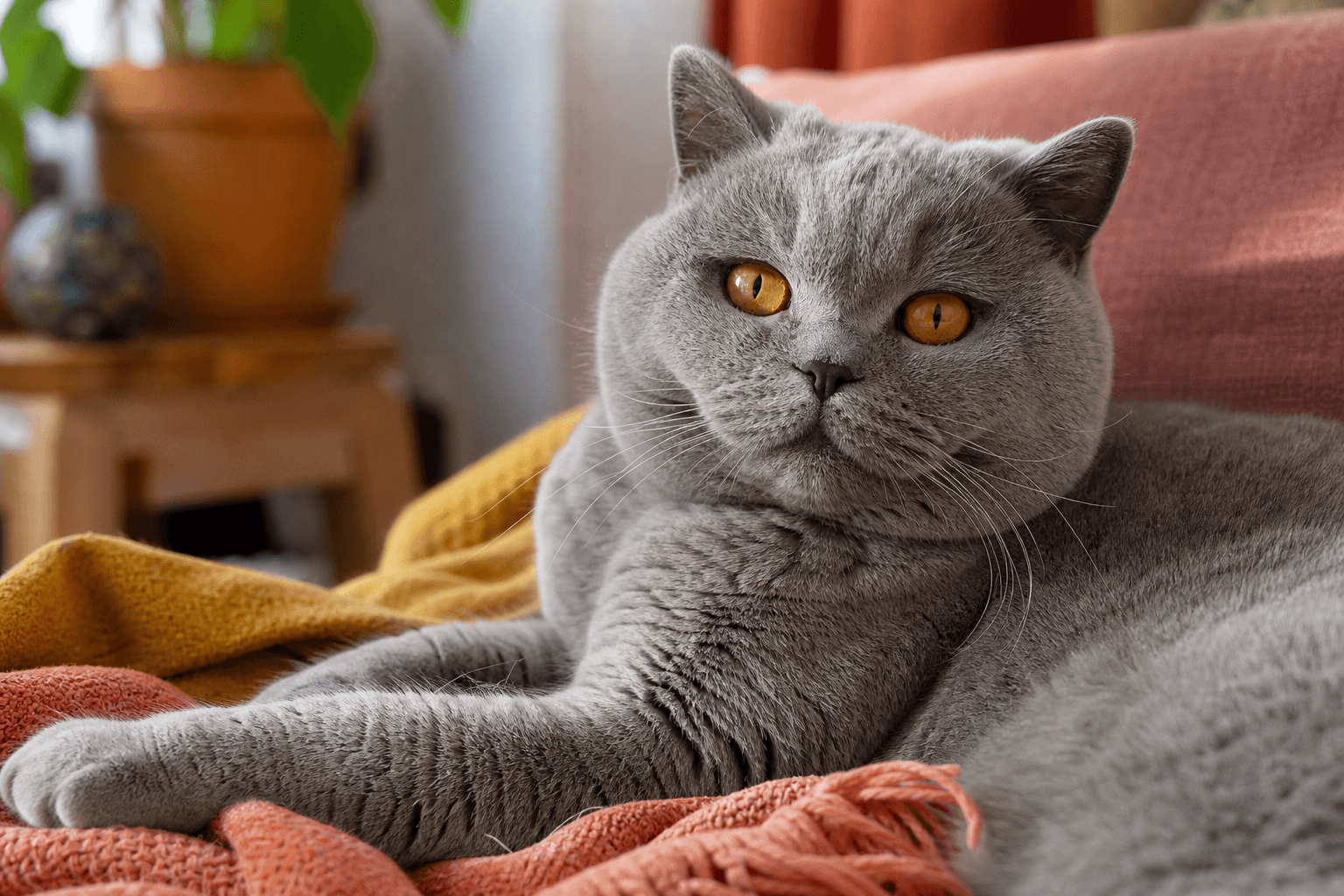
You saw that plush, teddy-bear face and thought, that is my cat.
Same here. British Shorthairs are as steady as they look — but there are a few surprises first-time owners don't expect.
Here are the things we wish we knew before bringing one home, so you can start strong.
1. Temperament: Calm, Not Cuddly
British Shorthairs are famously easygoing and undramatic.
They'll follow you from room to room, sit nearby, and blink hello — but many aren't lap fixtures.
Expect companionship over clinginess. If you want a Velcro cat, this may not be it.
2. Low-Activity, Still Needs Play
They're a low-drama, low-sprint breed, but daily interactive play keeps weight and boredom in check.
Two or three 5–10 minute wand-toy sessions beat one long chase they won't commit to.
Plush body, sturdy frame — plan for sturdier handling
3. Heavier Than They Look
That compact build is dense. Many adult males land 12–17 lb; females often 8–12 lb.
Pick up with forearm support, not just under the chest. Children need coaching here.
4. Dense Coat, Seasonal Sheds
The coat is short but thick, with a true undercoat.
Most of the year they shed modestly; spring and fall blowouts are real. A rubber curry or silicone brush lifts the fluff fast.
5. Grooming Is Simple But Consistent
Once or twice weekly brushing is usually enough outside of shedding seasons.
Check nails every 2–3 weeks and wipe eyes if needed. Baths are rarely necessary for indoor cats.
Weekly brush
Short sessions prevent mats during seasonal sheds.
Nail care
Trim before they turn into couches and carpets.
Dental routine
Aim for brushing; dental diets and chews help as backup.
Litter check
Clumping litter and a large, high-sided box for a solid cat.
6. Watch Heat and Humidity
That dense coat plus a broad head can make hot, muggy rooms uncomfortable.
Keep fresh water in multiple spots and provide cool resting places; air conditioning on rough days is kindness.
7. Health Watch: HCM, PKD, Joints
Reputable lines screen for hypertrophic cardiomyopathy (HCM) and polycystic kidney disease (PKD).
British Shorthairs can also trend toward joint and spinal stiffness with age if overweight.
8. Weight Management Is a Must
They eat politely and then quietly gain.
Feed measured meals, not free-choice. Choose a high-quality diet with appropriate calories for a moderately active indoor cat.
- Use a kitchen scale to portion food.
- Schedule twice-daily meals; pick up leftovers.
- Rely on treats for most calories.
9. Good With Kids and Dogs — With Boundaries
Their steady nature helps them fit into family life, but they value space.
Teach children to pet, not grab. Dog intros should be slow, with vertical escape routes for the cat.
10. Fine Alone, But Not Ignored
British Shorthairs tolerate workday absences well.
What they need is predictable attention: a greeting, some play, and quiet companionship each evening.
11. Train With Food, Not Fuss
They're intelligent, observant, and slightly dignified about it.
Clicker training for touches, sits, carrier entries, and nail trims works beautifully with small food rewards.
They train well in short, food-motivated sessions. Keep it low-pressure and end on a win.
They shed seasonally and benefit from weekly brushing to keep the coat plush and healthy.
12. Choosing a Breeder or Rescue
For kittens, look for breeders who welcome questions, health-test breeding cats, and let kittens go home at 12–13 weeks.
Rescues and breed clubs often list adults — a fantastic fit if you prefer a settled personality.
Red flags to skip
- No health testing infoHCM screening and PKD testing should be normal practice.
- Goes home too earlyUnder 12 weeks risks social and immune setbacks.
- Always available, any colorQuality breeders have waitlists; variety is not unlimited.
13. Budget: Quiet Cat, Real Costs
They aren't high-maintenance, but quality care adds up.
Annual Cost Breakdown
| Expense | Annual Cost |
|---|---|
| Food (quality wet + dry) | $500–$900 |
| Litter and supplies | $250–$400 |
| Preventive vet care | $250–$500 |
| Insurance (optional) | $300–$600 |
| Grooming tools/toys | $80–$150 |
| Est. Annual Total | $1,380–$2,550 |
Many prefer to sit beside you rather than on you. Some tolerate brief holding, but most don’t enjoy being carried for long.
Commonly 12–16 years with good care; responsible breeding and weight management support the longer end.
Yes. Their calm nature and moderate exercise needs make them excellent for smaller homes, provided you enrich vertically and play daily.
Often, yes, with a slow introduction. Their steady temperament helps, but they still expect personal space.