Consider These 13 Factors Before Getting a Boxer Dog
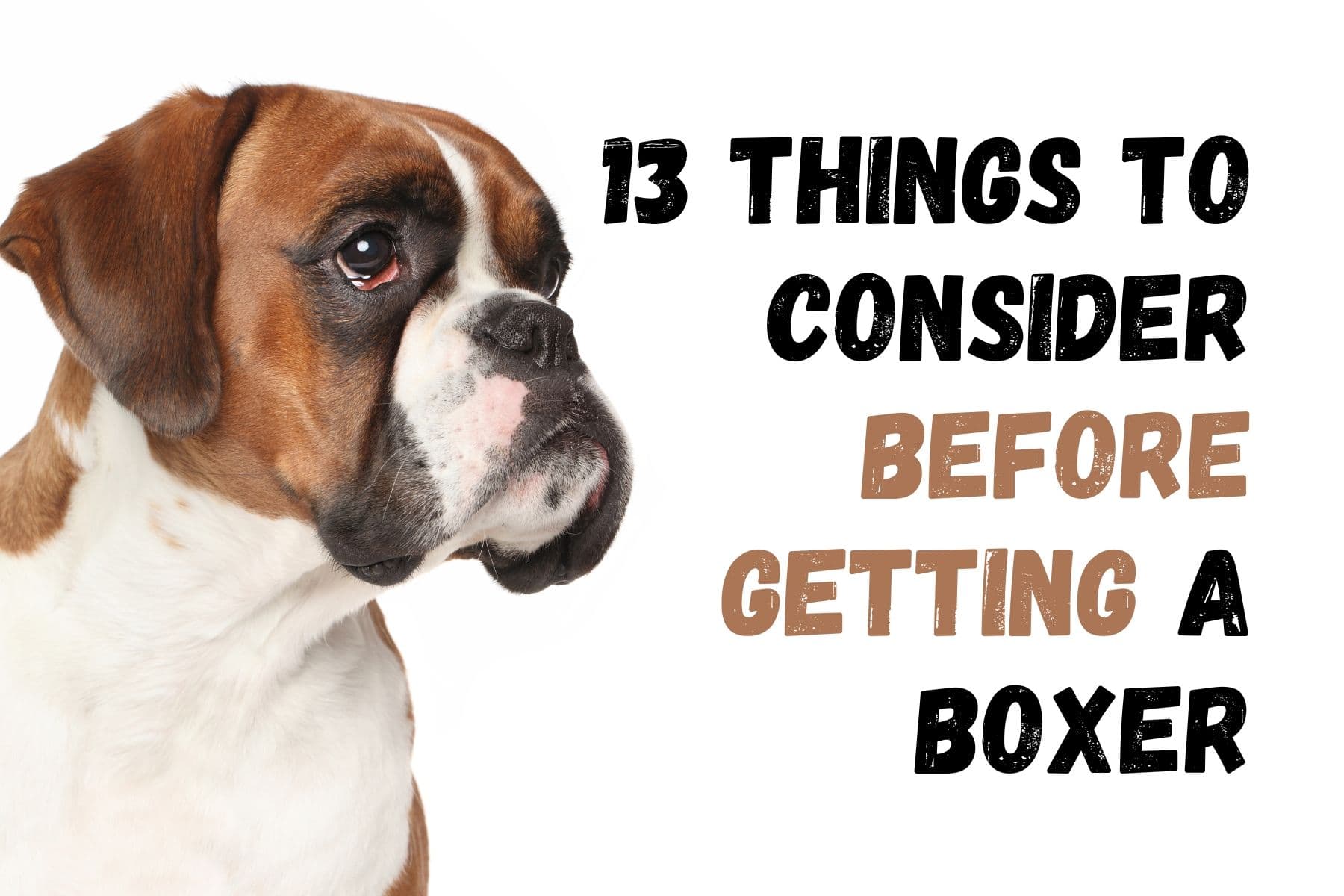
Thinking about bringing home a Boxer? You've probably already fallen for those soulful eyes, that wiggly stub of a tail, and the goofy grin that seems to say "let's play forever."
Here's the thing: Boxers are one of the most loving, hilarious, loyal dogs you'll ever meet.
But they're also demanding — and not the right fit for everyone.
Below, you'll find 13 honest, no-fluff factors to weigh before you commit. By the end, you'll know exactly whether a Boxer belongs in your life — or whether you're better off admiring them from afar.
Let's start with the single biggest thing people underestimate about this breed.
1. They're Energizer Bunnies in Dog Form
Boxers don't just like exercise. They need it — every single day.
You're looking at a minimum of one solid hour of high-energy activity daily. And that's the floor, not the ceiling.
1+ hr
Of daily high-energy exercise, minimum
Walks, hikes, jogs, fetch, zoomies in a fenced yard — it's all fair game.
But here's the catch: physical exercise alone won't cut it.
Boxers have busy brains too. Without mental stimulation, that energy turns into mischief — think chewed shoes and freshly dug craters in your yard.
So if your ideal evening is Netflix and a couch, this probably isn't your breed.
Got the energy covered? Now let's talk about their stubborn streak.
2. Training Takes Patience (and Treats)
Boxers are smart, and they genuinely love making you happy.
But they've also got a mind of their own — and a stubborn streak that shows up at the worst moments.
What works best? Positive reinforcement. Lots of praise, plenty of treats, and short, fun sessions that end before they get bored.
Think of training as a game you play together, not a battle you win. Keep it light, keep it regular, and the stubbornness fades.
3. They're Big Softies With a Bold Bark
Underneath all that muscle, a Boxer is basically a giant toddler who loves you fiercely.
Endlessly affectionate
They're devoted to their families and want to be part of everything you do.
Great with kids
Usually gentle and playful — though their size and energy can overwhelm toddlers.
Attention seekers
They hate being left out. A Boxer wants front-row seats to your whole life.
Natural watchdogs
Alert and quick to sound the alarm when something feels off.
That watchdog instinct is a bonus — but only if it's channeled properly.
Early socialization keeps their protective side balanced, so they alert you without becoming reactive.
“A well-raised Boxer is confident enough to be calm, and calm enough to be a joy.”
4. Socialization Isn't Optional
Now, here's where it gets important.
The window that shapes your Boxer's entire personality opens early — between about 3 and 14 weeks of age.
During this time, slow and positive introductions to people, other pets, and new places pay off for life.
- Introduce new people, sounds, and surfaces gradually
- Give plenty of early exposure to small animals and other dogs
- Keep every experience calm and positive
- Skip socialization "because they're still a puppy"
- Force scary interactions to "get them used to it"
Boxers can carry a strong prey drive, so the more exposure they get early, the calmer they'll be around small critters later.
Speaking of behavior — here's the deal-breaker for a lot of busy households.
5. Alone Time? Not Their Thing
Boxers are social butterflies to their core.
Leave one alone too long, and you'll come home to barking, digging, chewing — or full-blown separation anxiety.
You might be wondering: "How long is too long?"
Quick poll
How many hours would your Boxer be alone on a typical workday?
Crate training can help ease the transition, but it's a tool — not a cure.
If your household is empty most of the day, a Boxer will struggle unless you build in company.
6. Grooming? Easy. Shedding? Not So Much.
Good news first: that short, sleek coat is genuinely low-maintenance. A weekly brush with a soft-bristle brush usually does it.
But here's the surprise — Boxers shed way more than their tiny coat suggests, especially during seasonal changes.
Their fur is short, but they shed steadily year-round and heavily during coat changes. Expect fine hairs on your clothes and couch.
You'll also need regular ear cleaning (they're prone to infections), nail trims every few weeks, and consistent dental care.
7. Health Comes With a Price Tag
This is the section that deserves your full attention before you commit.
Boxers are prone to several serious health conditions — and knowing them upfront helps you plan, catch problems early, and avoid heartbreak.
- Cancer — especially mast cell tumors and lymphoma
- Heart conditions — such as dilated cardiomyopathy
- Bloat — a life-threatening emergency
- Hip dysplasia
- Allergies and skin problems
- Eye issues — like cherry eye or cataracts
- Hypothyroidism
So what does this mean for you? Regular vet visits and early detection are non-negotiable.
8. They're Not Really Apartment Dogs
Boxers are medium-to-large dogs with oversized energy. They need room to move.
A house with a secure yard is the ideal setup.
There's also a climate catch: that short coat leaves them exposed at both extremes.
House with a yard
IdealSpace to run and burn off steam safely.
Small apartment
ToughDoable only with serious daily exercise and enrichment.
Hot climates
RiskyThey overheat easily — keep them cool and shaded.
Cold climates
CautionA dog sweater is genuinely needed in winter.
9. They'll Cost More Than Just the Puppy Price
Let's be honest about the money — because the sticker price is only the beginning.
A well-bred Boxer puppy runs $1,000–$3,000. Then the real budgeting starts.
Can you guess?
Guess the biggest hidden cost of owning a Boxer
Annual Cost Breakdown
| Expense | Annual Cost |
|---|---|
| High-quality food | $360–$720 |
| Toys (they destroy them) | $100–$200 |
| Routine vet care | $300–$600 |
| Training classes | $150–$400 |
| Grooming supplies & extras | $100–$200 |
| Estimated yearly cost (excluding emergencies) | $1,010–$2,120 |
Because Boxers are strong, playful, and hard on their gear, expect to replace toys and equipment far more often than you would with smaller, gentler breeds.
10. Breed Restrictions Exist
Here's one that catches people off guard.
Some areas still include Boxers in breed-specific legislation — meaning they can be restricted or even banned depending on where you live.
Wondering how the first year actually unfolds? Here's the timeline.
What to Expect in the First Year
Bringing home a Boxer isn't a single event — it's a series of stages, each with its own quirks.
Weeks 8–12
Settling in
Focus on house training, gentle routines, and building trust. Start crate training early.
3–6 months
Teething & socialization
Provide chew-safe toys and pack in positive new experiences. This window shapes their adult temperament.
6–12 months
Adolescent chaos
Energy peaks and boundaries get tested. Stay consistent — this is where good training pays off.
1–2 years
Settling into adulthood
The goofiness stays, but the reckless energy softens. Keep up exercise and mental work.
So, Is a Boxer Right for You?
Boxers are fun, goofy, loyal, and bursting with life. But low-maintenance? Not even close.
Pros
A Boxer thrives if you...
- Are home most of the day
- Love an active, outdoor lifestyle
- Enjoy training and mental games
- Have space (ideally a secure yard)
- Can budget for health surprises
Cons
Reconsider if you...
- Work long hours away from home
- Prefer a calm, low-energy dog
- Live in a tight apartment with no room to run
- Can't commit to daily exercise
- Have very young toddlers and want a mellow pet
If you're active, present, and ready for the commitment, a Boxer will repay you with endless love, laughs, and — let's be real — a little slobber.
Frequently Asked Questions
They can be — if that first-time owner is active, patient, and home a lot. Their energy and stubborn streak make them harder than a mellow breed, but their eagerness to please rewards consistent training.
Ideally no more than 4–6 hours. They're highly social and prone to separation anxiety, so longer absences call for a sitter, daycare, or a midday walker.
They're alert watchdogs, so they'll bark to announce visitors or anything unusual. Excessive barking usually signals boredom, loneliness, or too little exercise.
Generally, yes — they're playful and affectionate with kids. Just supervise around toddlers, since a happy Boxer's size and enthusiasm can accidentally knock small children over.
With early socialization, many do well. But their prey drive means slow, careful introductions to cats and small animals are essential.
For most owners, it's the relentless energy plus the health risks. You need time for daily exercise and a financial cushion for potential vet bills.
Expect peak chaos through adolescence (roughly 6–18 months). Most Boxers start mellowing around age 2, though the playful spirit never fully disappears.