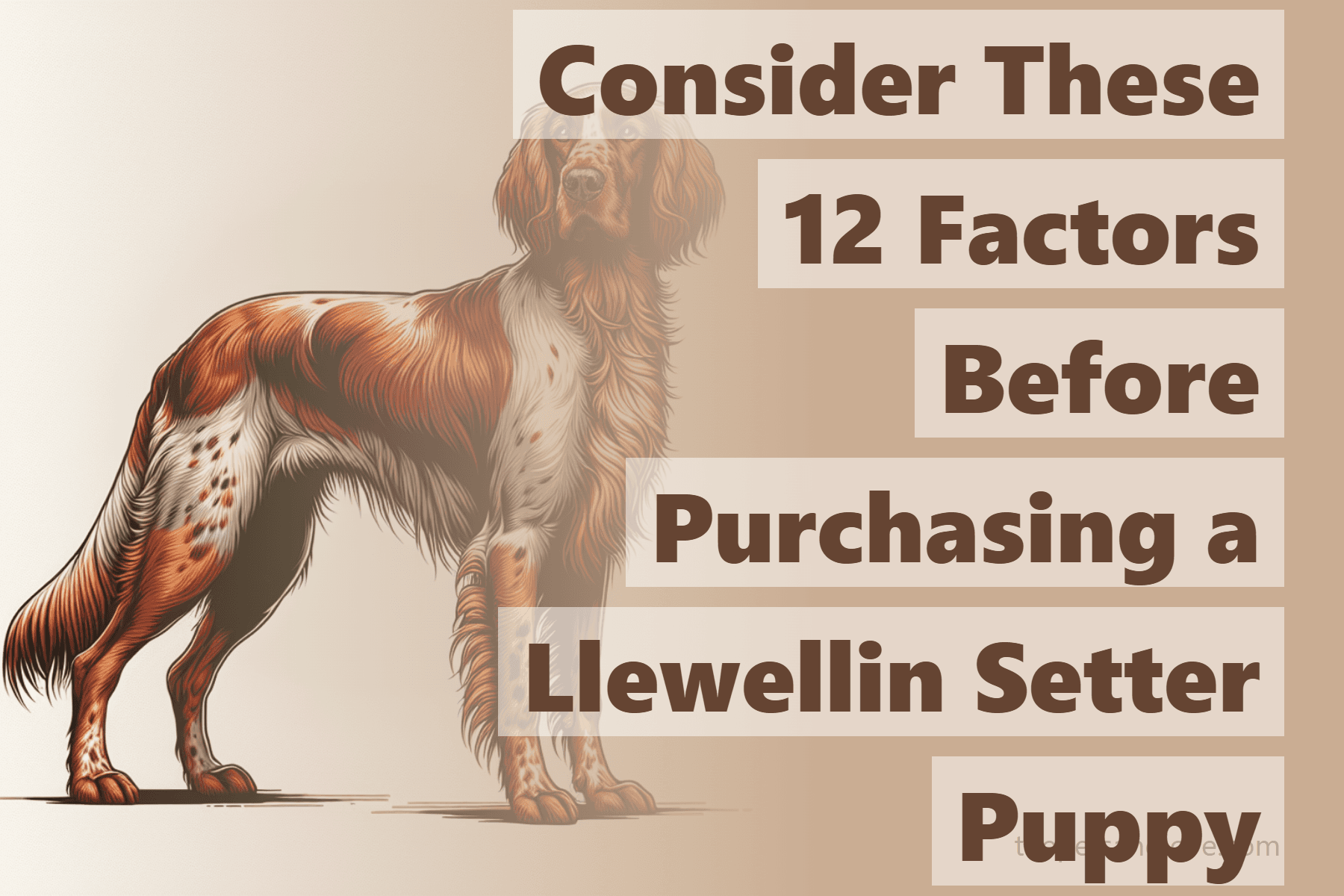
Consider These 12 Factors Before Purchasing a Llewellin Setter Puppy
Thinking about bringing home a Llewellin Setter? You're in for a wild, wonderful ride — but let's be honest: this breed isn't for everyone.
These are high-drive field dogs with athlete-level energy and a mind of their own.
Get it right, and you'll have the most loyal adventure partner you've ever known. Get it wrong, and you'll have a bored, willful dog redecorating your yard.
So before you fall for those soulful eyes and silky ears, here's what you actually need to know.
What Exactly Is a Llewellin Setter?
Here's the first thing that trips people up: the Llewellin Setter isn't officially its own breed.
It's a specific line within the English Setter breed, bred for one thing above all — field performance.
The AKC doesn't recognize them separately. But breeders and hunting enthusiasts absolutely see them as distinct, thanks to their tight focus on working lineage.
What does that mean for you? These dogs were built for stamina, intelligence, and drive. Those traits make them champions in the field — and demanding companions at home.
So how do all that energy and drive play out in a normal home?
They're Great Family Dogs — With Energy to Spare
If your family lives outdoors, this dog will feel like it was made for you.
Hiking, running, hunting, endless fetch in a big yard — a Llewellin thrives on all of it. They're affectionate, gentle with kids, and happiest when they're part of whatever you're doing.
But there's a catch: they do not do well left alone all day.
These are velcro dogs. They want to be with their people — not parked in a crate while you're at work.
“If you're looking for a laid-back lapdog, this isn't your breed. If you want a partner for life's adventures, it just might steal your heart.”
Just How Much Exercise Are We Talking?
Let's set expectations clearly, because this is where most owners underestimate.
45+ min
Of hard exercise every single day, plus free run time
Think running, playing, or structured training — every day, not just weekends. Add free time in a securely fenced yard on top of that.
Skip it, and boredom sets in fast. And a bored Llewellin gets creative.
Quick poll
How much daily exercise can you realistically commit to?
Before you introduce a Llewellin to your household, there's one instinct you can't ignore.
High Prey Drive Means Caution Around Small Pets
Llewellins are hunters at heart. It's baked into the bloodline.
That deep prey drive means they may not mix well with small animals — rabbits, birds, even small dogs can trigger the chase instinct.
Now, here's the good news: they're usually great with other medium-to-large dogs, especially when socialized early.
The key word is thoughtfully. Slow, controlled introductions make all the difference.
Active families & kids
ExcellentGentle, affectionate, and endlessly playful with their people.
Medium/large dogs
GoodUsually social, especially with early exposure and calm intros.
Cats & small dogs
CautionDoable with careful management, but the prey drive is real.
Rabbits, birds, rodents
RiskyInstinct kicks in fast — generally not a safe combination.
Smart dog. Loyal dog. But an easy dog to train? Let's talk about that.
Training Can Be a Challenge — But Not Impossible
These pups are seriously smart. They're also seriously stubborn.
That combination means training takes consistency, patience, and buckets of positive reinforcement.
They respond to firm — never harsh — leadership, backed by high-value rewards: treats, toys, or genuine praise.
You might notice a personality split, too. Females often lean independent and clever, while males can be a touch more eager to please, especially out in the field.
The Llewellin training playbook
- Keep it positiveReward the behavior you want; harsh corrections backfire with this sensitive breed.
- Stay consistentSame rules, same words, every family member, every time.
- Make it high-valueBring the good treats and favorite toys — they work for what excites them.
- Socialize early and oftenNew people, dogs, sounds, and places while they’re young pays off for years.
That gorgeous coat isn't maintenance-free — here's the routine.
Grooming: Manageable, But You'll Need a Routine
That silky, feathered coat is stunning. It's also a magnet for burrs, mud, and tangles.
The upside? Grooming is totally manageable once you build a rhythm.
- Brush several times a week (more after fields or woods)
- Bathe every 6–8 weeks to stay fresh
- Clean those floppy ears regularly
- Trim nails when you hear clicking on the floor
- Brush teeth every 2–3 days
- Ignore the ears — trapped moisture invites infections
Fueling an athlete: what to feed your Llewellin.
Diet and Feeding
Good news — no exotic diet required. But quality genuinely matters for an active dog.
Most Llewellins do well on about 3 cups of high-protein kibble per day, split into two meals. Adjust for size, age, and how hard they're working.
Always confirm exact portions with your vet.
Now for the numbers most people underestimate.
Cost of Ownership
Let's talk money, because a Llewellin is an investment of both cash and time.
Can you guess?
What does a puppy from a reputable breeder cost?
And the sticker price is just the start. Factor in vet visits, vaccinations, spay/neuter, food, gear, and preventatives.
Annual Cost Breakdown
| Expense | Annual Cost |
|---|---|
| Puppy (reputable breeder) | $750–$2,000 |
| Initial vet care & vaccinations | $200–$500 |
| Spay / neuter | $150–$500 |
| Quality food (annual) | $500–$800 |
| Gear & preventatives (annual) | $300–$600 |
| Rough first-year range | $1,900–$4,400 |
Quick answers to what first-time owners always ask.
Frequently Asked Questions
They can be, but only for active, committed first-timers. Their smarts and stubborn streak reward consistency — if you’re ready to train daily and exercise hard, you’ll do great.
Not long. These are people-oriented dogs that struggle with being left all day. A few hours is fine; a full workday alone regularly is a recipe for boredom and destructive behavior.
They’re not naturally excessive barkers, but a bored or under-exercised Llewellin will bark, dig, and chase. Meet their needs and noise usually drops way down.
Yes — they’re affectionate and gentle with kids, especially in active families that include them in the fun. Supervise play with very young children as with any energetic dog.
They generally get along with medium-to-large dogs, especially when socialized early. Cats and small pets are trickier because of their strong prey drive — introduce carefully, if at all.
Meeting their exercise and mental-stimulation needs every single day. Skip it and their intelligence and energy turn into trouble fast.
Expect high-octane adolescence through the first couple of years. With consistent training and enough activity, most settle into calmer, polished adults around age two — though they never become couch potatoes.
Final Thoughts: Is This the Right Dog for You?
Llewellin Setters are not low-maintenance pets. Let's be clear about that.
But for the right owner, they're deeply rewarding companions.
If you're active, consistent, and ready to fold your dog into daily life, they'll become your shadow — always eager, always loyal, always up for the next adventure.
Indoors, once their energy is spent, they're polite and calm. Outdoors, they're in their element.