11 Things to Know Before Getting a Siberian Cat
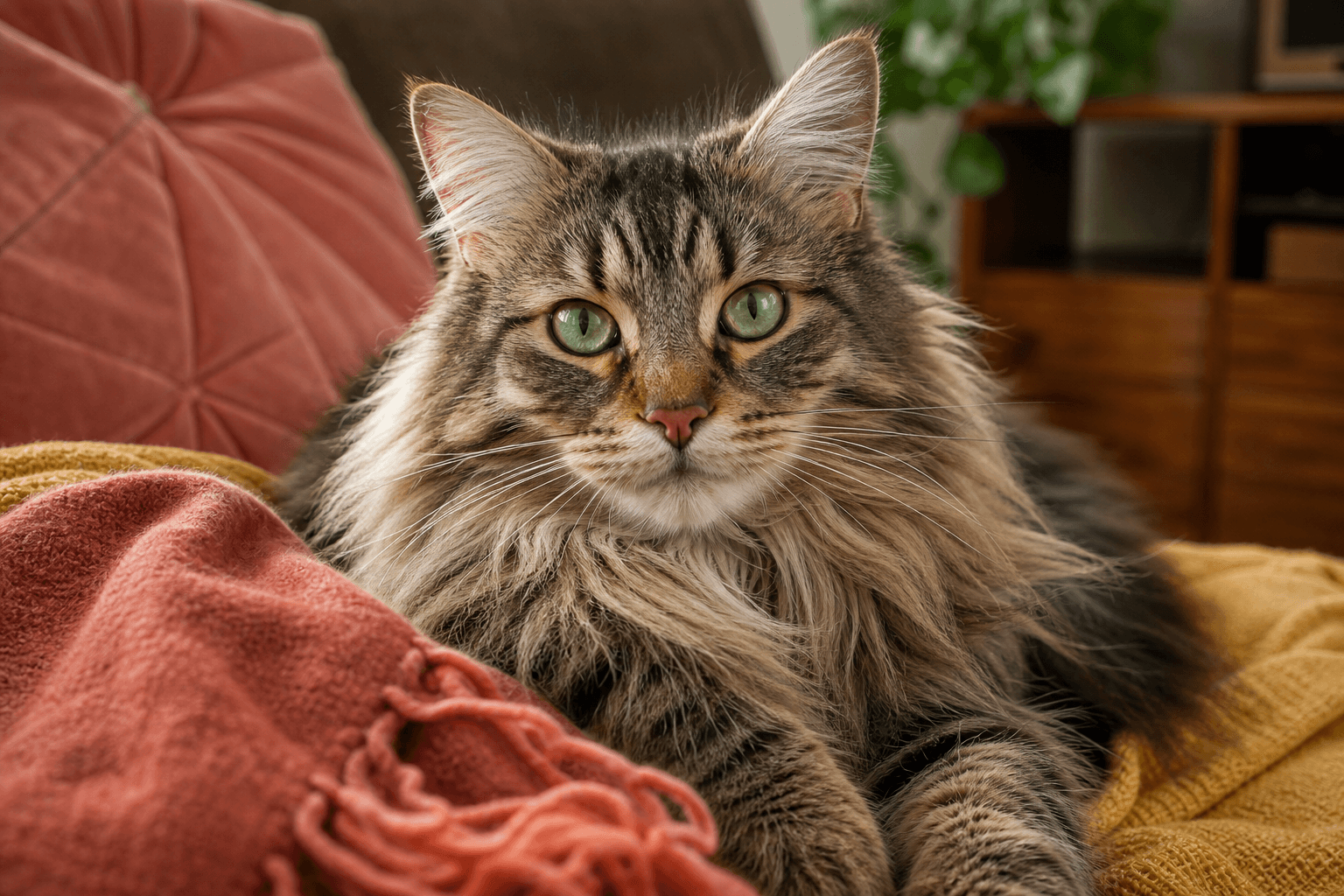
You fell for those big eyes and a waterfall of fluff. Same.
Before a Siberian curls up on your lap, here are the truths we wish we knew first.
Short, honest, and from our homes to yours — so you can start strong.
1. They Are Bigger (and Heavier) Than You Think
Siberians are a natural forest breed with serious heft. Many mature males land in the 12–17 lb range, females a bit less, and they carry dense muscle under that coat.
They also take time to mature — up to five years. That kitten who fits your forearm now may need a sturdier tree, wider litter box, and a carrier rated for big cats later.
2. The Triple Coat Is Real Work
That water-resistant, triple-layer coat shrugs off snow — and traps loose hair. Expect a weekly brush most of the year, more during seasonal sheds.
Use a wide-tooth comb for the ruff and britches, then a slicker for the topcoat. Go gently; you’re detangling, not raking.
Weekly upkeep
10–15 minutes with comb + slicker; check armpits and behind ears for sneaky mats.
Seasonal shed plan
Daily quick combs for 2–3 weeks in spring/fall, plus a deshedding tool if needed.
3. Hypoallergenic? Not Exactly
Siberians can produce lower levels of Fel d 1 compared to some cats, but it varies by individual. Some allergy sufferers do better; others react the same.
Test time with the exact cat you plan to adopt. Rotate HEPA filtration, frequent vacuuming, and washing soft bedding to reduce allergen load.
4. Athletic, Springy, and Into Heights
These cats jump like parkour pros. High shelves, tall trees, and window perches keep them happy and out of your houseplants.
If you don’t provide vertical real estate, they’ll invent it — usually on top of your fridge or bookcase.
Set that energy to good use with structured play
5. Social, Dog-Like Temperament
Siberians often follow you from room to room, supervise showers, and greet guests. They’re confident, chatty in soft chirps, and generally good with respectful kids and cat-savvy dogs.
They crave company. If your home is empty for long stretches, pair with another compatible cat or schedule mid-day play visits.
6. Daily Playtime Is Non-Negotiable
Smart and prey-driven, they need interactive play — think wand toys, flirt poles, and puzzle feeders.
Two focused 10-minute sessions beat scattershot toy piles. End with a small meal to satisfy that hunt-catch-eat cycle.
- Two play sessions daily (laser or wand, not just solo toys)
- Rotate toys weekly to keep novelty high
- Skip play because they “seem fine”
7. Shedding Seasons Will Test Your Vacuum
Spring and fall blowouts happen. You’ll find fluff tumbleweeds under couches and along baseboards.
Brush more, bathe rarely. If you do bathe, thoroughly dry the undercoat to prevent chill and matting.
8. Health: Strong Breed With a Few Watchouts
Siberians are generally robust, but responsible breeders screen for hypertrophic cardiomyopathy (HCM). Ask for echocardiogram history on breeding cats.
Keep up with dental care; big cats still get tartar. Routine vet checks, weight monitoring, and parasite prevention go a long way.
They can. Ethical breeders screen for HCM; you should still do regular vet checks.
They can still be exposed through people, other pets, or screened windows. Ask your vet for a plan.
9. Feed for Muscle, Not Just Fluff
Prioritize high-protein, moisture-rich diets. Wet food anchors hydration; measured dry can be a tool, not the base.
Portion to a lean waist you can feel, not to a bowl that’s always full. Big frames hide creeping weight gain.
10. Indoor Life With Outdoor-Level Enrichment
They thrive indoors if you make it interesting. Window views, bird TV, scent trails (catnip/silvervine), and climbing circuits keep minds busy.
Consider a secure catio or harness training for supervised outdoor time. Many Siberians take to it with patient, positive sessions.
Pros
What we love
- Affectionate, people-oriented companions
- Athletic fun — great for interactive play
- Gorgeous coat and expressive faces
Cons
What to plan for
- Regular grooming and seasonal blowouts
- High vertical needs — invest in stable trees
- Not truly hypoallergenic for everyone
11. Finding an Ethical Breeder (or Rescue)
Expect waitlists. A good breeder prioritizes health over color trends, provides contracts, HCM screening proof, and keeps kittens until 12–14 weeks.
Meet virtually or in person, ask about socialization, and see where cats live. Avoid impulse buys and shipping without dialogue.
Quick vetting checklist
- Health testingEchocardiogram history on parents; vet records for kittens.
- TransparencyOpen about genetics, returns, and support after adoption.
- EnvironmentKittens raised in-home with exposure to normal noises and handling.
Often, yes. Their confident, social nature pairs well with calm, respectful dogs after slow introductions and scent swapping.
Weekly most of the year, then daily quick sessions during spring/fall sheds. Focus on armpits, behind ears, and hindquarters.
They “talk” in chirps and trills more than yowls. Expect soft commentary, especially around mealtimes and play.
Absolutely, if you build vertical space, schedule play, and enrich windows. Noise-tolerant, they adapt well.
Around 12–15 years with good care, nutrition, and routine veterinary checkups.