11 Things to Know Before Getting a Savannah Cat
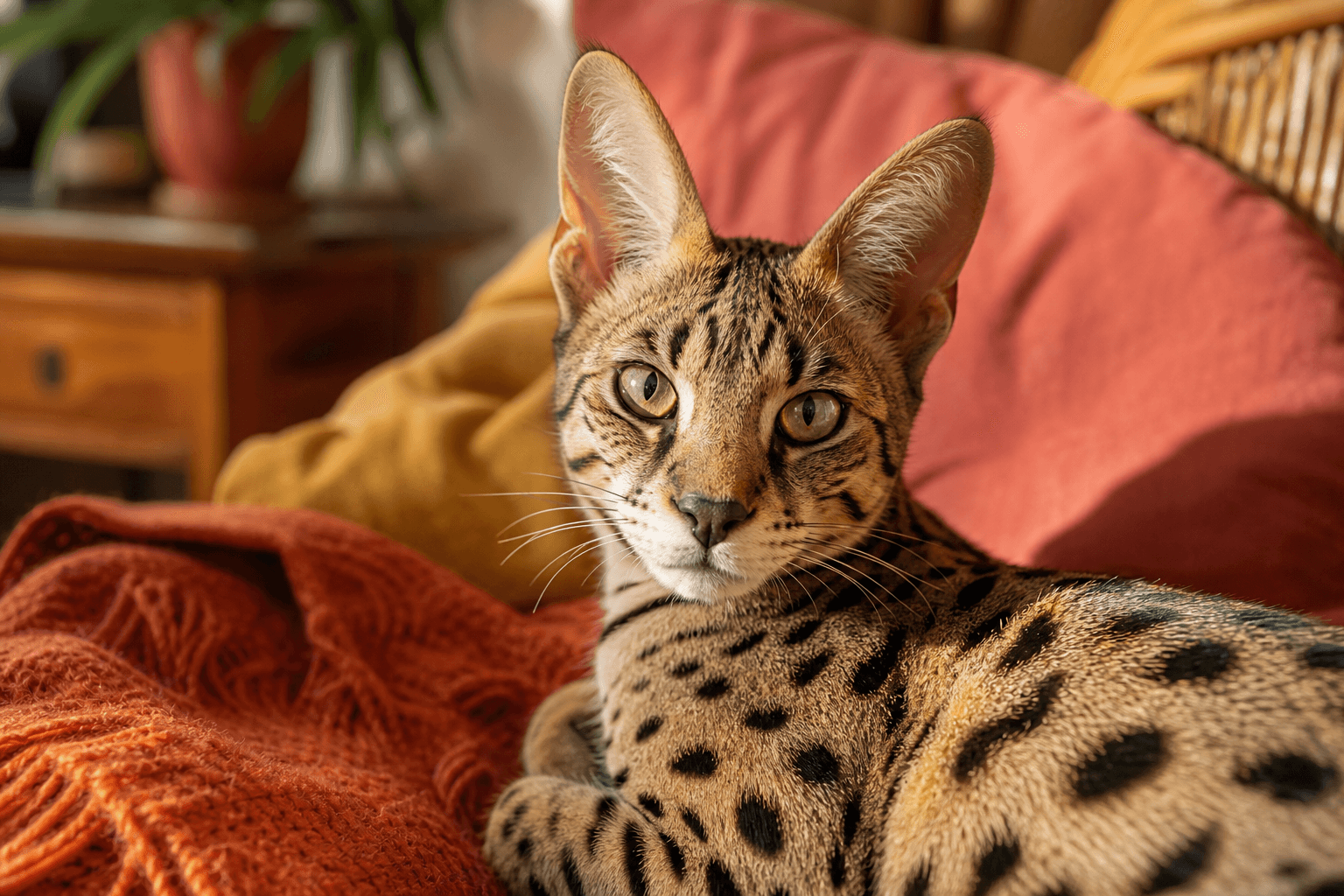
You clicked because Savannah cats look like tiny leopards and act like adventure buddies.
Same. We love them too — but living with one is a specific lifestyle.
Here are the real-world things to know so you can bring one home with confidence, not surprises.
1. They Are Extremely High-Energy
Think athlete in a cat suit. Savannahs sprint, leap, problem-solve, and then look for round two.
Plan on two to three structured play sessions daily using wands, fetch toys, and puzzle feeders.
2. Legality and Generation Rules Matter
Some places restrict early-generation Savannahs (F1–F3) or all Savannahs. Rules can vary by state, province, and city.
Later generations (F4, F5 and beyond) are more widely accepted and usually easier to live with for first-time owners.
3. Space and Vertical Territory Keep the Peace
They don’t need a mansion, but they do need height and routes. Tall cat trees, shelves, and safe window perches burn energy and reduce mischief.
Must-haves
Two tall trees, a window perch, a door-hung scratcher, and puzzle feeders.
Nice-to-haves
Hallway sprint lane, ceiling shelves, screened catio or secured balcony.
If you work from home, this part matters
4. They Bond Hard — and Hate Boredom
Savannahs are social shadows. Expect them at your keyboard, shower, and bedtime.
If you’re gone long hours, consider a compatible second pet or a dedicated enrichment plan so separation stress doesn’t turn into door-dashing or yowling.
- At least 90 minutes of interactive play split AM/PM
- Forage feeding or puzzle toys when you leave
- Leaving them free-roam day one
5. Water Obsession Is Real
Many Savannahs splash in bowls, join showers, and fish in toilets.
Use a heavy fountain, keep toilet lids closed, and expect wet pawprints. It’s normal — and kind of delightful if you plan for it.
6. Train Like a Dog (Harness, Clicker, Recall)
They’re smart and trainable. Clicker training turns that big brain into cooperation.
Starter cues
Name, touch/target, sit, come, off.
Outdoor skills
Harness acclimation indoors, then quiet-yard walks. Never force it.
Most enjoy harness walks if introduced gradually with positive reinforcement.
Training channels energy, but prey drive and curiosity are features, not bugs.
7. Prey Drive and Other Pets
They coexist well with confident, well-socialized cats and some dogs, but small pets and birds can trigger chase.
Introductions that work
- Go slow and scent-firstSwap bedding and use gates or cracked doors before face-to-face.
- Parallel playShort, positive sessions with treats on both sides of a barrier.
- Supervise small animalsSavannahs are hunters. Management beats wishful thinking.
8. Grooming Is Easy; Enrichment Is Not
Short coat, light shedding, quick weekly brush. Nails and dental care are the real routine.
The hard part is the mind-and-body workout. Bored Savannahs open cabinets, learn doorknobs, and rearrange your shelves.
9. Diet: Quality First, Routine Second
Feed a high-quality, meat-forward diet. Wet or balanced raw can help hydration; dry can be part of the mix if your vet agrees.
Use scheduled meals to power training and prevent overnight zoomies. New foods? Transition slowly to avoid tummy drama.
10. Costs Add Up Beyond the Kitten Price
Purchase price varies by generation and breeder, but the recurring costs are what you’ll feel.
Annual Cost Breakdown
| Expense | Annual Cost |
|---|---|
| Food (premium wet/dry mix) | $600–$1,000 |
| Litter & supplies | $250–$400 |
| Preventive vet care | $250–$600 |
| Insurance (optional) | $400–$800 |
| Enrichment (toys/trees/puzzles) | $200–$600 |
| Est. Annual Total | $1,700–$3,400+ per year |
11. Landlords, Insurance, and Travel Hurdles
Some landlords and insurers restrict hybrid breeds even when legal locally.
Expect extra paperwork, sometimes higher deposits, and occasional no-go policies from airlines for in-cabin travel. Always get approvals in writing before you commit.
Usually F4 or later. They retain the look and personality without the intensity and restrictions of earlier generations.
With respectful, cat-savvy kids and supervised introductions, yes. Their size and energy mean boundaries and structured play are essential.
Size varies by generation and lines. Many are long and leggy rather than heavy; later generations often range similar to larger domestic cats, while early generations can be notably taller.
Yes, when set up well. Offer large, open boxes, unscented clumping litter, and at least one box per cat plus one.