11 Things to Know Before Getting a Himalayan Cat
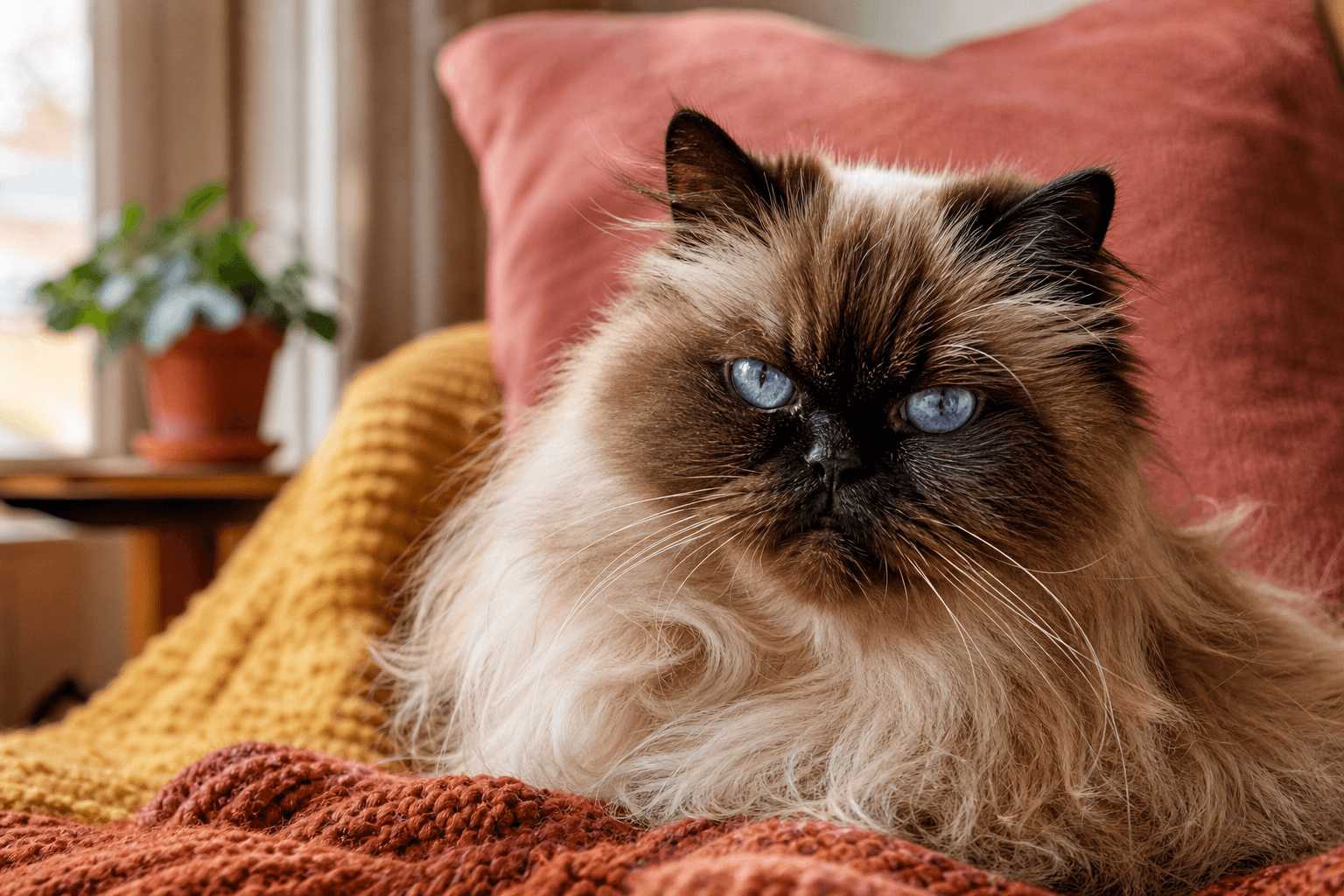
You clicked because those blue eyes and fluffy coats are irresistible. We get it.
Before you fall for a Himalayan (Himmie), here are the real-life things we wish someone told us sooner.
Read this first, shop later—you will thank yourself.
1. Daily Grooming Is Non-Negotiable
That luxurious coat mats fast. Think silky topcoat over dense undercoat—tangles hide until they don't.
Plan on 5–10 minutes a day with a stainless steel comb, then a slicker if needed. Focus on armpits, behind ears, belly, and pantaloons.
2. Sweet, Calm, and People-Oriented
Himalayans are generally gentle, affectionate, and quietly social. Expect a kitty who follows you room to room and settles nearby.
They aren't typically chatterboxes, but they communicate with soft trills and looks that say, Move that laptop—it's my lap time.
Vibe
Low-drama, sofa-companion energy.
Affection
Bonded to their people; prefers routine and predictability.
Noise Level
Usually quiet—great for apartments.
Alone Time
Tolerates it, but thrives with daily connection.
3. Flat Faces Can Mean Breathing and Eye Care
As a brachycephalic breed, some Himalayans have narrowed nostrils and shorter nasal passages. That can mean snorting, mouth-breathing in heat, and lower exercise tolerance.
Big, round eyes weep more. Keep soft wipes handy and clean tear staining daily to prevent skin irritation.
4. Yes, They Shed—Seasonally and Softly
Expect light daily shed and heavier spring/fall blowouts. A deshedding comb helps, but be gentle to avoid coat breakage.
A quality diet with omega-3s supports skin and coat. Vacuum schedule: little and often beats marathon cleans.
5. Playful, But Not Parkour Athletes
Himmies enjoy wand toys, puzzle feeders, and short bursts of play. They rarely crave ceiling-height acrobatics.
Think cozy perches, a sturdy mid-height tree, and window views. They like to watch the party—not headline it.
Let's talk health and what to screen for
6. Know the Breed-Linked Health Risks
Responsible breeders screen for PKD (polycystic kidney disease). Insist on DNA-tested, PKD-negative lines.
Other risks: dental crowding, tear duct issues, and potential hypertrophic cardiomyopathy (HCM) in some lines. Annual vet checks, dental care, and weight control go a long way.
- Request PKD DNA results for both parents
- Ask about heart scans (HCM) in breeding cats
- Skip breeders who say “we don’t need tests”
7. Litter Box Hygiene Needs Upgrading
Long fur plus clumping litter equals sticky situations. Keep fur around the backside neatly trimmed to avoid cling-ons.
Use low-dust, unscented litter and scoop twice daily. A high-sided box helps keep the fluff inside the box.
8. Budget for Groomers and Tools
Even with daily combing, many owners schedule professional grooming every 8–12 weeks for sanitary trims and coat maintenance.
Annual Cost Breakdown
| Expense | Annual Cost |
|---|---|
| Grooming visits (4–6/yr) | $240–$540 |
| Brushes/comb/dryer | $60–$150 |
| Quality food & supplements | $400–$900 |
| Routine vet care | $200–$500 |
| Insurance (optional) | $300–$600 |
| Est. Annual Total | $1,200–$2,700+/year (range varies by region and health) |
9. Good With Gentle Kids and Calm Dogs
With proper introductions, Himalayans co-exist beautifully with respectful children and laid-back pets.
They dislike chaos. Set house rules: no chasing, no sudden grabs, and always a retreat space that's off-limits to others.
Respect rules for tiny royalty
- Let them come to youOffer a finger sniff, then slow pets on cheeks and shoulders.
- Protect their nap zonesHigh shelves or a closed guest room keep stress low.
- Supervise first weeksShort, positive sessions build trust.
10. Primarily an Indoor Lifestyle
The coat and calm nature make Himalayans better as indoor cats. They overheat easily and aren't street-smart sprinters.
Offer vertical spaces, sunny naps, and daily play. A catio or harness training is a great compromise for fresh air without risk.
11. Choose Ethical Sourcing—Breeder or Rescue
If buying, look for small-scale breeders who welcome questions, provide health tests, and let you meet at least one parent. Contracts should include health guarantees and a return policy.
Prefer to adopt? Search Persian/Himalayan rescues and local shelters; many stunning adults need quiet homes.
Yes, primarily due to daily coat care and eye cleaning. Temperament-wise, they are easygoing and low-energy indoors.
Generally yes with calm, respectful pets. Slow introductions and safe retreat spaces are key.
Comb daily for 5–10 minutes and schedule professional grooming every 8–12 weeks as needed.
They can. Prioritize PKD-negative lines, monitor for dental issues and tearing, and maintain annual vet checks.
Absolutely. Their quiet, mellow nature fits small spaces—just provide enrichment and routine.