11 Large Dog Breeds That Are Easy to Train
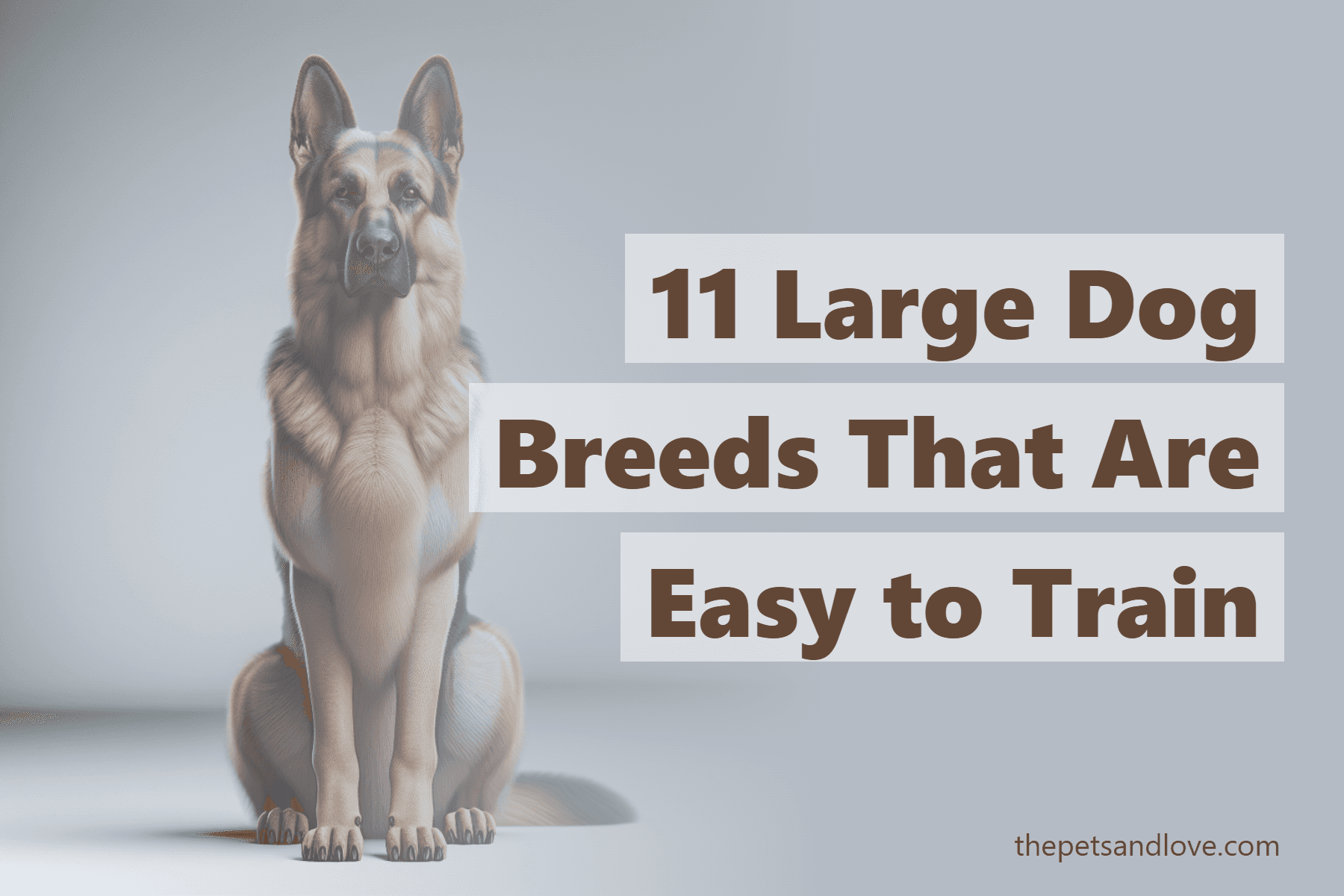
Thinking about bringing home a big dog but worried you'll be in over your head? You're not alone — and here's the reassuring truth: some large breeds are so smart and eager to please that they practically train themselves.
The trick is picking the right dog to start with.
Below, you'll meet 11 large breeds that tend to be genuinely rewarding to train — plus the mindset that makes training actually work, no matter which one you choose.
“The smartest dog in the world still needs a human who's consistent, patient, and starts early.”
The 11 Large Breeds That Are Easy to Train
Not every big dog is a challenge. These eleven stand out for being quick studies, willing partners, or both.
Let's start with the breed that practically wrote the book on trainability.
1. German Shepherd
These dogs are born learners.
They pick up commands faster than you can say "sit" — because they genuinely love having a job to do.
Give them structure, positive reinforcement, and consistency, and you'll have your most loyal student. Perfect for families who want a smart, protective companion that thrives on purpose.
2. Standard Poodle
Forget the fancy haircut. This breed is all brains and heart.
Poodles are seriously intelligent and love learning new things, which makes them naturals for obedience and agility.
Just one tip: keep training fun and varied. A bored Poodle is a mischievous Poodle.
3. Golden Retriever
Goldens are the classic "good dogs" for a reason.
They're affectionate, eager to please, and basically live to make you happy.
Start with basic obedience and early socialization, and you'll have a calm, well-mannered companion before you know it.
4. Labrador Retriever
Labs are high-energy — but here's the shortcut: they're wildly food-motivated.
Many Labs will do just about anything for a treat, which makes teaching new skills a breeze.
The catch? Balance that training with plenty of exercise, or all that energy finds its own outlet.
5. Doberman Pinscher
Don't be fooled by the tough exterior.
Dobermans are sensitive, loyal, and remarkably smart. They catch on fast and respond beautifully to firm-but-loving guidance.
They do best with a confident handler who sets clear boundaries early.
6. Chinook
You won't spot a Chinook every day — but when you do, you'll notice how people-focused they are.
These calm, patient dogs love working alongside their humans.
They can be a little jumpy as puppies, so early training matters, especially in homes with kids.
7. Leonberger
These gentle giants are surprisingly easygoing.
Despite their size, they're eager to learn and thrive on positive feedback.
Start while they're still manageable and prioritize socialization. They're naturally friendly, but manners matter a lot when a dog is this big.
Now here's one that's brilliant — but not for everyone.
8. Belgian Malinois
If you're experienced or up for a real challenge, the Malinois is a dream.
Think German Shepherd on turbo mode: incredibly smart, intensely driven, and always ready to work.
But there's a catch: they need a job and constant mental stimulation. Not ideal for first-timers — amazing with the right handler.
9. Bearded Collie
Beardies are bouncy and bursting with personality.
They love staying active and having a task, so build training around games and movement.
They can be a touch independent, but consistency and early structure win them over.
10. Irish Wolfhound
Despite their towering size, Wolfhounds are calm and dignified.
They're smart and willing to learn — they just mature a little slowly, so patience pays off.
Keep training gentle and positive, and you'll gain a loving, laid-back buddy for life.
11. Rottweiler
Rotties need a confident leader, but reward you with fierce loyalty and real trainability once they know who's in charge.
Trained with patience, consistency, and firm kindness, they excel at obedience.
They're naturally protective, so early socialization is non-negotiable.
| Category | Rating |
|---|---|
| German Shepherd | |
| Standard Poodle | |
| Golden Retriever | |
| Labrador Retriever | |
| Belgian Malinois | |
| Irish Wolfhound |
So Which One Is Right for a Beginner?
Great question — because "trainable" and "beginner-friendly" aren't always the same thing.
Some of these dogs will forgive your rookie mistakes. Others expect you to already know what you're doing.
Total beginner
Golden or LabForgiving, food-driven, endlessly patient with new owners.
Active first-timer
Standard PoodleSmart and adaptable, as long as you keep sessions fun.
Confident owner
Doberman or RottweilerLoyal and capable with clear, calm leadership.
Experienced handler
Belgian MalinoisIncredible potential — but demands a real time commitment.
Quick poll
Which trainable giant are you leaning toward?
Whatever breed you choose, this next part matters more than the breed itself.
Real Talk: What Actually Makes Training Work
Here's the part most people overlook.
Across every breed on this list, the biggest factor isn't the dog — it's your approach.
The three rules that beat any breed advantage
- Use positive reinforcementTreats, praise, and play teach faster and build trust better than corrections.
- Be relentlessly consistentSame cues, same rules, every time. Mixed signals confuse even the smartest dog.
- Start earlyBegin while your dog is still small enough to manage — future you will be grateful.
And don't expect perfection overnight.
Even the sharpest dogs need time to learn your cues and expectations. Progress, not perfection, is the goal.
Intelligence often means a dog gets bored fast and needs more variety and mental work — not less effort from you.
Firm, calm consistency beats harshness every time. Fear-based training damages trust and can backfire badly.
The earlier you start, the easier it is. Small habits are far easier to shape than large, ingrained ones.
Frequently Asked Questions
Golden Retrievers and Labrador Retrievers are top picks for beginners — they're eager to please, food-motivated, and very forgiving of first-time mistakes.
Not necessarily. Training difficulty depends more on the breed's temperament and your consistency than on size. The main difference is that a large dog's bad habits are harder to manage physically, so early training matters more.
Generally, no. Malinois are brilliant but intensely driven and need a job plus lots of mental stimulation. They're best suited to experienced, active handlers.
As early as possible — ideally the moment they come home. Starting while they're still small makes handling, socialization, and boundary-setting far easier.
It's optional but highly recommended for new owners. A class teaches you how to communicate clearly and gives your dog valuable socialization at the same time.
Basic obedience can come together within a few weeks of consistent practice, but training is really ongoing. Some breeds, like the Irish Wolfhound, simply mature more slowly and need extra patience.
Whichever gentle giant you choose, remember: consistency and kindness will always take you further than any breed's natural smarts alone.
Happy training! 🐾