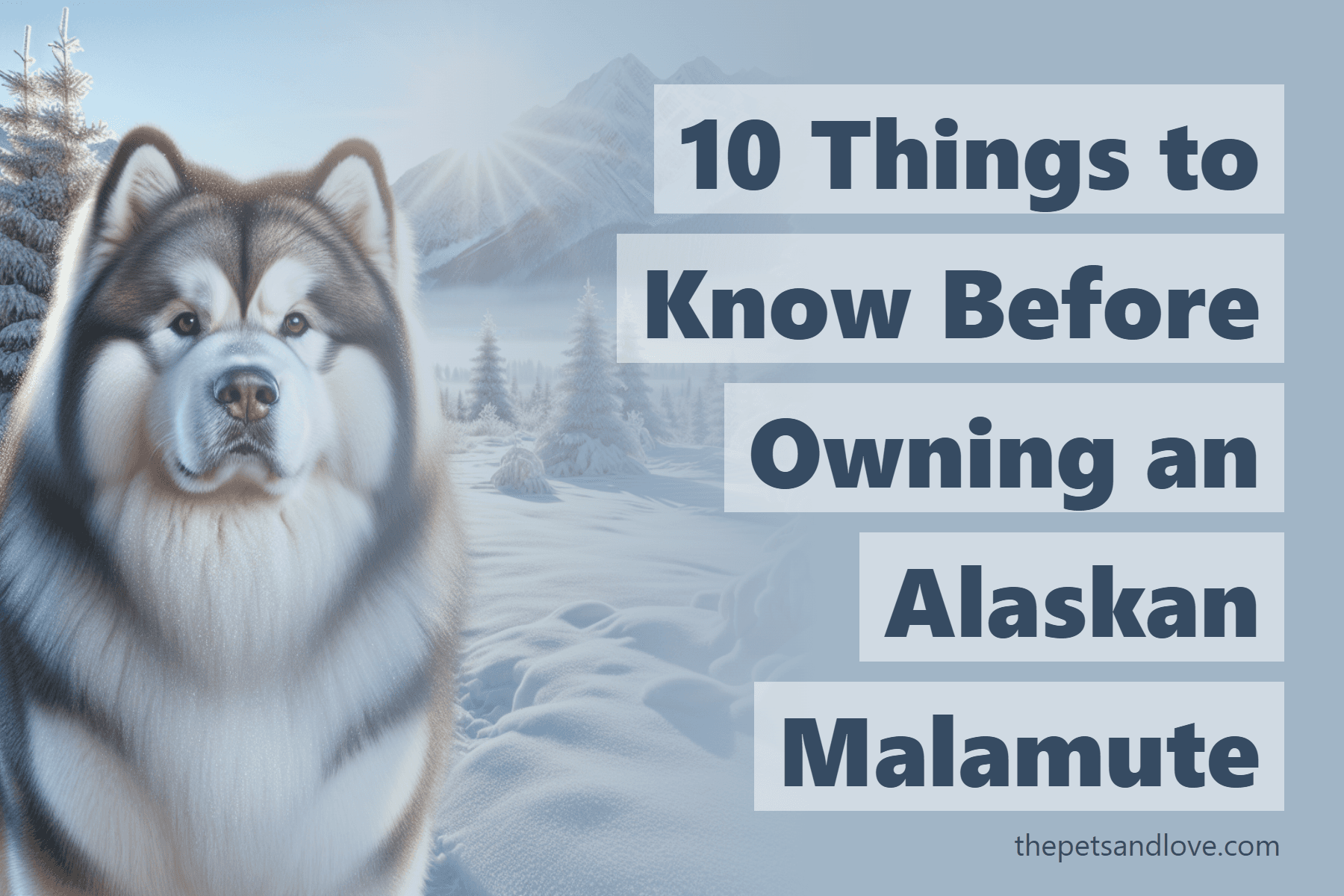
10 Things to Know Before Owning an Alaskan Malamute
Thinking about getting an Alaskan Malamute? Let's be real with you upfront — they're absolutely stunning dogs, but they're not the right fit for everyone.
Every time you meet one, the same thought hits: "Wow, what a majestic animal… but that's a LOT of dog."
So before you fall head over heels for those wolfish good looks, here's what you actually need to know — the size, the stubbornness, the fur, and everything in between.
1. They're Not Just Big — They're Strong
People love comparing Malamutes to Huskies. But make no mistake: Malamutes play in a completely different league when it comes to size and raw power.
A healthy adult can weigh up to **100 lbs** and stand roughly two feet tall at the shoulder.
Here's what that means in practice: that's a serious amount of dog to control — especially if they decide to bolt after a squirrel while you're holding the leash.
Strength is one thing. But all that power needs somewhere to go.
2. This Breed Needs a Mission
Malamutes were bred to work — hauling freight across frozen terrain, running long distances, and guarding camp. That drive didn't disappear when they became house dogs.
Just letting them out in the yard won't cut it. Not even close.
They need **at least 1.5 to 2 hours of real activity** every day. Think hiking, running, pulling a cart or sled, or working through an agility course.
Great fit
Active people and families who love hiking, running, and being outdoors year-round.
Rough fit
Chill-at-home types. A bored Malamute takes it out on your furniture, yard, and sanity.
Now, about that famous Malamute stubbornness…
3. They're Smart — and Stubborn
Training a Malamute is nothing like training a Golden Retriever. These are independent thinkers, and they don't always feel like listening.
You'll need to start obedience work **early**, stay consistent, and lean on positive reinforcement.
And even then? Don't expect blind obedience. They like to test you.
“Once you earn a Malamute's respect and trust, they're incredibly loyal and eager to be part of the pack.”
Training rules that actually work
- Start youngBegin obedience and socialization the moment your puppy comes home.
- Be consistentMixed messages confuse a smart dog — and give them room to negotiate.
- Reward, don't forceHarsh corrections backfire. Positive reinforcement earns cooperation.
- Keep it interestingShort, varied sessions beat long, repetitive drills every time.
Big, strong, stubborn… and secretly a total softie.
4. Total Sweethearts With Their People
Despite the size and strength, Malamutes can be absolute teddy bears at home.
They adore their families, enjoy cuddles, and are generally gentle — especially with older kids.
Just keep their size in mind around toddlers. Even a happy tail wag can knock a little one flat.
Older kids
GreatGentle and affectionate with children who can handle a big, bouncy dog.
Toddlers
Supervise closelyNot aggressive — just huge. Accidental bumps happen easily.
Active adults
ExcellentA loyal adventure buddy who genuinely keeps up with you.
Cats & small pets
RiskyStrong prey drive means introductions need real caution.
Their friendliness isn't automatic, though. It's built.
5. Early Socialization Is a Must
Malamutes aren't naturally aggressive. But they can be reserved or dominant around unfamiliar dogs and strangers.
Without proper socialization, that tendency can snowball into real problems — and given their strength, "real problems" is not something you want.
So expose them to a wide variety of people, pets, and environments early on.
Some behaviors, though, you'll be managing forever.
6. Digging Is Basically a Hobby
Leave a Malamute alone in the yard, and don't be shocked if it looks like a construction site when you get back.
They love to dig. It's instinctive, and it runs deep — pun intended.
You can manage it with a designated digging spot or by keeping them mentally engaged. But eliminating it completely? Good luck.
Now for the thing every Malamute owner learns to live with.
7. Get Ready for the Fur
Malamutes shed year-round. Then, **2–3 times a year**, they "blow" their undercoat entirely.
That means fur. Everywhere. On your clothes, your couch, your food — you name it.
Daily brushing is essential, especially during shedding season.
- Brush daily (non-negotiable during coat blows)
- Invest in a strong vacuum you actually like using
- Budget for a groomer a few times a year
- Shave the coat to "cool them down"
Speaking of heat — this is the big one.
8. They Don't Do Well in Heat
This breed was built for the Arctic. If you live somewhere warm, you'll need to be extra cautious.
Schedule walks for early morning or late evening. Always keep water and shade within reach.
Most importantly: learn the signs of overheating. Dogs like this can go downhill fast.
Quieter than a Husky — but don't expect silence.
9. Quieter Than Huskies — But Not Silent
Malamutes aren't as chatty as Huskies. But they can absolutely howl — especially when left alone too long.
Separation anxiety is a real thing for this breed.
Training and structure help. Still, it's worth honestly asking: how often will your dog be home alone, and will your neighbors tolerate a 95-pound howler?
Quick poll
How much alone time does your dog realistically get each day?
Last one — the health picture.
10. Generally Healthy — With a Few Caveats
For such a large breed, Malamutes enjoy a decent lifespan of **10–14 years**.
But like all purebreds, they're prone to certain conditions.
| Category | Rating |
|---|---|
| Overall Longevity | |
| Joint Health | |
| General Vigor |
The most commonly discussed issues include **hip dysplasia, hypothyroidism, cataracts, and bloat**.
So, after all that — is this really your dog?
So, Is the Alaskan Malamute Right for You?
If you're a first-time dog owner, think twice. Genuinely.
These dogs are high-maintenance in nearly every category: training, exercise, grooming, and socialization.
Pros
You'll thrive with a Malamute if you…
- Have owned big, strong dogs before
- Live an active, outdoorsy life
- Can commit 1.5–2 hours of exercise daily
- Don't mind serious, year-round shedding
- Want a fiercely loyal, affectionate companion
Cons
Reconsider if you…
- Are brand new to dog ownership
- Live in a hot climate without AC
- Are away from home 8+ hours a day
- Want an easygoing, off-switch couch dog
- Can't physically handle a 100-lb puller
Frequently Asked Questions
Honestly, not usually. Between the strength, stubbornness, exercise demands, and heavy grooming, they're a lot to manage. First-time owners can absolutely succeed with serious commitment and a trainer — but easier breeds exist if you're unsure.
Aim for under 4 hours. Malamutes are prone to separation anxiety and boredom, which can lead to howling, digging, and destruction. If you're gone all day, plan for a dog walker, daycare, or a companion at home.
They're not big barkers — but they are howlers. Expect vocal "woo-woo" conversations and full-on howling if they're lonely or bored. Structure and enough exercise keep the noise down.
Yes, they're gentle and affectionate, especially with older kids. Just supervise closely around toddlers, since their size means an accidental bump can knock a small child over.
It depends on early socialization. They can be dominant with unfamiliar dogs, and their strong prey drive makes cats and small pets a real risk. Careful, gradual introductions are a must.
Most owners point to two things: the relentless shedding and the exercise demands. Combine that with their independent streak, and this is a breed that constantly asks you to show up.
They can, but it takes work. This is an Arctic breed with a heavy coat, so you'll need air conditioning, shade, cool water, and walks timed for early morning or evening. Never shave the coat to cool them down.
Expect high energy through adolescence, roughly up to 18–24 months. Many mellow somewhat after age two, but this remains an active, workmanlike breed for life.