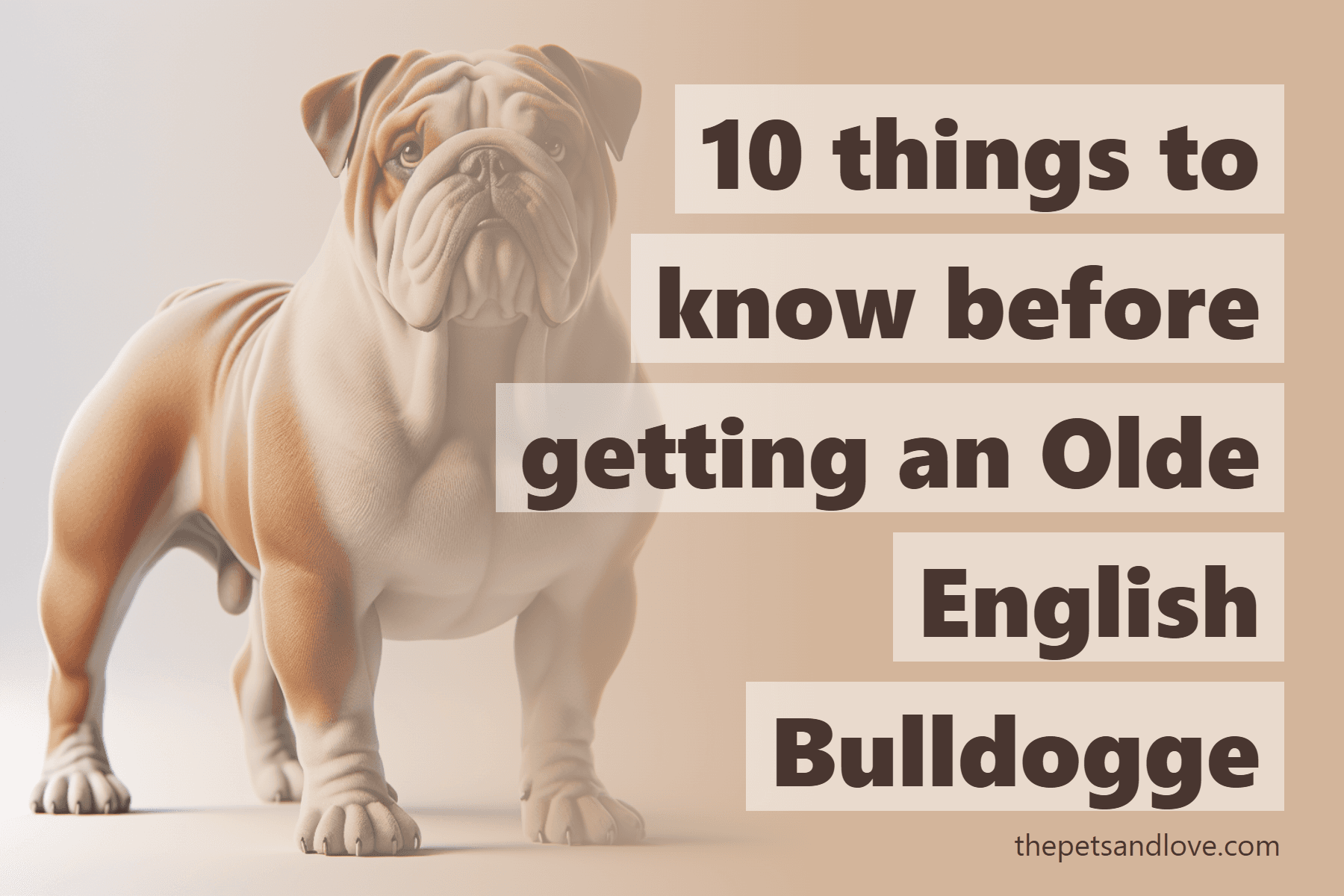
10 things to know before getting an Olde English Bulldogge
Thinking about bringing an Olde English Bulldogge into your life? Good — because those wrinkly faces come with a lot more personality than most people expect.
These dogs are a charming mix of muscle, loyalty, and surprising goofiness. But they're not for everyone.
Here's the real scoop, based on what you'll actually deal with day to day — the drool, the stubborn streak, and the deep, unshakable loyalty that makes it all worth it.
A Bulldog With a Twist
Despite the old-timey name, the Olde English Bulldogge is actually a modern breed.
It's a blend of English Bulldogs, American Bulldogs, Bullmastiffs, and American Pit Bull Terriers.
So why mix all those together? Here's the goal:
Breeders wanted to bring back the athleticism and health of the original bulldogs from centuries ago — without the extreme traits you see in many of today's English Bulldogs.
And honestly? Mission mostly accomplished.
More agile
They move better and handle exercise far more easily than their flat-faced cousins.
Breathe easier
A longer muzzle means fewer of the breathing struggles bulldogs are known for.
Sturdier joints
Stronger build overall, with fewer of the structural issues that plague other bulldog lines.
Still brachycephalic
They're short-nosed, so heat is still a real risk — more on that below.
So what are they actually like to live with?
Temperament: Tough, Tender, and Totally Loyal
Here's the part that surprises most first-time owners.
Olde English Bulldogges look like tough guys — but with their families, they're total sweethearts.
They're confident, protective, and deeply loyal. The kind of dog that sticks by your side and genuinely makes you feel safe.
“Behind the muscle and the wrinkles is a dog that just wants to be close to you.”
But they're not just bravado. With the right socialization, they're gentle with kids and can even live peacefully with cats and other pets.
Why early socialization matters so much
This is the one thing owners underestimate the most.
If your Bulldogge isn't used to other animals and people early on, they may grow up wary — especially around unfamiliar dogs.
The fix is simple, but it takes consistency:
- Regular walks in different environments
- Low-stress meet-ups with calm, friendly dogs
- Positive introductions to new people
- Skipping socialization "because they seem fine at home"
- Forcing tense, chaotic dog-park encounters
Training: smart, willing, and a little stubborn
Good news: these dogs are smart and eager to please, which makes training easier than you'd think.
The catch? Don't be shocked when a stubborn streak shows up.
Now let's talk grooming, drool, and keeping them healthy.
Health and Grooming: Less Fuss, Still Needs Love
Compared to other bulldog breeds, the Olde English Bulldogge is surprisingly hardy.
Fewer breathing issues. Stronger joints. Less skin trouble overall.
But they're not totally off the hook.
| Category | Rating |
|---|---|
| Overall hardiness | |
| Grooming needs | |
| Skin fold care | |
| Drool factor |
The grooming routine that actually keeps them healthy
The short coat is easy — but the details matter.
- Brush weekly to keep shedding and dander down.
- Bathe every couple of months (or after they roll in something gross).
- Clean the skin folds regularly — moisture gets trapped and can lead to infection.
- Keep ears clean and nails trimmed.
- Brush teeth a few times a week, and use dental chews to help.
Are they hypoallergenic?
You'll hear this label thrown around a lot. Let's set the record straight.
No dog is 100% allergy-free. Their low-shedding coat and minimal dander are a plus, but the heavy drool can trigger allergies in some people. If allergies are a concern, spend time around one before committing.
Don't let the stocky build fool you — here's their energy story.
Exercise and Energy: More Than You'd Expect
They may look like couch potatoes. They're not.
These dogs have real energy to burn, and they need daily exercise to stay fit and happy.
Daily
Exercise these dogs genuinely need to stay balanced
Walks, playtime, and short jogs are all great. Just don't push them in hot weather — that short nose makes heat dangerous.
Are they good for apartments?
They can work — but only if you're truly committed to daily outdoor time.
A yard or regular access to open space is ideal. If you're gone all day with no outlet for them, this probably isn't your breed.
And now for their favorite subject: food.
Diet and Appetite: Big Dog, Big Hunger
These dogs love their food — and they're not shy about begging for it.
The right feeding approach keeps them lean, healthy, and out of trouble.
Feeding done right
- Choose high-quality kibbleMatch it to their size and activity level.
- Split meals into two a dayThis helps reduce the risk of bloating.
- Count treat caloriesTreat-based training works great — just factor those into the daily total.
- Always keep fresh water availableEspecially important after exercise.
Frequently Asked Questions
They can be, thanks to their loyalty and eagerness to please. Just be ready for a stubborn streak and commit to early socialization and consistent, positive training from day one.
With proper socialization, yes. They're typically gentle with children and can live peacefully with cats and other pets. Early, low-stress introductions make all the difference.
Yes — a lot. Keep a towel handy, and know that drool is one of the trade-offs for that lovable bulldog face.
More than their build suggests. They need daily walks, playtime, and mental stimulation. Skip the exercise and they'll get bored, restless, and destructive.
Not well. They're brachycephalic (short-nosed), so overheating is a real risk. Exercise them during cooler parts of the day and always provide shade and fresh water.
Not much for the coat — weekly brushing and occasional baths. The key is cleaning their skin folds regularly to prevent infections, plus routine ear, nail, and dental care.
Not truly. Their low-shedding coat and minimal dander help, but no dog is fully allergy-free, and their drool can trigger some people's allergies.
Managing the drool, staying on top of the stubborn streak, and being vigilant about heat. Do those things well and you get one of the most loyal companions around.
Quick poll
What's your biggest hesitation about an Olde English Bulldogge?