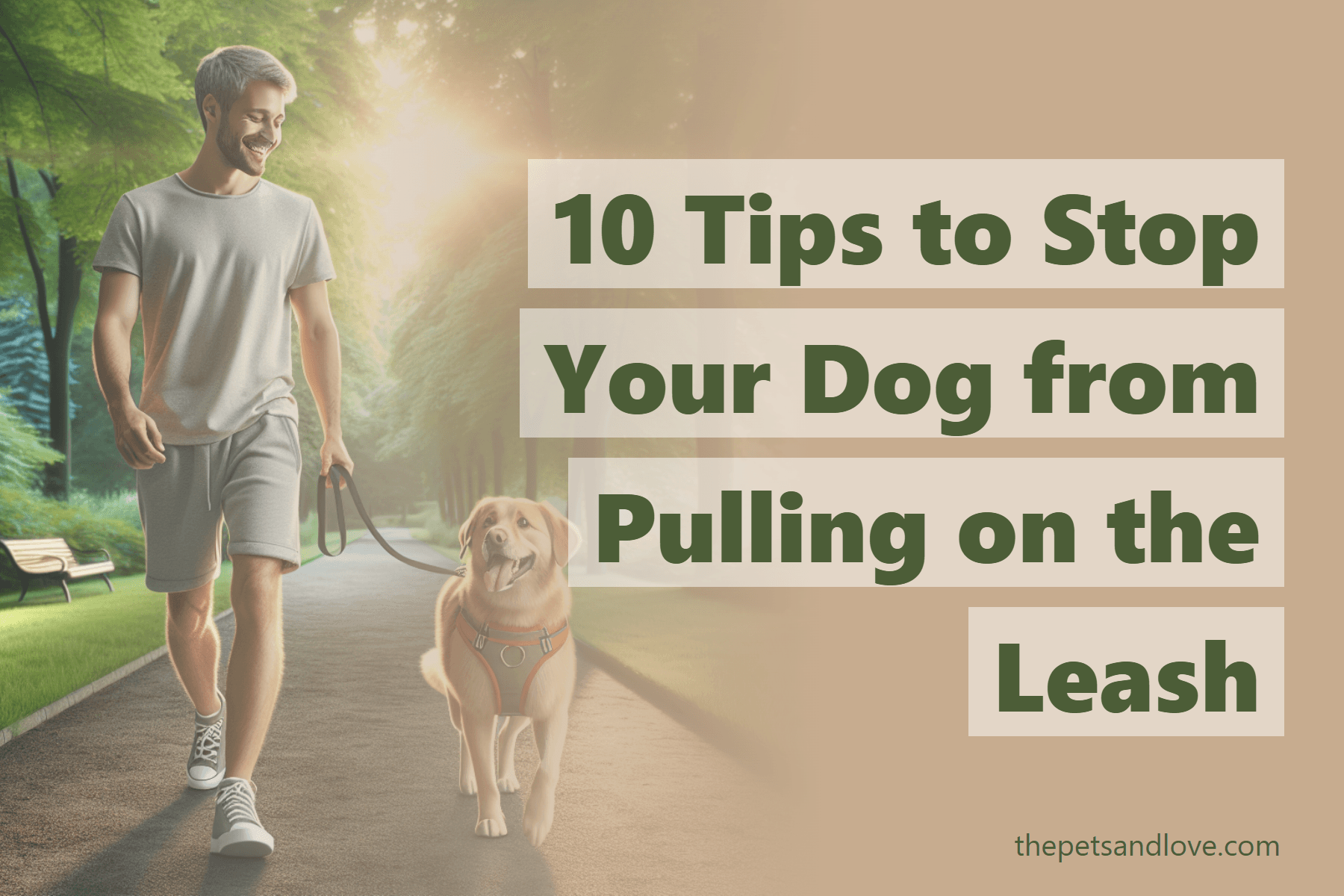
10 Tips to Stop Your Dog from Pulling on the Leash
7 min read
Updated on: May 21, 2024
10 Tips to Stop Your Dog from Pulling on the Leash

You clip on the leash, open the door, and boom — your dog is off like a rocket, dragging you down the sidewalk while your shoulder screams for mercy.

Sound familiar? You're not alone, and it's not a lost cause.

The truth is, most dogs pull for one simple reason: it works. Every time they lunge forward and get to move, they learn that pulling gets results.

Flip that logic on its head and everything changes. Below are 10 tips that have actually worked — for us and for plenty of frustrated pet parents just like you.

“Dogs don't pull to be stubborn. They pull because it works — until you teach them a better way.”
— The Pets & Love team

1. Start With the Right Gear

Here's the thing: training is a lot easier when your equipment is on your side.

A no-pull harness can be a genuine game changer, especially the kind with a front clip.

Why the front clip? When your dog surges ahead, the clip gently redirects them back toward you instead of letting them power forward like a sled dog.

2. Reward What You Want to See

Dogs repeat whatever pays off. So let's make walking nicely the thing that pays off.

Keep a few treats in your pocket and reward your dog the moment they stay close to your side.

You don't need to go overboard. A quick "good job" and a small treat is plenty to get the message across.

Great — but rewards only work if your dog knows what you're asking for.

3. Be Consistent With Cues and Rewards

Pick one word — like "heel" or "with me" — and stick with it.

Then always reward the same behavior the same way.

If you're using treats one day, praise the next, and ignoring your dog the day after, they simply can't figure out the rules of the game.

Consistency is boring. It's also the fastest path to a dog that walks nicely.

4. Stop the Moment They Pull

This one is almost too simple — but it works.

When your dog pulls, just stop. Plant your feet. Don't yank the leash, don't scold, don't move an inch.

The second they ease up and the leash goes slack, praise them and carry on.

The stop-and-go method

  1. Dog pulls → you freezeNo forward progress happens while the leash is tight.
  2. Leash goes slack → you praiseMark the good behavior instantly.
  3. Then keep walkingMoving forward becomes the reward for a loose leash.

The lesson lands quickly: pulling stops the fun, walking calmly keeps it going.

5. Use the U-Turn Trick

Got a dog that's too excited or too stubborn to listen? Try a smooth 180-degree turn.

Simply turn around and walk the other way. It interrupts the pulling and pulls their attention right back to you.

Just keep it calm and gentle — no sudden jerks on the leash. This is a redirect, not a punishment.

6. Train in Low-Distraction Areas First

Trying to teach leash manners in a busy park is like trying to study in the middle of a concert.

Start somewhere boring: your backyard, a quiet street, an empty parking lot.

Once your dog nails it there, slowly add more distractions.

  • Master calm walking in the backyard first
  • Progress to a quiet street
  • Add real-world distractions gradually
  • Start day one at the dog park
  • Expect perfection around other dogs immediately

It's all about setting your dog up to succeed instead of asking too much, too soon.

Now let's fine-tune the little things that make a big difference.

7. Shorten the Leash — But Not Too Much

A shorter leash gives you more control and stops your dog from wandering way out ahead.

But here's the catch: too tight and your dog feels constantly restricted, which can actually make pulling worse.

You want enough slack that they can walk comfortably beside you.

8. Practice Loose-Leash Walking

The goal isn't a taut, tug-of-war rope. It's a relaxed leash with a gentle curve in it.

So make this your golden rule: whenever the leash is loose, reward.

Over time, your dog connects the dots — a loose leash means good things happen.

“A loose leash isn't just the goal. It's the signal you're constantly rewarding along the way.”
—

9. Know When to Get Help

Feeling stuck or overwhelmed? There's zero shame in calling a professional trainer.

A good trainer can spot exactly what's going wrong and tailor a plan to your dog.

They've genuinely seen it all — and a fresh set of eyes can save you weeks of frustration.

10. Stay Patient and Celebrate Small Wins

Leash training doesn't happen overnight. Some days will feel like two steps forward, one step back.

That's completely normal.

Celebrate the little victories — one block without pulling, one calm street crossing — and don't get discouraged.

Your dog is learning. And honestly? So are you.

Quick poll

What's your dog's biggest walk challenge?

Frequently Asked Questions

It varies by dog, age, and how consistent you are. Many owners see clear improvement within a few weeks of daily practice, but full loose-leash reliability can take a few months. Short, frequent sessions beat rare, long ones.

A front-clip no-pull harness is usually the safer, more effective choice for pullers. It redirects your dog toward you and takes pressure off their neck, unlike a collar that can strain the throat when they lunge.

Dogs pull hardest toward exciting things — other dogs, smells, squirrels, the park. If your dog walks nicely on quiet streets but pulls near distractions, it means you need to practice more in gradually more stimulating environments.

Not at all. Older dogs can absolutely learn loose-leash walking. It may take a little more patience to override an ingrained habit, but the same reward-based methods work at any age.

No. Yanking, jerking, or scolding tends to increase anxiety and can make pulling worse. The most reliable approach is to make pulling ineffective (by stopping) and calm walking rewarding (with treats and praise).

Go back to basics in a low-distraction area, shorten your sessions, and reward heavily for even a few steps of slack. If it still isn't clicking, a professional trainer can quickly identify what's missing.


Was this section helpful?

Up next

Keep reading

9 Things to Know Before Getting a Scottish Fold
Cat Breeds

9 Things to Know Before Getting a Scottish Fold

Thinking about a Scottish Fold? Here are the nine must-knows—health, temperament, grooming, and daily life—so you can decide with clear eyes and a happy heart.

9 Things to Know Before Getting a Keeshond
Dog Breeds

9 Things to Know Before Getting a Keeshond

Thinking about a Keeshond? Here are the nine bite-size truths we wish we knew first — from grooming and exercise to temperament and costs.

8 Things to Know Before Getting a Redbone Coonhound
Dog Breeds

8 Things to Know Before Getting a Redbone Coonhound

Thinking about a Redbone Coonhound? Here are the eight must-knows—energy, voice, training, and everyday life—so you can decide with confidence.

8 Things to Know Before Getting a Leonberger
Dog Breeds

8 Things to Know Before Getting a Leonberger

Thinking about a Leonberger? Here are the big, real-life considerations—size, grooming, training, and health—so you can decide with confidence in a quick, practical read.

7 Things to Know Before Getting a Birman
Cat Breeds

7 Things to Know Before Getting a Birman

Thinking about a Birman? Here are the seven essentials—temperament, grooming, health, and daily life—so you can decide with confidence before you bring this silky, blue-eyed cat home.

11 Things to Know Before Getting an Irish Setter
Dog Breeds

11 Things to Know Before Getting an Irish Setter

Thinking about an Irish Setter? Here are the must-know truths about energy, grooming, training, health, and daily life with this gorgeous, high-spirited breed—told fast and from experience.

9 Things to Know Before Getting an Oriental Shorthair
Cat Breeds

9 Things to Know Before Getting an Oriental Shorthair

Thinking about an Oriental Shorthair? Here are the nine must-know truths about this whip-smart, chatty, velvety-eared cat so you can decide with confidence.

9 Things to Know Before Getting an Egyptian Mau
Cat Breeds

9 Things to Know Before Getting an Egyptian Mau

Thinking about an Egyptian Mau? Here are nine essential, experience-based insights to help you decide if this athletic, spotted cat fits your home and lifestyle.

9 Things to Know Before Getting a Whippet
Dog Breeds

9 Things to Know Before Getting a Whippet

Thinking about a Whippet? Here are the nine essentials to know before you bring this gentle, speedy sighthound home—so you can skip surprises and start strong.

9 Things to Know Before Getting a Veiled Chameleon
Exotic Pets

9 Things to Know Before Getting a Veiled Chameleon

Thinking about a veiled chameleon? Here are the nine essentials—habitat, heat, humidity, handling, and diet—so you can set them up right from day one.

9 Things to Know Before Getting a Sphynx Cat
Cat Breeds

9 Things to Know Before Getting a Sphynx Cat

Thinking about a Sphynx cat? Here are nine honest things to know—from skincare to snuggles—so you can decide if this famously hairless breed fits your life.

9 Things to Know Before Getting a Shih Tzu
Dog Breeds

9 Things to Know Before Getting a Shih Tzu

Thinking about a Shih Tzu? Here are the nine must-know truths about grooming, temperament, training, and everyday life with this charming companion breed.

9 Things to Know Before Getting a Shiba Inu
Dog Breeds

9 Things to Know Before Getting a Shiba Inu

Thinking about a Shiba Inu? Here are nine honest, experience-led things to know before you bring home this bold, fox-like companion — from exercise needs to training quirks and grooming reality.

9 Things to Know Before Getting a Pug
Dog Breeds

9 Things to Know Before Getting a Pug

Thinking about bringing a Pug home? Here are the nine must-knows—from breathing care to daily routines—so you can decide with confidence and start strong.

9 Things to Know Before Getting a Papillon
Dog Breeds

9 Things to Know Before Getting a Papillon

Thinking about a Papillon? Here are the nine bite-size truths that help you decide fast — from energy needs to grooming, training, and what life really looks like with those butterfly ears.

9 Things to Know Before Getting a Leopard Gecko
Exotic Pets

9 Things to Know Before Getting a Leopard Gecko

Thinking about a leopard gecko? Here are the nine must-know basics — habitat, heating, diet, handling, and more — so you can set yours up right from day one.

9 Things to Know Before Getting a Hedgehog
Exotic Pets

9 Things to Know Before Getting a Hedgehog

Thinking about a pet hedgehog? Here are the nine must-know realities—from housing and diet to legality and handling—so you can decide with confidence and set your prickly friend up for a healthy, happy life.

9 Things to Know Before Getting a Green-Cheek Conure
Exotic Pets

9 Things to Know Before Getting a Green-Cheek Conure

Thinking about a green-cheek conure? Here are the nine essentials—noise, mess, bonding, lifespan, and more—so you can decide with clear eyes and a happy heart.

9 Things to Know Before Getting a Golden Retriever
Dog Breeds

9 Things to Know Before Getting a Golden Retriever

Thinking about a Golden Retriever? Here are the nine must-knows to make life easier from day one — from energy and shedding to training, health, and real-life costs.

9 Things to Know Before Getting a Finch
Exotic Pets

9 Things to Know Before Getting a Finch

Thinking about adding a finch to your home? Here are nine essential, experience-backed things to know so your tiny songbird thrives from day one.

9 Things to Know Before Getting a Cavalier King Charles Spaniel
Dog Breeds

9 Things to Know Before Getting a Cavalier King Charles Spaniel

Thinking about a Cavalier King Charles Spaniel? Here are the nine things we wish we knew first — from health realities to grooming, energy, and that famous cuddly temperament.

Loading ...