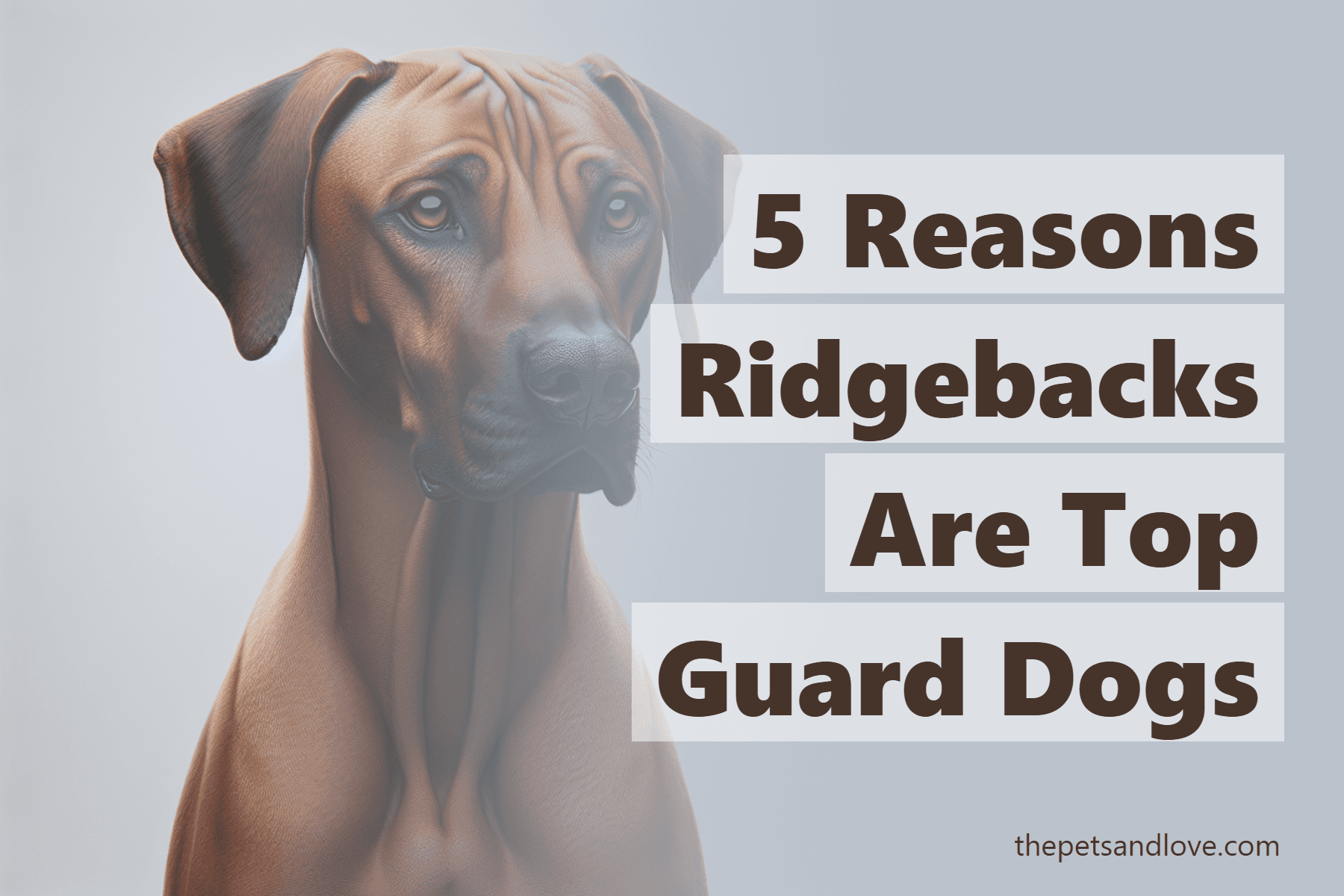
5 Reasons Ridgebacks Are Top Guard Dogs
You want a family dog that curls up on the couch with your kids — but also makes an intruder think twice. Good news: you don't have to choose.
The Rhodesian Ridgeback delivers both. Affectionate at home, quietly intimidating at the door.
Below, you'll see exactly why this breed makes such a natural guardian, what training they actually need (and the kind you should skip), and whether one belongs in your home.
“A well-raised Ridgeback protects through presence and awareness, not biting.”
Why Ridgebacks Make Great Guard Dogs
Here's where their history matters.
Rhodesian Ridgebacks were bred in Africa to track lions and guard homesteads. That legacy still shows in every muscle and every bark.
They're alert, powerful, and smart — with a deep, serious bark that makes anyone reconsider stepping onto your property uninvited.
But here's what really sets them apart: restraint.
Ridgebacks don't bark just to hear themselves. So when they do sound off, you pay attention. They're naturally wary of strangers yet endlessly loving with their own people.
| Category | Rating |
|---|---|
| Alertness | |
| Intimidation Factor | |
| Loyalty | |
| Default Aggression | |
| Trainability |
So if you shouldn't train aggression, what should you focus on?
What Kind of Training a Ridgeback Actually Needs
Skip the attack training. But don't skip training altogether.
Like any intelligent, independent breed, a Ridgeback will test your boundaries the moment you let them slide. Set the rules early and clearly.
Here's what works.
The Ridgeback training essentials
- Socialize earlyIntroduce your puppy to new people, sounds (vacuum, doorbell, traffic), and environments. A well-socialized Ridgeback is confident — not fearful or reactive.
- Train consistentlyThey’re smart but stubborn. Use positive reinforcement, keep sessions short, and mix things up so they don’t get bored.
- Manage the prey driveBred to chase game, they have a strong instinct to pursue. Introduce cats and small pets early and supervise closely.
Now, what does that protectiveness actually look like day to day?
What to Expect in a Ridgeback Guardian
A Ridgeback won't patrol like a police dog. But they will absolutely notice when something's off.
They alert
Expect a bark when someone’s at the door or crossing onto your property.
They position
They’ll place themselves between you and a perceived threat — instinctively.
They intimidate
Big and muscular, they use their presence to make a point without a single bite.
They warn first
They rarely escalate. A warning comes long before anything more.
They are not aggressive by default. That's the key.
It bears repeating: you never want any dog to be aggressive toward people without cause.
But honestly, guarding is only part of the picture.
Beyond Their Guarding Instinct
What owners love most usually has nothing to do with security.
Ridgebacks are affectionate, goofy, and loyal to the bone. Yours will likely follow you room to room like a shadow — and happily nap across your feet, or your whole couch if you allow it.
But there's a catch.
These are high-energy dogs. Don't expect a lazy lapdog. They were built to run, and a good sprint makes their whole day.
Pros
The joys
- Deeply affectionate and loyal
- Playful, goofy companion
- Great with kids with the right training
- Natural protector without aggression
Cons
The demands
- High exercise needs — daily
- Can get destructive when bored
- Stubborn streak needs consistency
- Not suited to being left in the yard all day
So is this the right dog for your home?
Is a Ridgeback Right for You?
If you want a dog that's protective, smart, loyal, and great with kids, a Ridgeback can be a perfect fit.
But they're not for everyone.
Confident, consistent owners
IdealThey thrive when boundaries are clear and enforced.
Active households
GreatRunners, hikers, and outdoorsy families keep them happy.
Families with kids
With careWonderful with the right training and supervision.
Yard-only or hands-off homes
Poor fitThey need to be part of the family, not left outside.
Quick poll
What matters most to you in a family guard dog?
Frequently Asked Questions
Yes. They’re alert, muscular, naturally wary of strangers, and have a deep, serious bark. Their protective instinct is built in — they guard through presence and awareness rather than aggression.
Usually not — and it can backfire. Their instinct is already strong. What they do need is basic obedience and early socialization so that instinct stays balanced and manageable.
Not by default. A well-raised Ridgeback gives a warning first and only escalates if they truly believe their owner is in danger. Aggression toward people without cause is never the goal.
They can be excellent family dogs with the right training and supervision. They’re loyal and affectionate, but their size and energy mean interactions with young kids should always be supervised.
It depends on socialization. They have a strong prey drive from their hunting heritage, so introduce them to cats and small pets early and supervise closely. Raised together, they often do well.
A lot. These are high-energy dogs built to run. Plan on daily vigorous exercise plus mental stimulation. Skimp on it and boredom-driven destruction usually follows.
No. They thrive as part of the family, not as an outdoor fixture. Isolation makes them anxious and bored, which undermines the very temperament that makes them great companions.
The opposite. Their protective instinct is natural — aggression training can overshoot and create dangerous, hard-to-manage behavior.
Ridgebacks bond intensely with their people. Left alone in a yard, they become bored, anxious, and destructive.
They love a good couch nap, but they’re high-energy athletes bred to run. They need real daily exercise to stay balanced.