7 things to know before owning a Siberian Husky
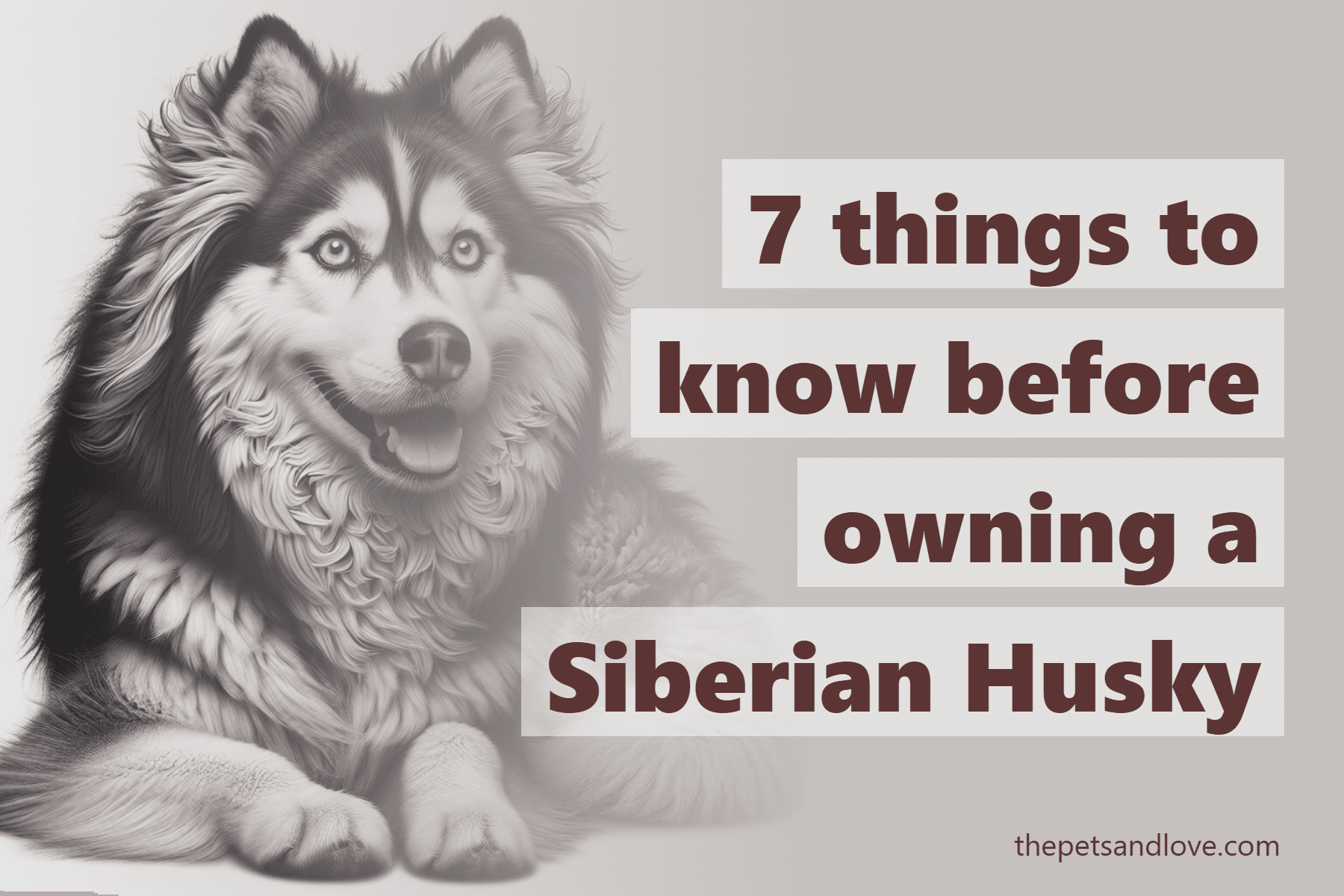
Siberian Huskies are stunning, hilarious, and bursting with personality — but they are absolutely not a bring-home-on-a-whim kind of dog.
If you're picturing a calm, quiet companion who'll happily lounge at your feet all day, we need to talk.
Here's the honest truth: plenty of new Husky owners get blindsided by how much time, patience, and pure energy these dogs demand.
So before you fall for those piercing blue eyes, let's walk through the seven things you really need to know first.
1. Huskies Are Loud and High-Energy — And That's Part of the Fun
The first thing you'll notice about a Husky? They are talkers.
They howl, whine, grumble, and "talk back" in a way that sounds almost human.
It's genuinely hilarious when you're playing or mock-arguing over the couch.
It's a little less funny at 3 a.m. when they've decided to sing you the song of their people.
“A bored Husky isn't a quiet Husky — it's a destructive one.”
Then there's the energy. This is a breed built to run for miles across snow, hauling a sled behind them.
Two gentle strolls around the block won't come close to satisfying that.
They need real exercise — running, hiking, ball chasing, romping with other dogs.
Skip it, and you'll pay for it. A bored Husky chews, digs, escapes, and howls. Loudly.
All that energy comes with a big social side, too.
2. They Crave Company — and Not Just Yours
Huskies are true pack animals through and through.
They adore being around people and other pets, they're usually great with kids, and they're often friendly with other dogs — especially if socialized early.
But here's the flip side: they genuinely hate being left alone.
Leave a Husky by themselves all day and frustration builds fast. That's when the shredded cushions and chewed furniture appear.
Kids
GreatPlayful and tolerant, but supervise around toddlers given their size and bounce.
Other dogs
GreatNaturally social, especially with early socialization.
Cats & small pets
With careStrong prey drive — introduce slowly and never assume.
Left alone all day
RiskyProlonged solitude leads to stress and destruction.
Now, about that famous Husky brain...
3. Smart — Sometimes Too Smart
Make no mistake: Huskies are brainy dogs.
They pick things up quickly — especially when there's something in it for them.
But they're also fiercely independent thinkers.
That means your Husky might understand exactly what you're asking… and simply decide they'd rather not, thanks.
How to actually train a Husky
- Start earlyBegin training and socialization the day they come home, not months later.
- Stay consistentMixed signals give an independent dog room to negotiate. Same rules, every time.
- Use positive reinforcementTreats, toys, and praise work far better than force with this breed.
- Be the calm leaderIf you don’t take the leadership role, your Husky happily will.
The good news? A well-trained Husky is a joy. The trick is patience and repetition, not punishment.
Let's talk about what everyone falls for first.
4. Gorgeous — And That Coat Comes at a Price
Let's be honest — a huge reason people fall for Huskies is the looks.
That thick double coat and those striking eyes make them absolute showstoppers.
But that coat? It sheds. A lot.
And during seasonal "blowouts," it can look like a second dog exploded in your living room.
- Brush several times a week (daily during shedding season)
- Invest in a strong vacuum — you’ll need it
- Accept that this is not a hypoallergenic dog
- Shave the coat to "cool them down"
Here's a pleasant surprise, though: despite all that fur, Huskies are remarkably clean.
They don't carry a strong "doggy" smell and rarely need baths — unless they've rolled in something disgusting. Which, being Huskies, they absolutely might.
Quick poll
Be honest — is heavy shedding a dealbreaker for you?
Speaking of surprises, here's the one that catches owners off guard.
5. The Escape Artist Side of Huskies
Huskies are legendary escape artists.
If there's a way out of the yard, trust me, they'll find it.
Fence too low? They'll jump it. Not buried deep enough? They'll dig under it.
It's not that they don't love you. They just love to explore.
Your best defense is a tall, secure fence combined with plenty of daily exercise.
A Husky whose energy is spent and curiosity satisfied is far less likely to go adventuring on their own.
Some genuinely good news next.
6. Health: One of the Breed's Strong Points
Here's the reassuring part: Huskies are generally a healthy, hardy breed.
They're not plagued by a long list of genetic problems, though a responsible breeder should still be able to talk to you about hip and eye health.
The biggest real-world risk? Overheating.
That gorgeous coat was engineered for snow, not summer sun.
So, the big question...
7. So, Is a Husky Right for You?
A Husky can be an incredible companion — for the right person.
Pros
A Husky suits you if...
- You’re active and love the outdoors
- You’re home often or can provide daily company
- You’re up for consistent training and structure
- You don’t mind (a lot of) shedding
- You want a playful, social dog full of personality
Cons
A Husky won't suit you if...
- You want a quiet, low-key dog
- You’re away from home most of the day
- You expect off-leash reliability with no work
- You dread vacuuming
- You’re looking for a lazy lapdog
Frequently Asked Questions
They can be, but they’re a challenging first dog. Their high energy, stubborn streak, and need for company mean a first-time owner has to be genuinely committed to training and daily exercise. If you’re prepared for that, go for it — just don’t expect an easy ride.
Not much actual barking, but they’re very vocal in other ways. Expect howling, whining, and "talking." Many owners find the chatter endearing, though it can be loud, especially at unexpected hours.
Not long, and never all day. Huskies crave company and get frustrated and destructive when isolated. A few hours is fine, but a full workday alone regularly is a recipe for chewed furniture and stress. Consider a walker, daycare, or a second pet.
Generally yes — they’re playful, tolerant, and social. That said, they’re strong and bouncy, so supervise interactions with young children and teach kids how to handle them respectfully.
They’re usually great with other dogs, especially when socialized early. Cats and small pets are trickier because Huskies have a strong prey drive. Introductions should be slow and carefully managed.
A lot. This is a working sled breed, so casual walks won’t cut it. Aim for vigorous daily activity — running, hiking, or off-leash play in a secure area. A tired Husky is a well-behaved Husky.
It’s driven by curiosity and energy, not unhappiness. They love to explore and are skilled at jumping and digging. A tall, secure fence plus plenty of exercise is your best defense.
Not really — their thick double coat is built for cold climates. In warm weather, provide shade and water, avoid midday exertion, and never shave the coat, since it actually helps regulate their temperature.